Politics
Trump, Xi and Putin Hold First-Ever Trilateral Summit in Shenzhen, Pledging Nuclear Talks and More Oil
The leaders of the United States, China and Russia met for about 80 minutes in Shenzhen on Thursday, issuing a four-point declaration on nuclear risks, U.N. reform, oil supplies and the International Criminal Court — but with no breakthrough on Ukraine or Iran.
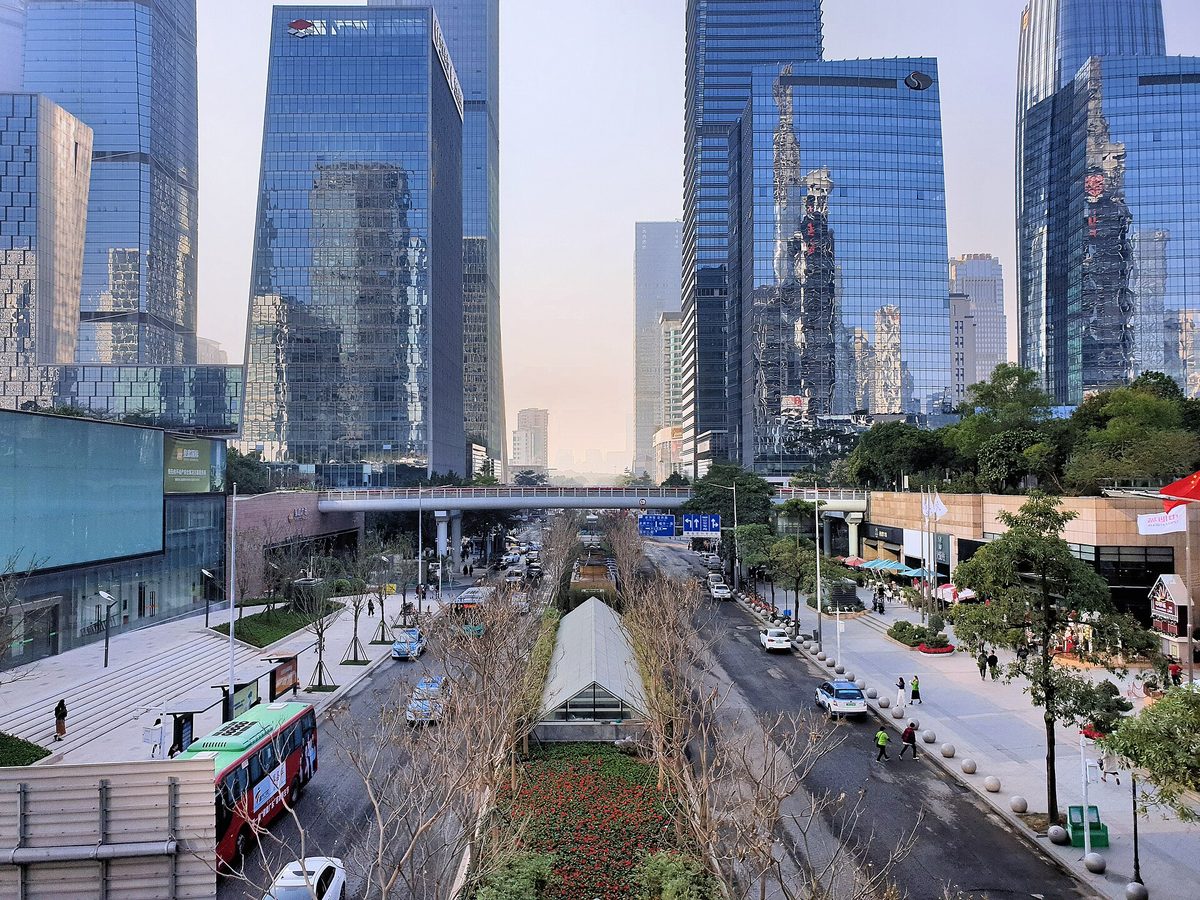
President Donald Trump, Chinese President Xi Jinping and Russian President Vladimir Putin held the first-ever trilateral meeting of the leaders of the United States, China and Russia on Thursday, gathering in Shenzhen, China, on the sidelines of the Asia-Pacific Economic Cooperation forum to discuss nuclear weapons, the wars in Ukraine and Iran, trade tensions and artificial intelligence. The three-way talks lasted about 80 minutes and produced a joint declaration the leaders called a "peace declaration."
The three-way session lasted just 80 minutes, including 10 minutes of opening remarks to the media, and it began about two hours later than planned. Trump opened the meeting by attacking what he called the "old school" of American diplomacy. "No problems were ever solved under the old school refusing to talk about them," he said in his opening remarks. "No peace was ever forged by declining opportunities for engagement and speech," Trump added.
Before the three-way session, Trump held separate meetings with each man. He greeted Putin warmly as the Russian leader entered the meeting room, joking, "Who is he?" and adding, "He's my friend." He also sat down separately with Xi, with whom he discussed trade relations and fentanyl exports. For Putin, the day marked the first time he has been welcomed back onto the world stage since Russia's full-scale invasion of Ukraine in 2022 turned him into an international pariah in the West.
The four-point joint declaration released after the talks pledged more "dialogue on reducing nuclear risks and preventing the proliferation of nuclear weapons." It also committed the three countries to reforming the United Nations so it can respond more effectively to global challenges, and promised to increase the production and supply of refined petroleum products. It also condemned the International Criminal Court, saying the court and "other similar institutions" must not abuse their jurisdiction. The declaration was released by China and Russia and was not immediately confirmed by the White House.
Notably, Ukraine was not explicitly mentioned in the joint statement, even though the war there was one of the subjects the leaders discussed. Trump framed the summit as primarily about nuclear disarmament, though he also floated ending the wars in Iran and Ukraine and collaborating to undermine what he called "rogue globalist organizations" such as the ICC in order to "protect our nations' sovereignty." An administration official described the nuclear talks ahead of time as a preliminary step rather than something likely to produce an immediate pact.
Nuclear arms dominated the public remarks. In an interview with Fox News on Thursday morning, Trump said the United States has 4,000 nuclear weapons, Russia has 3,800, and China now has 400 or 500 but is "going hot and heavy" on building more. He said all three countries "only need about 10" nuclear bombs and that "you don't need 4,000." In his opening remarks, he told the other two leaders: "As the world’s three largest nuclear powers by far, the United States, Russia, and China are uniquely positioned to discuss how to reduce the number of nuclear weapons on Earth, and also to lessen the risk that those weapons will ever be used," Trump said.
Xi agreed in principle to Trump's disarmament push, saying that "nuclear weapons should be comprehensively banned and thoroughly destroyed, building a nuclear-free world." Earlier, according to Chinese state media, Xi described nuclear weapons as "the sword of Damocles hanging over humanity." Putin, whom the ICC has indicted for alleged war crimes in Ukraine, described the trio as guardians of world peace in his own opening remarks. "We hold joint responsibility for maintaining international peace," Putin told Trump and Xi. "Our task [is] to preserve and strengthen the system of international law," he said.
The warm tone did not erase the tensions in the room. Chinese officials banned a Bloomberg reporter in the traveling White House press pool from the trilateral session after she shouted a question at Trump during his meeting with Xi about ousted Nvidia chief executive Jensen Huang's alleged affair with a Chinese technology executive whom U.S. intelligence agencies suspect of being a corporate spy. White House officials tried but failed to reverse the ban, with Chinese officials calling her conduct "extremely rude," according to pool dispatches. Trump later told Fox News he "might have" raised the Huang matter "just briefly" with Xi during a welcome dinner the night before.
A separate APEC statement released as the talks concluded was limited to pledges and aspirations about cooperating on trade, technology innovation and economic growth. It appeared to refer obliquely to the Nvidia scandal. "We recognize the importance of respecting intellectual property rights in the development of digital and emerging technologies," the statement said. The White House has restricted exports of Nvidia's powerful AI chips to China as the two countries compete for dominance in artificial intelligence.
The meeting drew comparisons, particularly in Russia and Ukraine, to the 1945 Yalta Conference, when the United States, Britain and the Soviet Union helped shape the post-World War II order. "We really don’t want this to turn into ‘Yalta 2, 3, 4,’ with a redistribution of influence," Ukrainian President Volodymyr Zelenskyy told reporters in October. Political scientists and former officials said the gathering was significant because it was the first time the world's largest military and nuclear powers had met face to face amid shifting international power dynamics, simmering conflicts and big business deal-making. "The summit is more than symbolic," said Henry Huiyao Wang, a former senior adviser to China's government. "Face-to-face dialogue of this kind can help calm down a lot of the world's conflicts."
What happens next is less clear than what happened in the room. The three leaders pledged to keep talking about nuclear risks, but the declaration set out intentions rather than timetables, numerical limits or enforcement mechanisms, and there was no announced date for a follow-up meeting. The wars in Ukraine and Iran, the two conflicts Trump said he wanted to discuss, produced no visible movement. For now, the summit stands as a striking image — the three most powerful leaders in the world seated around one table — with the hard bargaining still to come.
Why it matters: This was the first time the leaders of the three largest nuclear powers have ever sat down together, and that alone makes it historic — but the substance was deliberately thin. A declaration that pledges dialogue on nuclear risks, more oil and U.N. reform, without timetables or numbers, is a statement of intent, not a deal. The real test is whether the nuclear dialogue Trump wants actually starts, and whether the absence of any mention of Ukraine means the three leaders are content to leave that war to separate channels. The summit also showed the limits of personal diplomacy: warmth between the leaders did not produce a breakthrough on either war, and the side dramas — a banned reporter, the Nvidia scandal — underlined how much of the U.S.-China rivalry sits outside the leaders' control.
Reporting: USA Today · New York Post
Spot an error? Orbit News corrects articles promptly and notes the correction in the article. See our Editorial Policy, or flag an error by messaging us on Facebook, X, or Instagram.
Related from Orbit News
Hegseth Signs Military Cooperation Deal With Venezuela, Calling It a 'Compliant Security Partner'
Politics · Nov 19, 2026
House Democrats Nominate Hakeem Jeffries for Speaker in 251-11 Vote, Putting Him on the Brink of History
Politics · Nov 19, 2026