Politics
Sanders Unveils Four-Year Medicare for All Plan as He Prepares to Retake the Senate Health Chair
Sen. Bernie Sanders laid out a four-year path to universal health care on Wednesday, starting with lowering the Medicare eligibility age to 55, as he prepares to chair the Senate health committee when Democrats take control in January.
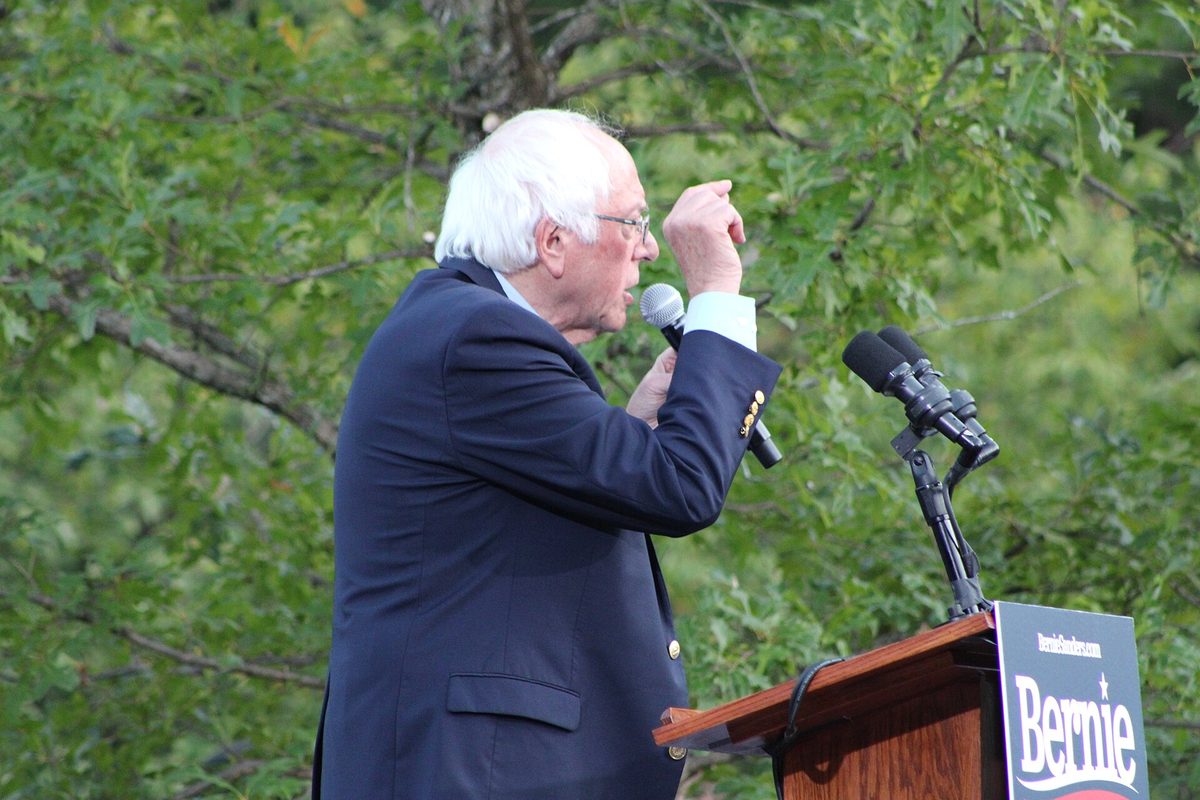
Sen. Bernie Sanders is preparing to use his return atop a powerful Senate committee to push for sweeping changes to the nation's healthcare system, setting up an early test of how far Democrats are willing to go in embracing progressive priorities. His agenda, first provided to The Associated Press, lays out the legislative implementation for proposals that he and progressive candidates championed on the campaign trail this cycle.
Sanders, a Vermont independent who caucuses with Democrats, is currently the ranking member on the Senate Health, Education, Labor and Pensions Committee and is expected to become its chairman when Democrats take control of the Senate in January. Democrats will have a 56-44 Senate majority when the new Congress begins in January, marking the party's largest advantage in the chamber in 16 years.
At the center is Sanders' longstanding push for Medicare for All, a universal healthcare system that would be implemented over four years. The first year would lower the Medicare eligibility age from 65 to 55, expand coverage to include dental, vision and hearing care, and guarantee healthcare to children through age 18. In the second year, the eligibility age would fall to 45, followed by 35 in the third year, before extending coverage to everyone in the fourth year.
"This is no longer a utopian vision. This is where the American people are," Sanders said in an interview with the AP. "I think the election, in my opinion, was a crying out for fundamental change in the way the government does business and the absolute need to protect a struggling working class," he said. "I think this is a time to bring about very significant changes in policies so that we can actually improve the lives of working families."
Sanders has long championed a single-payer national health insurance program that would replace most private insurance with a federally administered system providing universal coverage. "Transforming a system which is 18% of the GDP of America, you don't do that overnight," Sanders said of the transitional period. His proposal for the new Congress lays out a four-year transition to that system, beginning with expanding Medicare eligibility and benefits.
The costs are likely to lead to massive debate between the two major political parties, as the national deficit stands at $2 trillion, or 6.2% of gross domestic product. The Congressional Budget Office estimated in 2022 that lowering the age of Medicare eligibility to 60 would increase federal budget deficits by $155 billion over the 2026–2031 period. Sanders' prior proposals to pay for the program shift healthcare financing away from private insurance premiums and toward payroll contributions, including a combination of employer and household premiums, higher taxes on the rich and new taxes on Wall Street and large firms.
Sanders also argued that Democrats could pass the first stage of the transition through budget reconciliation, a process that allows certain tax and spending legislation to advance through the 100-member Senate with a simple majority rather than the 60 votes typically required to overcome a filibuster. Along with pushing for greater access to primary care, Sanders says Democrats will push for lower prescription drug costs.
He sees signs of that shift among Democratic leaders. House Democratic leader Hakeem Jeffries of New York has pledged to get to work "right out of the gate" to restore Affordable Care Act subsidies and reverse Medicaid cuts enacted under Republicans. Jeffries said Tuesday that Democrats know that simply returning to the status quo "is not acceptable" and they are preparing ways to further expand healthcare access by lowering the Medicare eligibility age, adding access to vision, hearing and dental coverage, and ensuring all kids are covered. "Jeffries basically supported the first year of Medicare for All," Sanders said.
But anything that passes Congress the next two years will still need to be signed by President Donald Trump to take effect. Sanders rejected the notion that Trump, a Republican, wouldn't sign something like Medicare for All into law. "Donald Trump may be crazy, but he is not stupid. He's a smart guy, and he's a very good politician," Sanders said.
Sanders has previously balanced his progressive ambitions with the realities of governing. During his first stint chairing the HELP Committee from 2023 to 2025, he worked with Republicans on legislation to lower prescription drug costs and expand access to primary care. He also chaired the Senate Budget Committee from 2021 to 2023, helping advance major Democratic spending priorities. But now, just weeks after the midterms, Sanders is laying out an ambitious agenda that he argues reflects a shift not in his own positions but in voters' demands for sweeping changes to the healthcare system.
Sanders is also preparing to use the committee to advance a broader economic agenda that includes raising the federal minimum wage from $7.25 an hour to $20 an hour and promoting the PRO Act, which would strengthen workers' rights to unionize. The proposed wage increase would nearly triple the federal minimum, which has remained unchanged since 2009, and Sanders proposes to implement it over a four-year transition period. His agenda also calls for sweeping restrictions on artificial intelligence, including a moratorium on new AI data centers, a pause in advanced AI development and a ban on artificial superintelligence.
Why it matters: Sanders is testing whether the Democrats' midterm victory was a mandate for transformation or just a rejection of Trump. A four-year Medicare for All phase-in, a $20 minimum wage and a moratorium on AI data centers is the most ambitious agenda any incoming committee chair has laid out in years — and it lands in a Congress where every bill still needs Donald Trump's signature. The reconciliation gambit for year one is the tell: Sanders knows he cannot get 60 votes, so he is betting the first step can pass with 51. The fight to watch is not with Republicans but inside the Democratic Party, where Jeffries' embrace of the first year will be measured against the cost, the CBO numbers and the party's appetite for a fight it could lose.
Reporting: U.S. Senate · Finwire
Spot an error? Orbit News corrects articles promptly and notes the correction in the article. See our Editorial Policy, or flag an error by messaging us on Facebook, X, or Instagram.
Related from Orbit News

Trump, Xi and Putin Hold First-Ever Trilateral Summit in Shenzhen, Pledging Nuclear Talks and More Oil
Politics · Nov 19, 2026
Hegseth Signs Military Cooperation Deal With Venezuela, Calling It a 'Compliant Security Partner'
Politics · Nov 19, 2026