Politics
Hegseth Signs Military Cooperation Deal With Venezuela, Calling It a 'Compliant Security Partner'
Defense Secretary Pete Hegseth announced a new U.S.-Venezuela military agreement in Caracas on Wednesday, ten months after American forces captured Nicolás Maduro, covering joint training, intelligence sharing and defense equipment.
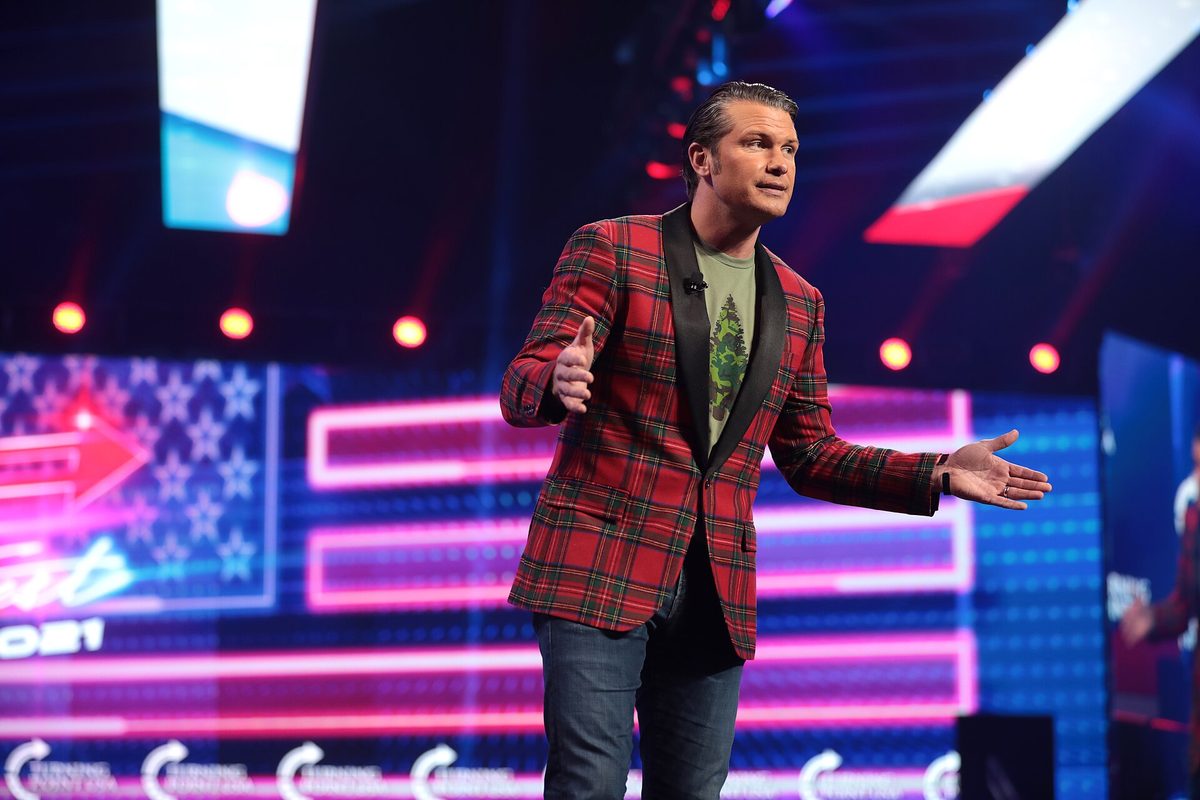
The United States has signed a new agreement to reestablish military ties with Venezuela more than 10 months after toppling its leader in a military raid, Defense Secretary Pete Hegseth announced during his first trip to the South American nation on Wednesday. The deal, which Hegseth described as "historic," would allow American and Venezuelan forces to train together and share intelligence, defense equipment and other capabilities.
"Venezuela has gone from our most aggressive regional threat to a compliant security partner," Hegseth said outside the U.S. Embassy in Caracas. He insisted that the partnership would not be "cosmetic" and would require defense and security reforms in Venezuela to modernize its military and eliminate "persistent threats" to both nations.
Hegseth appeared to have signed the agreement earlier in the day at the Venezuelan presidential palace with Defense Minister Gustavo Gonzalez Lopez, according to footage broadcast on state television. He then met interim President Delcy Rodriguez at the Miraflores presidential palace, where the two leaders discussed the arrangement in a televised meeting. Rodriguez said their renewed "technical-military cooperation" is meant to confront common threats and make the region safer.
"The weight of this moment does not escape me," Hegseth said outside the embassy. "Just one year ago, my presence here, our presence here would have been deemed impossible." Rodriguez said, "We have turned very difficult and very harsh moments for our people … into an extraordinary space for cooperation and the mutual benefit of our countries."
The timeline and scope of the deal remain unclear. The Defense Department has not responded to questions about the agreement or Hegseth's trip, nor did it provide a daily schedule for the secretary on the day of his visit. No text of the agreement has been made public, and neither side has said when joint training or intelligence sharing would begin.
Both Hegseth and Rodriguez underscored their countries' remarkable turn in relations since the United States captured Venezuela's authoritarian leader Nicolas Maduro on January 3. Since then, the United States has been working with the acting Venezuelan government on the country's democratic transition and political reconciliation. Rodriguez has met just about every demand from Washington, including releasing hundreds of political prisoners and making it easier for U.S. companies to invest in the country.
In the televised meeting, Hegseth said the United States looks forward to deepening defense cooperation "to ensure the Venezuelan people are not threatened by foreign actors or narco-terrorists or criminals and that they are safe and secure inside sovereign borders." Rodriguez said she welcomed what she saw as a restart of military cooperation to face "common threats." "The renewed opportunity to strengthen the training of our Bolivarian National Armed Force, enhance its operational equipment and facilitate access to new technologies is highly beneficial for our military personnel," Rodriguez said.
Wednesday's military deal is the latest effort by the Trump administration to bolster security cooperation with Latin American countries with the aim of combating what it calls "designated terrorist organizations" in the region. Hegseth said the partnership would herald a significant ramp-up in joint action against drug trafficking groups, and the agreement was presented as part of a wider American push to deepen military ties across the region.
Hegseth traveled to Colombia later on Wednesday and was expected to discuss security ties and deliver military equipment, according to the Colombian defense minister. That visit comes amid a New York Times report that Colombian President Abelardo de la Espriella this week rejected a U.S. plan for joint anti-crime operations on Colombian soil. A source from Colombia's Ministry of Defense told CNN that while the government supports increased military cooperation and intelligence sharing to combat drug cartels and terrorist organizations, it cannot greenlight operations involving foreign forces on the ground, as this requires legislative authorization.
Hegseth is also expected to travel to Ecuador and Honduras as part of a tour of Latin America. The trip is his first extended swing through the region since the January operation in Venezuela, and it comes as the administration tries to lock in security partnerships with governments across the hemisphere while the war in Iran continues to dominate attention in Washington.
For now, the Venezuela agreement raises as many questions as it answers. The Pentagon has not explained what American equipment Caracas would receive, what intelligence would be shared, or how the partnership would be overseen. What is clear is the political signal: ten months after U.S. special forces removed Maduro, Washington is treating his successor's government not as an adversary to be isolated but as a partner to be armed, trained and brought into the fold.
Why it matters: This deal is a measure of how completely the U.S.-Venezuela relationship has been remade in ten months. In January, American forces captured Maduro in a raid on Caracas; on Wednesday, the U.S. defense secretary was signing a cooperation agreement in the presidential palace and calling the country a compliant partner. The speed of that reversal is the story, and it is also the risk: the agreement has no published text, no timeline and no public detail on what the United States is giving a government whose democratic transition is still unfinished. The Colombia stop on the same trip showed the limits of the approach — Bogota wants cooperation, not foreign troops on its soil. Whether the Venezuela deal becomes a model for the region or a cautionary tale will depend on details the Pentagon has not yet shared.
Spot an error? Orbit News corrects articles promptly and notes the correction in the article. See our Editorial Policy, or flag an error by messaging us on Facebook, X, or Instagram.
Related from Orbit News
Trump, Xi and Putin Hold First-Ever Trilateral Summit in Shenzhen, Pledging Nuclear Talks and More Oil
Politics · Nov 19, 2026
House Democrats Nominate Hakeem Jeffries for Speaker in 251-11 Vote, Putting Him on the Brink of History
Politics · Nov 19, 2026