Politics
House Democrats Nominate Hakeem Jeffries for Speaker in 251-11 Vote, Putting Him on the Brink of History
House Democrats overwhelmingly chose Hakeem Jeffries as their nominee for speaker on Wednesday, putting the Brooklyn lawmaker in line to become the first Black speaker in U.S. history when the new Congress convenes on January 3.
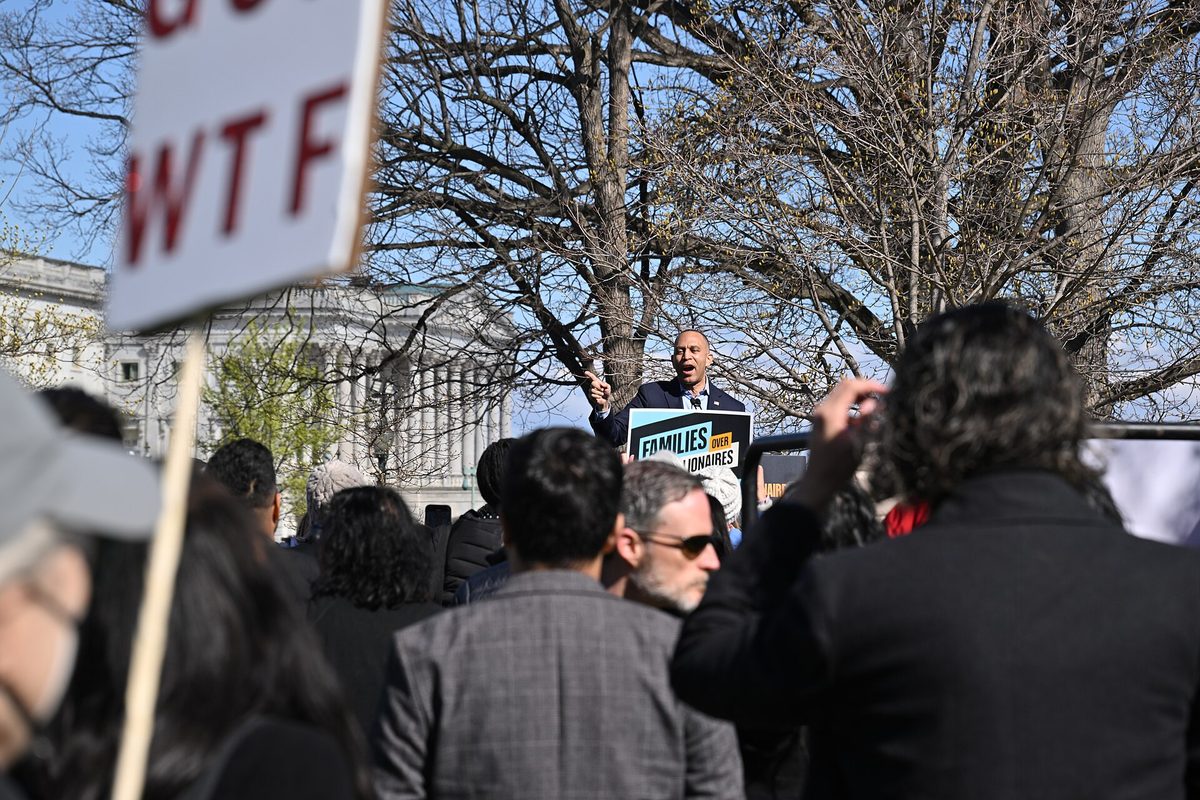
House Democrats overwhelmingly nominated Hakeem Jeffries on Wednesday to be speaker of the House, as he brushed past most skeptics and moved to the brink of making history as the nation's first Black lawmaker with the gavel. Jeffries secured the nod during closed-door voting, 251-11, ahead of a full House vote when the new Congress convenes in January.
The tally, with 262 votes cast, included those elected to the new Congress and the House delegates. Jeffries, of New York, ran unopposed, but 11 members voted against him on the secret ballot, including a group of progressive newcomers who said in a statement there is "still work to be done" to ensure their priorities. He will need a simple majority of 218 votes from the whole House to be elected speaker when the new Congress convenes on Jan. 3, 2027.
Afterward, Jeffries vowed to work hard, through every corner of the Democratic caucus, and said each generation has the opportunity to "show up, speak up, stand up, and help the country march toward a more perfect union." "Our job is to fight MAGA extremism, not each other," he said, "and to get big things done for the American people."
Jeffries centered his remarks after the vote on cost-of-living issues, saying Democrats would fight to lower the cost of groceries, gas, housing and health care. "Our message to the American people who are struggling in this failed economy is a simple one. We hear you, we see you, we feel you, and House Democrats are committed to making life better for you," he said. In the face of what he described as "unprecedented corruption," Jeffries said Democrats would work to hold officials accountable. "Not for partisan reasons but for patriotic ones, because the American people deserve better," he said.
Jeffries is part of a leadership trio with Rep. Katherine Clark of Massachusetts and Rep. Pete Aguilar of California, who would all be historic firsts — Clark as the first female majority leader and Aguilar as the first Latino to serve as the majority whip. They also ran unopposed and were elected, as was Rep. Ted Lieu of California, as chairman of the House Democratic caucus. The three have led House Democrats in the minority since 2023 and will soon serve as leaders in the majority for the first time.
The dissent came from the party's left flank. Among those who voted against Jeffries were a number of newly elected members, some who won with the backing of the Democratic Socialists of America. In a statement after the vote, they said they have engaged in "good-faith conversations" with Jeffries to secure commitments on their policy priorities. "While we have seen meaningful progress, there is still work to be done to ensure that the direction our party takes this coming Congress reflects what our constituents are demanding of leadership. Those conversations are ongoing. As such, our vote in caucus today was no."
Among those who signed the statement were members-elect Darializa Avila Chevalier and Claire Valdez, both from New York; New Jersey's Adam Hamawy; Frederick Haynes of Texas; Colorado's Melat Kiros; Donavan McKinney of Michigan and Chris Rabb of Pennsylvania. Those opposing Jeffries signaled that conversations are ongoing as they push to deliver Medicare for All, stop harsh actions from U.S. Immigration and Customs Enforcement, get money out of politics and end Israel's war in Gaza.
Jeffries was nominated for House speaker by five Democrats essentially representing all aspects of the caucus, including Rep. James Clyburn, the legendary lawmaker from South Carolina. "This is a historic moment for our nation," Clyburn told the room, according to his private remarks that invoked voters' outpouring for a change in the country. Rep. Rosa DeLauro of Connecticut discounted the naysayers and said: "It is a day in the history of this nation that cannot be diminished in any way. I could never be more proud to be a Democrat than I am today."
Rep. Kweisi Mfume of Maryland, who first came to Congress in 1987 with the late civil rights leader Rep. John Lewis of Georgia, said: "It just means so much in terms of moving the ball forward. Somebody’s got to break the glass, and in this instance that’s exactly what has happened." Jeffries has led House Democrats since 2023, when he succeeded Nancy Pelosi and became the first Black lawmaker to lead either party in Congress, and he led the party to one of the biggest incoming House majorities in decades.
The Senate picture is less settled. Minority Leader Chuck Schumer of New York faces a challenge from Sen. Chris Van Hollen of Maryland in leadership elections set for early December, and a handful of current and incoming members have declined to back Schumer for the job. Schumer insisted Wednesday he had the votes: "I will be reelected as majority leader." Meanwhile, House Republicans selected Rep. Jim Jordan of Ohio to be the conference's minority leader, and Senate Republicans tapped South Dakota's John Thune for a second term as party leader.
For Jeffries, the hard part is now the floor vote. With Democrats poised to control at least 257 seats, he has room to weather some dissent, but the 11 no votes on Wednesday were a reminder that the progressive wing expects something in return for its support. The formal vote on Jan. 3 will show whether the caucus unity on display Wednesday holds when the whole House votes.
Why it matters: Jeffries' nomination is historic on its face — he would be the first Black speaker — but the politics underneath matter more. He won 251 of 262 votes while running unopposed, which means the 11 no votes were a deliberate message from incoming progressives, not a protest against a rival. They want Medicare for All, curbs on ICE and an end to weapons transfers to Israel, and they used the only leverage they had: a secret ballot before the gavel is in hand. Jeffries now has to keep that wing inside the tent while governing with a large but fractious majority, and the contrast with the Senate — where Schumer faces a real challenge from Van Hollen — shows the leadership fights are not over. The January floor vote is a formality only if Jeffries keeps his promises to both wings.
Spot an error? Orbit News corrects articles promptly and notes the correction in the article. See our Editorial Policy, or flag an error by messaging us on Facebook, X, or Instagram.
Related from Orbit News

Trump, Xi and Putin Hold First-Ever Trilateral Summit in Shenzhen, Pledging Nuclear Talks and More Oil
Politics · Nov 19, 2026
Hegseth Signs Military Cooperation Deal With Venezuela, Calling It a 'Compliant Security Partner'
Politics · Nov 19, 2026