World
Russian Court Jails Rights Lawyer Maria Bontsler for 12 Years on Treason Charge
Maria Bontsler, 66, was sentenced to 12 years in prison for treason in a closed trial in Kaliningrad. Her lawyers say the case was based on Telegram correspondence that contained nothing secret.
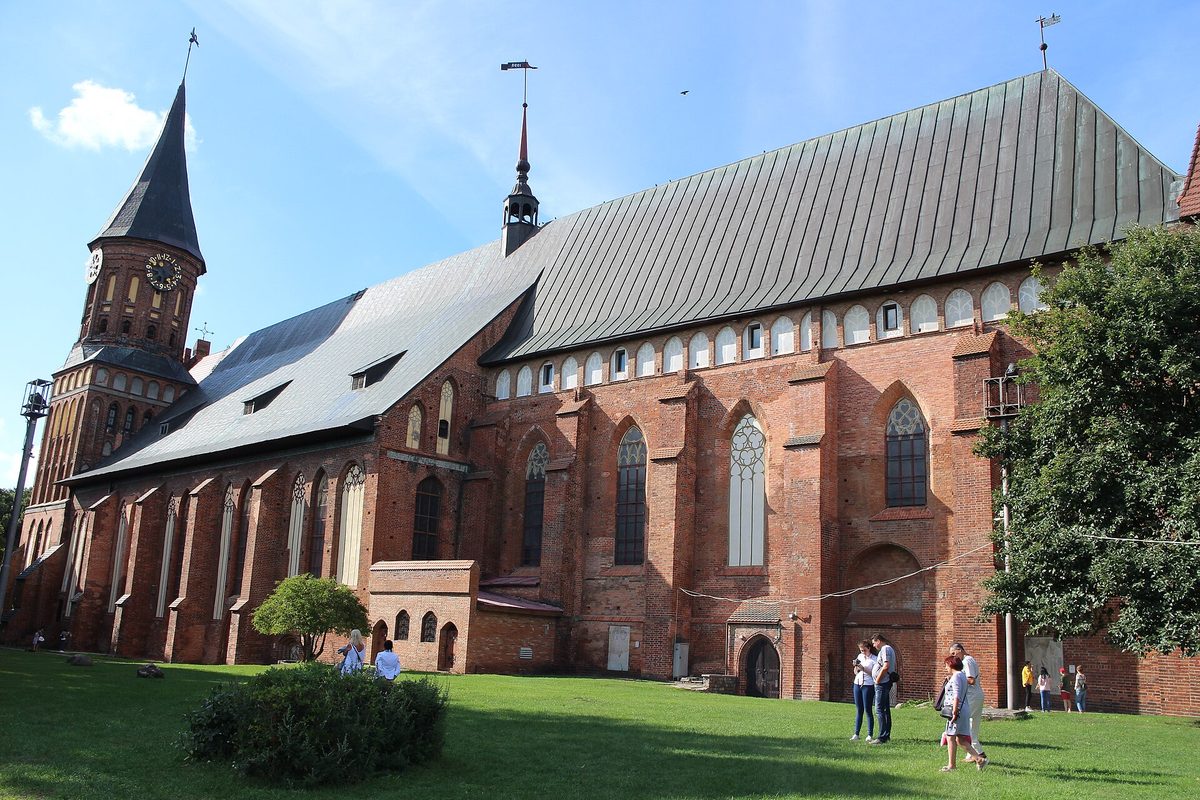
A court in Russia's Baltic exclave of Kaliningrad sentenced human rights lawyer Maria Bontsler to 12 years in prison on Thursday after convicting her of treason, in a case that her lawyers and international observers say was brought because of her work defending people accused in politically motivated cases. Prosecutors had sought 15 years. The sentence, handed down behind closed doors, is one of the longest ever imposed on a lawyer in Russia for treason.
Bontsler, 66, was accused of passing information about security officers in Kaliningrad to Ukraine from 2024, along with information about criminal cases of interest to Kyiv, according to the court. She was detained by the Federal Security Service, the FSB, in May 2025, initially on a charge of confidential cooperation with a foreign state, which carries up to eight years in prison. The charge was reclassified as treason in March 2026, raising the maximum sentence to 20 years. The court's statement on Telegram did not name her.
The trial was held behind closed doors, and Bontsler and her lawyers were barred from attending except for her closing statement, according to the International Commission of Jurists, which has followed the case. Her lawyers say none of the information cited in the case was secret, and the commission said the treason charge was not based on new evidence but rested on the same Telegram correspondence that had supported the original charge. The commission said she is being prosecuted for legitimate professional activities and called for her immediate release and for the charges to be dropped.
Bontsler's health has been a central concern throughout the case. She has been in ill health in detention, suffering from chronic hypertension and duodenal ulcers, and according to the human rights group OVD-Info she nearly died in custody in June after being given uncoordinated medications. She was denied essential medication for about a month, and she suffered a hypertensive crisis during a hearing. In addition to the 12-year prison term, the court imposed a further year of restrictions on her activities after her release.
Bontsler is one of the few lawyers in Kaliningrad who takes on politically motivated cases, including defending critics of the war in Ukraine. She founded and for many years led the Kaliningrad branch of the Committee of Soldiers' Mothers, a group that defends the rights of conscripts and soldiers. In 2022 she was fined for discrediting the army after using the word war in a court hearing, at a time when Russian law effectively banned describing the invasion of Ukraine as a war.
The case is part of a wider crackdown on lawyers, journalists and activists in Russia since the full-scale invasion of Ukraine in February 2022. In the years since, Russia has passed laws banning the discrediting of the armed forces and spreading what the authorities call fake news about the military, and a growing number of lawyers have themselves been prosecuted for their work.
Bontsler's case is unusual even by those standards: a treason charge against a defense lawyer, tried in secret, on the basis of correspondence her lawyers say contained nothing secret.
The 12-year term, imposed on a 66-year-old lawyer in poor health, means that if the sentence stands she is likely to spend the rest of her life in prison. For the small community of human rights lawyers still working in Russia, the message is unmistakable: defending the accused can itself be treated as a crime against the state.
Why it matters: Bontsler's sentence matters because it is aimed not at a spy or a saboteur but at a lawyer doing what lawyers do — and because it was handed down in secret, on evidence her lawyers say was never secret at all. The treason charge, upgraded from a lesser offense on the same correspondence, looks less like a prosecution than a warning to the handful of lawyers in Russia still willing to defend critics of the war: take the case and you may share your client's fate. For a 66-year-old in poor health, twelve years is effectively a life sentence, and the case will now stand as a test of whether Russia's courts have any room left for the idea that a defense is a right, not a crime.
Spot an error? Orbit News corrects articles promptly and notes the correction in the article. See our Editorial Policy, or flag an error by messaging us on Facebook, X, or Instagram.
Related from Orbit News

Iran Claims It Hit a U.S. Radar in Bahrain as a Tanker Strikes a Mine in Hormuz
World · Nov 13, 2026
Europe Gets a Seat at the Next Ukraine Peace Talks as Envoys Push a Record Prisoner Swap
World · Nov 13, 2026