World
Europe Gets a Seat at the Next Ukraine Peace Talks as Envoys Push a Record Prisoner Swap
U.S. envoys Steve Witkoff and Jared Kushner shuttled from Moscow to Dublin this week, and both sides agreed to bring European partners into the next round and to work toward the war's largest prisoner exchange.
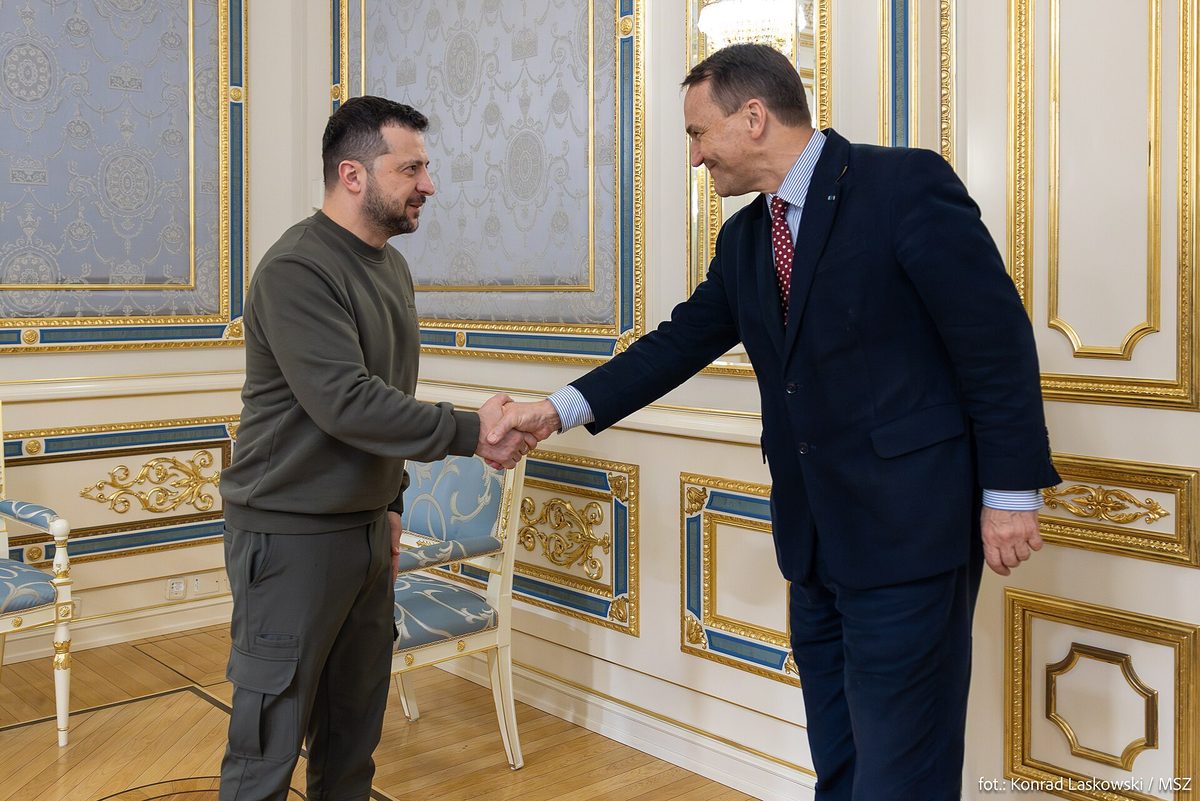
Europe will have a seat at the next round of Ukraine peace talks, and the two sides are working toward what could be the largest prisoner exchange of the war, U.S. envoy Jared Kushner said on Friday, after a week of shuttle diplomacy that took American negotiators from Abu Dhabi to Moscow and then to Dublin. The announcements marked the most tangible progress in months toward ending a war that has now stretched toward four years.
The talks began earlier this week in Abu Dhabi, where Russian and Ukrainian officials met directly for the first time in nine months. On Thursday, U.S. envoys Steve Witkoff and Jared Kushner flew to Moscow, where they met President Vladimir Putin at the Kremlin, and then to Dublin, where they met Ukrainian President Volodymyr Zelenskyy at Casement Aerodrome, the Irish air base at Baldonnel. The two sides have now agreed to expand the next round of negotiations to include European partners, Kushner wrote on social media after the Dublin meeting, adding that both sides are also working toward what would be the largest prisoner exchange of the war, potentially reuniting thousands of people with their families.
Zelenskyy confirmed the change on Friday, telling reporters that at the next meeting, Europe will be on the negotiating team and will have a voice. He said he hoped the war would end, and he called the proposed prisoner exchange a real result. The swap, if it goes ahead, would be the largest of the war, surpassing the exchanges that have already reunited thousands of prisoners and civilians on both sides.
Putin, for his part, told the American envoys that territorial issues will always be a bone of contention, according to a summary of the meeting provided by his aide, Yuri Ushakov. He also told them that Europe must decide whether it wants peace or war, a formulation that the Kremlin repeated on Friday, when spokesman Dmitry Peskov said Putin has never refused to engage with the Europeans and that the next round of talks could happen in the foreseeable future. Russian Foreign Minister Sergey Lavrov was more skeptical, criticizing European involvement as not a promising approach.
The European summit in Dublin on Thursday, where about 50 European leaders gathered for a meeting of the European Political Community, provided the backdrop for the announcement. Canadian Prime Minister Mark Carney was among those in attendance. As of Friday, no European representative had been publicly assigned to the talks, according to CNN, and it was not clear whether the next round would take place in Abu Dhabi or elsewhere.
Witkoff, speaking to CNN at Moscow's Vnukovo Airport after the Kremlin meeting, said he thought progress was made, that the trilateral process had been restarted, and that a new meeting had been set. He did not say when or where. The American envoys have been trying to build on the Abu Dhabi talks, which were the first direct contact between the two sides in nine months, and to keep the momentum going before the fighting season turns to winter.
The fighting, meanwhile, has not stopped. At least 10 people were killed and 48 injured in Ukraine on Thursday and into Friday, according to regional officials cited by CNN, and Russia said it downed nearly 1,198 Ukrainian drones overnight into Friday. At least 8 people were killed in Russia, according to a CNN tally. Russia holds about a fifth of Ukrainian territory, and Kyiv has refused to give up the Donbas, the eastern region that Moscow has demanded in full.
Putin and Trump are expected to continue their discussions at the APEC summit in China, which both leaders are scheduled to attend. Ukraine's forces have also reported repeated disruptions to Starshield, the military-grade version of the Starlink satellite system, though SpaceX told Axios that a report of new restrictions on the system was false. For now, the talks have produced two concrete commitments, a European seat at the table and a prisoner exchange in the works, and the next test will be whether either survives contact with the battlefield.
Why it matters: The week's diplomacy matters because it is the first time in months that the peace process has produced anything concrete, and because both commitments point in the same direction: a wider table and a human deal. Bringing Europe in answers Kyiv's longstanding demand that the continent most affected by the war have a voice in ending it, and a prisoner exchange on this scale would be the war's largest humanitarian gesture. But the obstacles are unchanged — Russia holds a fifth of Ukraine, Kyiv will not cede the Donbas, and the fighting that killed at least 18 people in two days has not paused for the talks. Whether the next round produces a ceasefire or just another meeting will depend on whether either side is willing to pay the territorial price peace would require.
Spot an error? Orbit News corrects articles promptly and notes the correction in the article. See our Editorial Policy, or flag an error by messaging us on Facebook, X, or Instagram.