World
Pakistan Says Its Forces Killed 74 Militants in Raids Along the Afghan Border
Pakistan's military said 74 militants were killed in intelligence-based operations in Balochistan and Khyber Pakhtunkhwa, including 31 in the Kurram area of Quetta district and 43 in the northwest over the past 48 hours.
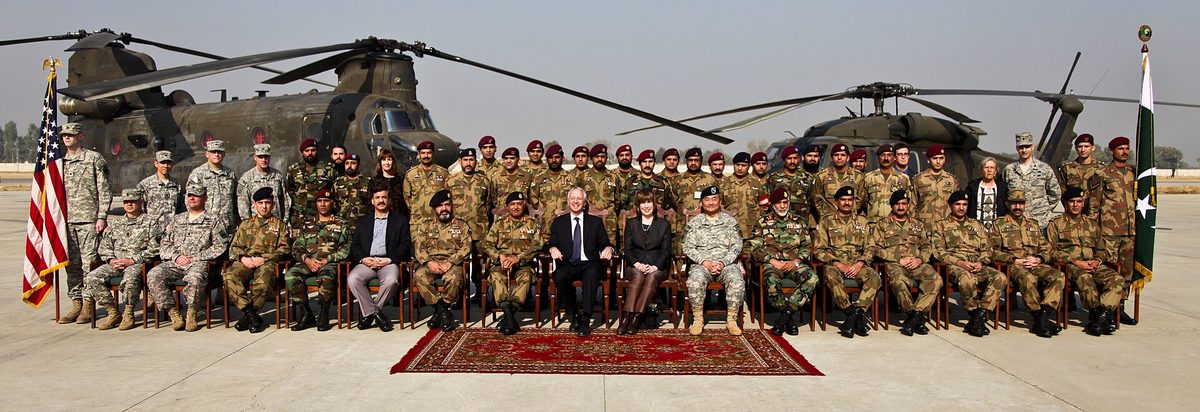
Pakistan's military said on Friday that its forces killed 74 militants in intelligence-based raids in Balochistan and Khyber Pakhtunkhwa, the two provinces along the Afghan border where most of the country's violence is concentrated, in the latest escalation of a campaign that has been running for months. The military said the operations targeted fighters it describes as backed by India and Afghanistan, a claim both countries deny.
The military's media wing, Inter-Services Public Relations, said in a statement on Friday that 31 militants were killed in the Kurram area of Quetta district in Balochistan since November 3, in operations against two groups the military calls Fitna al-Khawarij and Fitna al-Hindustan. A further 43 were killed in Khyber Pakhtunkhwa over the past 48 hours, 35 in Mir Ali and 8 in Orakzai, according to The News. The two figures add up to 74, the total the military reported.
Weapons, ammunition and explosives were recovered during the operations, including homemade explosives and improvised explosive devices, the statement said, and sanitisation and clearance operations were continuing in the areas where the raids took place. The campaign is being conducted under the banner of Azm-e-Istehkam, the military's ongoing counterterrorism operation, and the statement said the operations would continue until the threat was eliminated.
The military described the fighters it killed as India-backed, and it said the operations were aimed at what it calls externally sponsored terrorist elements seeking to undermine Pakistan's security. India has repeatedly denied backing militants in Pakistan, and Afghanistan has denied the same charge. The military uses the term Khawarij for fighters it says are backed by Afghanistan, and Fitna al-Hindustan for those it says are backed by India.
The two groups named in the statement are at the center of Pakistan's security problems. The Balochistan Liberation Army, which seeks independence for Balochistan, has carried out a series of attacks in the province. The Pakistan Taliban, known as the TTP, is based in Khyber Pakhtunkhwa and is allied with the Afghan Taliban, which has ruled Afghanistan since 2021.
President Asif Ali Zardari praised the operations in a statement on Friday, saying that operations must continue against externally sponsored terrorist elements seeking to undermine Pakistan's security. The military said the raids were intelligence-based, meaning they were launched on the basis of information gathered about specific militant hideouts, rather than as part of a broader sweep.
The announcement came a day after an ambush in Kohat, in Khyber Pakhtunkhwa, in which at least 11 police officers were killed and 12 wounded, according to Al Jazeera. The attack was a reminder that the violence is not one-sided: while the military reports large numbers of militants killed in its raids, police and soldiers continue to be killed in ambushes and bombings across the two provinces.
The scale of the violence is stark. According to the Centre for Research and Security Studies, a think tank that tracks the conflict, Khyber Pakhtunkhwa and Balochistan accounted for about 96 percent of violence-related fatalities in Pakistan in the second quarter of 2026. Khyber Pakhtunkhwa recorded 475 deaths, more than 61 percent of the national total, and Balochistan 265, or 34 percent. The two provinces also accounted for most of the incidents: 151 in Khyber Pakhtunkhwa, or 57 percent, and 94 in Balochistan, or 35 percent. Violence in Pakistan has risen since the Afghan Taliban took power in 2021, and the military's campaign, which has killed hundreds of militants this year, has not yet reversed that trend.
Why it matters: The raids matter because they illustrate the scale of Pakistan's security problem and the limits of its response. Seventy-four militants killed in a week is a large number, but it is a number the military has reported before, and the violence has not abated: the two border provinces still account for almost all of the country's conflict deaths, police are still being ambushed, and the groups the military is fighting are still able to operate. The campaign's real test is not how many fighters it kills in a given week but whether it can break the cycle that has kept Balochistan and Khyber Pakhtunkhwa in a state of low-grade war for years — and whether the accusations against India and Afghanistan, which both deny, will escalate into a wider confrontation.
Reporting: The News · Barbados Gazette
Spot an error? Orbit News corrects articles promptly and notes the correction in the article. See our Editorial Policy, or flag an error by messaging us on Facebook, X, or Instagram.
Related from Orbit News
Iran Claims It Hit a U.S. Radar in Bahrain as a Tanker Strikes a Mine in Hormuz
World · Nov 13, 2026
Europe Gets a Seat at the Next Ukraine Peace Talks as Envoys Push a Record Prisoner Swap
World · Nov 13, 2026