Business
Anthropic Heads Into Its $1.3 Trillion Debut as AI Stocks Wobble
The maker of the Claude AI models is set to price its shares on Wednesday and start trading on the Nasdaq as ANT on Thursday, in what would be one of the largest listings in history — arriving in the middle of a brutal AI sell-off.
Six weeks of jitters among AI investors are now colliding with the market debut of one of the sector's biggest champions. Anthropic, the developer of the Claude AI models, is set to price its initial public offering on Wednesday before trading begins on the Nasdaq under the ticker ANT the following day, in a listing that will test whether public markets still believe in frontier AI after a brutal November.
The terms are set. Anthropic's amended S-1, filed on November 10, sets 825 million Class A shares at $70 to $78 each, to be listed on the Nasdaq Global Select Market as ANT. CNBC and Bloomberg report, citing people familiar with the matter, that pricing is planned for November 18 and first trades for November 19, though the filing itself does not set a date and all terms remain subject to change. Of the 825 million shares, Anthropic is selling about 801.4 million and existing holders about 23.65 million, including nearly 3.4 million each from the seven co-founders, with an option for underwriters to buy a further 123.75 million shares.
The range implies a fully diluted valuation of about $1.33 trillion at the $74 midpoint and about $1.4 trillion at the top, or up to about $1.02 trillion on shares outstanding, according to Reuters. That compares with $965 billion in May 2026 — and it is well below the $1.5 trillion to $2 trillion discussed earlier. What was touted only a couple of months ago as the world's biggest IPO, with a $2 trillion valuation, is now guided at least 30 percent lower than that, and it also looks well short of SpaceX's valuation as recently as June. The public offering would raise up to $64.4 billion, and a separate $26 billion private placement lifts the total to as much as $90.4 billion.
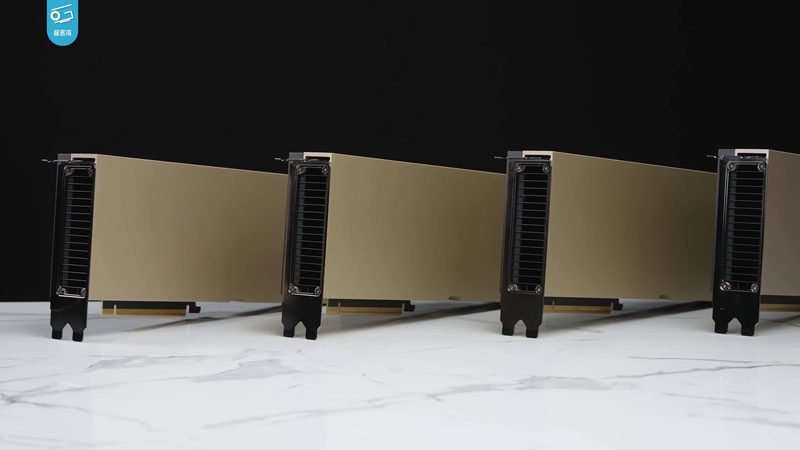
Demand, at least on paper, is not the problem. Bloomberg reports that orders already exceed the shares on offer several times over, and Anthropic is targeting about 20 percent of the offering for retail investors through Schwab, Fidelity, Robinhood, SoFi and E*Trade — roughly double the typical 5 to 10 percent. Seven of Anthropic's chip and cloud suppliers — AMD, Broadcom, Google, Micron, Microsoft, Nvidia and TSMC — have agreed to buy $26 billion of non-voting Class N stock at the IPO price, a commitment that has also prompted questions about circular financing, since several of the buyers sell Anthropic chips, memory or cloud capacity.
The business itself is growing at a pace rarely seen in public markets. Anthropic was founded in 2021 by researchers who left OpenAI over disagreements on governance and AI safety, and quarterly revenue has risen from zero at commercial launch in the first quarter of 2023 to $17.0 billion in the third quarter of 2026. Annual revenue grew from $41 million in 2023 to $386 million in 2024 and $4.6 billion in 2025, and the first nine months of 2026 brought in $33.2 billion, against $2.5 billion a year earlier. Customers generating at least $100,000 of trailing twelve-month revenue rose from more than 950 to more than 11,900 between September 2025 and September 2026, and net revenue retention was approximately 900 percent as of September 30.
But the filing also shows how expensive that growth is. The S-1 discloses approximately $895.4 billion of purchase and lease commitments, substantially all for compute and infrastructure, including at least $114.5 billion with Google, at least $110 billion with Amazon, at least $44.9 billion with Microsoft and about $161.2 billion of largely non-cancelable Broadcom equipment leases. About $69.8 billion falls due within 12 months of September 30. Credit rating firm Egan-Jones noted on Friday that the commitments total close to $900 billion through 2045, about half of them due by 2030, and that the figure is currently almost four times the company's combined cash position, trailing revenue and share sale proceeds.
The profit picture is complicated by the same spending. Third-quarter revenue of $16.96 billion was up 1,127 percent from a year earlier and 47 percent from the second quarter, but operating income of $974 million in the second quarter became an operating loss of $567 million in the third, which Anthropic attributes mainly to $5.0 billion of higher-cost short-term compute and $2.0 billion of non-cash donation-matching charges. The nine-month net loss of $104.0 billion includes a $94.3 billion non-cash fair-value charge on convertible notes, derivative liabilities and SAFEs. Adjusted operating income was $2.46 billion in the third quarter at a 15 percent margin, against 19 percent in the second.
The company's dependence on its biggest suppliers is another vulnerability. About 44 percent of revenue came through cloud marketplaces, where Amazon, Google and Microsoft stand between Anthropic and the buyer — and sell competing models. Many of its top customers have no long-term contracts and can reduce their spending, which is generated overwhelmingly by consumption-based fees, at any time. Governance is unusual too: a single Class F share held by a company of the seven co-founders carries 50.1 percent of the vote, and the Long-Term Benefit Trust elects directors who make up a majority of the board.
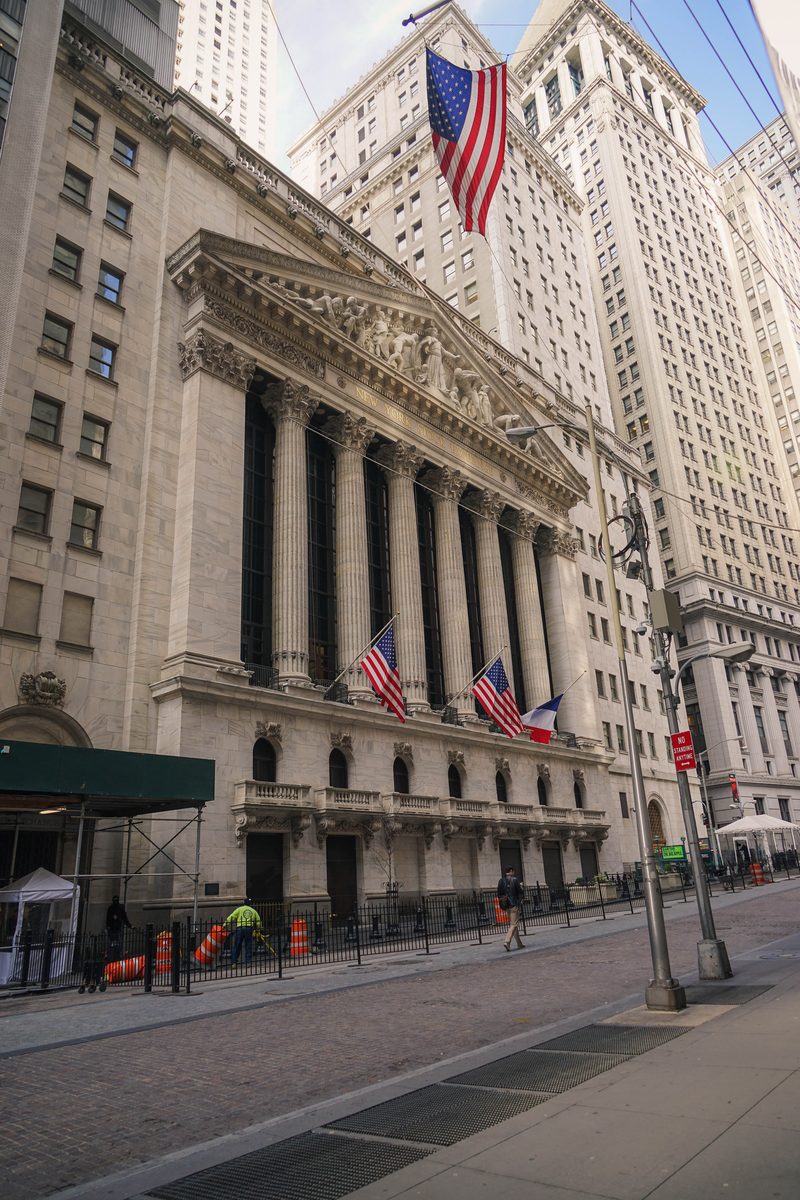
The timing could hardly be worse — or more revealing. In the rush to go public before rival ChatGPT owner OpenAI, Anthropic has been caught in a volatility storm that has seen some $2 trillion wiped off Nvidia's market value in just six weeks. With worries about political pushback against AI data centers following the U.S. midterm elections rattling sentiment, Wall Street's Nasdaq 100 is down 12 percent in that time, with the leading U.S. chipmaker index down more than 25 percent. SpaceX, the closest comparable, priced at $135, opened at $150 and closed its first day at $160.95, up 19.2 percent, after raising $75 billion at pricing — and it is trading just 1 percent above its issue price five months later. Whether Anthropic can do better will be decided by Thursday, when the shares start trading.
Why it matters: Anthropic's debut is the biggest test yet of the AI boom's second act: a company with real, explosive revenue growth but nearly $900 billion in compute commitments, a $104 billion nine-month loss on paper, and a governance structure that leaves public shareholders with almost no say. The valuation has already been cut by at least 30 percent from the $2 trillion floated months ago, yet the deal is still several times oversubscribed — the market wants in even as it doubts the math. If ANT trades well on Thursday, it will steady the whole AI trade; if it stumbles, it will confirm that the sell-off is about the business model, not just Nvidia's boardroom.
Reporting: Reuters · Phillip Nova
Spot an error? Orbit News corrects articles promptly and notes the correction in the article. See our Editorial Policy, or flag an error by messaging us on Facebook, X, or Instagram.