U.S. News
Wildfires Are Poisoning America's Drinking Water for Years After the Flames Go Out
New studies show that wildfire contamination can linger in the rivers and streams that supply drinking water for more than a decade. With more than 68,000 fires burning over 14,062 square miles in the U.S. so far in 2026, water utilities are scrambling to adapt.
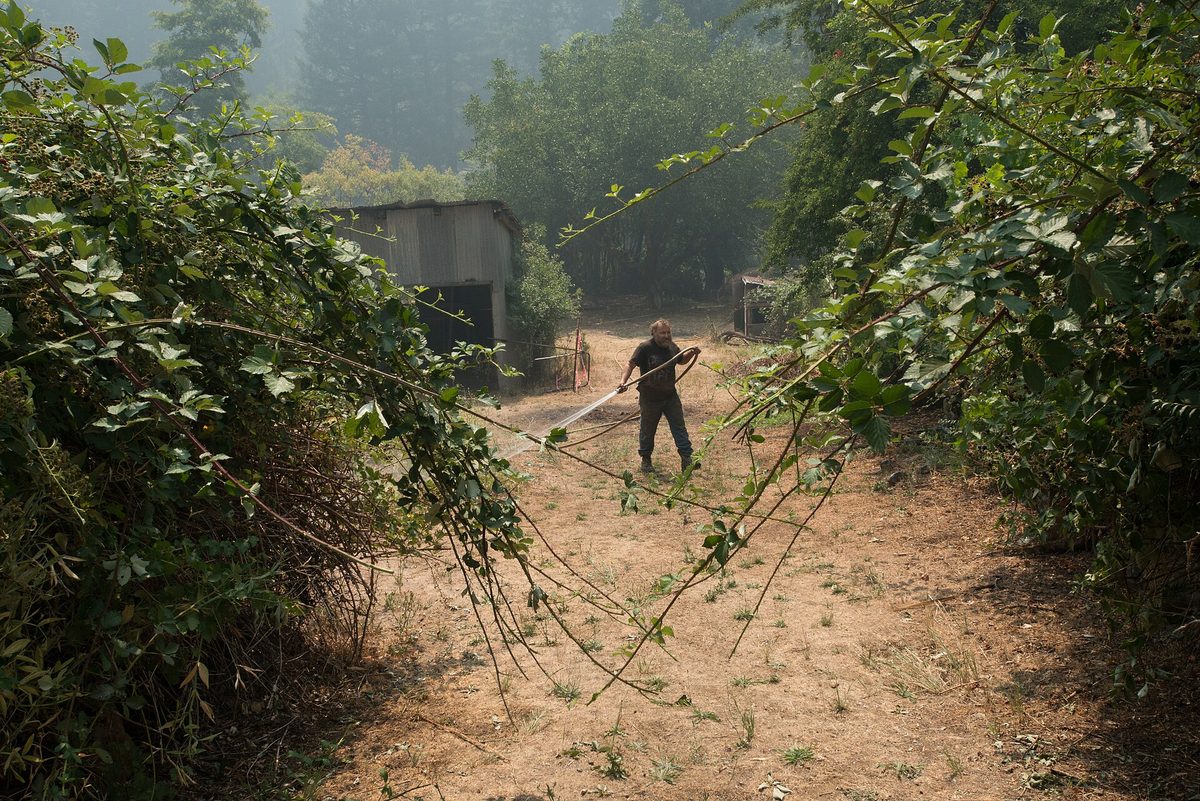
Wildfires are leaving a threat behind that outlasts the flames by years: the ash, sediment and charred vegetation they leave on the landscape wash into the streams and rivers that provide drinking water to much of the country, and new studies show the contamination can remain for more than a decade. The findings land in a year of heavy burning. So far in 2026, there have been 68,179 wildfires in the United States, burning more than 14,062 square miles, as climate change and increasingly strong El Nino weather events, which intensify drought conditions, have led to bigger and more frequent fires.
The damage starts after the fire is out. When rains arrive, they carry ash and organic matter from burned hillsides and forests into the streams that feed water treatment plants for towns and cities alike. Wildfires are a natural part of forest ecosystems, but an increase in their severity has made the areas that capture, filter and regulate the flow of water, known as watersheds, vulnerable, said Amanda Hohner, an assistant professor at Montana State University who specializes in wildfires and water quality. Forested watersheds provide water to nearly two-thirds of municipalities in the U.S., according to Carli Brucker, lead author of a University of Colorado Boulder study that assessed wildfire-affected water quality in hundreds of burned basins and compared them to unburned areas. That study found the impacts can last up to eight years.
Water treatment plants are built for clean water, and wildfire runoff is not clean. Wildfires cause spikes in heavy metals and dissolved organic matter, which the plants are not built to handle, Brucker said. That can force treatment facilities to shut off the incoming water and resort to other sources, which may not be immediately available. Some have groundwater or reservoir backups, but even those can be impacted. Garrett McKay, an associate professor of civil and environmental engineering at Texas A&M, said utilities are extremely concerned about the impacts wildfires have on water, and are reaching out to experts like him for help finding different water sources or learning how to treat the organic matter coming into their plants.
The chemistry of treatment itself becomes part of the problem. When facilities add disinfectants, like chlorine, to water, they react with the dissolved organic matter left behind by the fires to form disinfection byproducts, which are regulated by the U.S. Environmental Protection Agency because they can cause illnesses, including cancer, McKay said. Since plants cannot remove the disinfection byproducts, they must get rid of the organic matter before disinfecting the water, which can cause delays in the water supply.
Reservoirs offer only partial protection. They can serve as a sedimentation basin where particles can settle, said Kyle Shimabuku, an associate professor of civil engineering at Gonzaga University. But sediments from burned vegetation are rich in nutrients, like nitrogen and phosphorus, and as they sit in still water, algal blooms can grow. The algae can make people sick and kill the fish, he said.
Nowhere shows the long tail of the problem more clearly than Las Vegas, New Mexico. People there went without water for months after the Hermit's Peak/Calf Canyon wildfire contaminated the Gallinas River in 2022. In the four years since, they have had to give residents bottled water and ship tanks in from nearby towns as they collected funds to build a new treatment plant. Karen Pettine, who has owned the Hillcrest Restaurant for 50 years, said the water crisis forced them to close, sometimes for a week at a time. "It's hard to run a restaurant without good water," she said. "We used some paper plates at times. They brought in semi-truckloads of bottled water. You could pick up four cases at a time."
Las Vegas Mayor David Romero said climate change has made the things that used to be reliable less predictable. "It's a scary situation that we're all going to encounter," he said. The town was hit again and again: a massive flood in 2024 carried more burn debris into the town's two reservoirs, leaving them with only a few days of safe water, and the town hired trucks to bring 2.2 million gallons of water from nearby Santa Fe and Santa Rosa. In February 2025, burn scar debris coupled with bad weather and equipment failure caused a pressure drop that resulted in a monthlong boil-water advisory and more water shipments. "The February event was probably the scariest," Romero said.
Ultimately, the state and federal governments allocated $148 million to rebuild the town's treatment plant and help support efforts to find other options, including drilling wells and reusing water. Groundbreaking on the first phase of the new water treatment plant is slated for November 18, the mayor said. "We've been doing a lot of work for other sources of water and we know with climate change and what we experienced in the past, the Gallinas River is something we can't depend on forever."
Colorado has faced the same scramble. When a 2020 wildfire burned the area around No Name and Grizzly creeks, the primary water sources for the city of Glenwood Springs, officials scrambled to protect against sediment expected to wash down the slopes when spring rains arrived, and sought help from the Colorado Water Conservation Board. Within two months, the board authorized an emergency loan of $8 million for improvements to the treatment system. Fort Collins faced a similar challenge that year when ash and sediment from the Cameron Peak fire forced the city to close its river intake and pull water from the Horsetooth Reservoir, which was safe to use because it is fed by a different watershed.
Adapting is expensive, and it takes years. Communities are working to find new water sources, build backup supplies and upgrade treatment plants, but the work can cost millions and the threat keeps growing as fires get bigger and more frequent. The studies behind the new warnings make the same point from different angles: the danger does not end when the fire is put out, it moves downstream, into the pipes, and it can stay there long after the burn scar has gone cold. For the towns that draw their water from forested watersheds — nearly two-thirds of American municipalities — that makes wildfire season a water crisis that arrives months or years later, as the same reporting notes.
Why it matters: This story matters because it reframes wildfire as a slow-moving infrastructure crisis, not just a summer emergency. The fire itself makes the news; the poisoned tap water, the boil-water advisories and the $148 million rebuilds arrive quietly, years later, in towns that did nothing wrong except sit downstream of a burn scar. With 14,062 square miles burned so far in 2026, the number of watersheds carrying that hidden load is growing every year, and the fixes — new treatment plants, backup reservoirs, different sources — take years and millions of dollars that small towns do not have. The question now is whether water planning catches up with fire planning before the next Las Vegas, New Mexico, runs dry.
Reporting: Colorado Public Radio · The Weather Channel
Spot an error? Orbit News corrects articles promptly and notes the correction in the article. See our Editorial Policy, or flag an error by messaging us on Facebook, X, or Instagram.
Related from Orbit News
Faulty Router Installed by L3Harris Likely Caused Nationwide FAA Ground Stop, Duffy Says
U.S. News · Nov 15, 2026
Bessent Publicly Blames Lutnick for Failing to Blacklist Nvidia Chip Buyer Megaspeed
U.S. News · Nov 15, 2026