U.S. News
Faulty Router Installed by L3Harris Likely Caused Nationwide FAA Ground Stop, Duffy Says
Transportation Secretary Sean Duffy said a router installed during a routine copper-to-fibre upgrade flooded air traffic control networks, grounding flights across the country for nearly five hours on Friday.
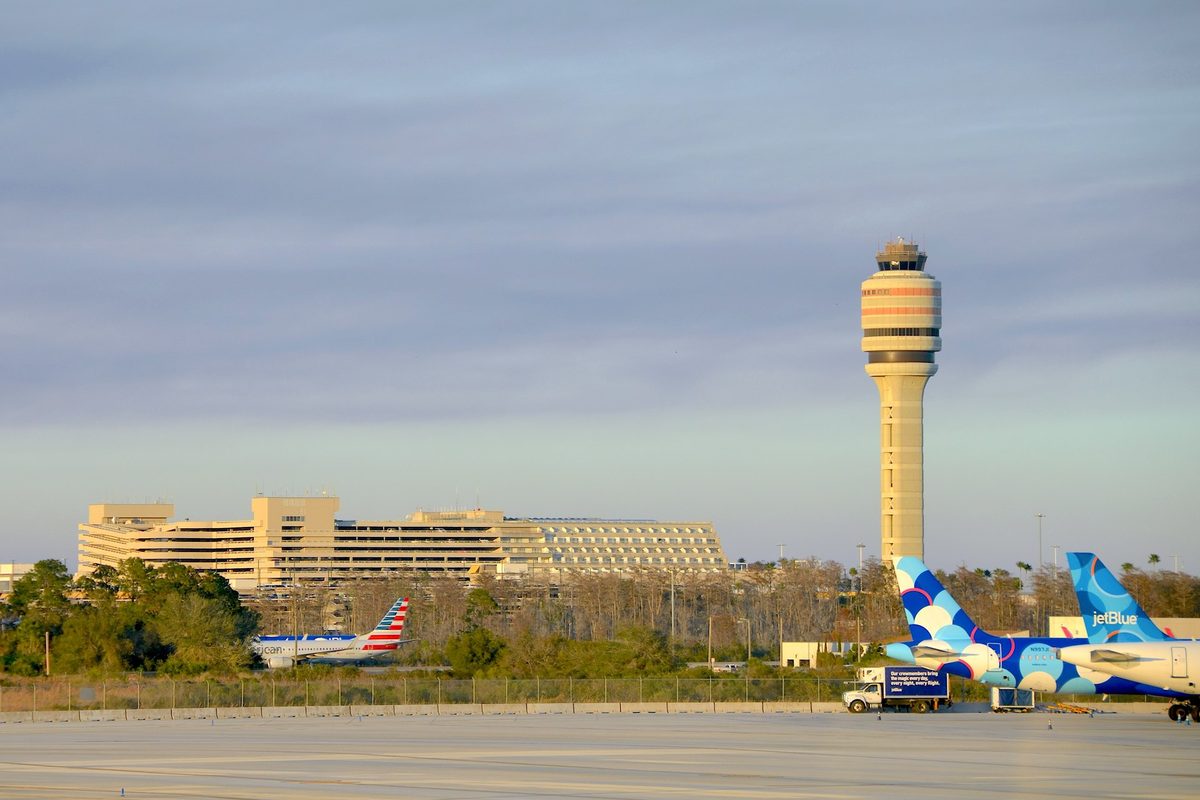
The nationwide ground stop that halted U.S. air travel on Friday was likely caused by a single router installed by government contractor L3Harris during routine work to replace ageing copper telephone lines with fibre-optic cable, Transportation Secretary Sean Duffy said on Saturday. Duffy told reporters the new router began flooding other routers on the air traffic control network with more than 1,000 connection attempts every four to five seconds, overloading communications at 17 of the Federal Aviation Administration's 22 en route centres.
The Federal Aviation Administration issued the nationwide ground stop on Friday afternoon and lifted it on Friday evening, after nearly five hours in which no departing flights were allowed to leave airports across the country. It was only the second nationwide ground stop since the September 11, 2001, attacks. More than 20,000 flights have been disrupted since Friday, according to Reuters, and the knock-on effects continued into Saturday as airlines struggled to reposition aircraft and crews.
As of 1 p.m. Eastern on Saturday, more than 5,000 flights had been cancelled and more than 4,400 flights within, into or out of the United States were delayed, according to tracking service FlightAware. FAA Administrator Bryan Bedford estimated that about 5,000 of the roughly 41,000 flights scheduled for Saturday would be cancelled. Bedford said he believed the worst was behind the system and that full recovery could be expected on Sunday, just ahead of the busy Thanksgiving travel week.
Duffy was blunt about the state of the system at a 45-minute news conference on Saturday morning, at which he apologised to travellers. "This was an FAA system that didn't meet the moment," he said. He said officials were still working out whether the failure came down to installer error or a faulty piece of equipment. "We're working to determine whether we had incompetence, meaning was it user error or installer error from L3Harris, or did they install a faulty router? We haven't determined what the fault was," he said.
L3Harris, which has been modernising the communications infrastructure supporting the National Airspace System, said it was supporting the FAA's investigation. "L3Harris has been modernizing the communications infrastructure supporting the National Airspace System in close coordination with the FAA," the company said in a statement. "We are supporting the FAA in its investigation to understand the conditions that led to the Nov. 13 ground stop of our nation's air travel. L3Harris takes the nationwide ground stop and its impact on travelers, airlines and air traffic operations seriously." The company said it has completed more than 70 percent of the planned conversion of the airspace communications system from legacy copper wires to fibre.
Duffy said the work that went wrong was routine maintenance that has been happening across the country for decades, switching telecommunications lines from old copper wire to fibre at a remote FAA location. He said officials were told there may also have been problems with routers installed in Arkansas and Texas. While a majority of the copper wires have been switched, Duffy said around 30 percent have yet to be replaced, and officials are working to identify where those remaining copper lines are. The routers being replaced are about 25 years old, he said, and were supposed to have been replaced in 2006.
Bedford said the ground stop became necessary when the overload spread from one facility to the next. "If that had been a single facility, we would have just worked through it," he said. "But when we saw it go to two, three, 10, 17 facilities, that's when we started to realize there was something much larger going on here." He stressed that none of the centres "actually went dark" and that controllers switched between primary and backup frequencies as reports of frequencies "going in and out" came in.
Both Duffy and Bedford stressed that the outage was not a cyberattack and that there was no evidence of foreign interference or any role for artificial intelligence. "We see zero evidence of anything nefarious, and zero evidence of anything AI-related," Bedford said. Duffy added: "A lot of questions came in yesterday. 'Was this a, a cyber attack? Did some foreign nation attack this network?' And the answer to that is we don't believe so."
The failure has become the latest example of the ageing air traffic control system's fragility. A nationwide ground stop in January 2023 lasted 90 minutes and disrupted 11,000 flights after a government contractor unintentionally deleted files. The FAA spends $1 billion a year maintaining its old copper-wire system, and Congress has provided $12.5 billion to upgrade the air traffic control and telecom system. Duffy has asked for $50 billion more for air traffic control and airports, and he used Saturday's news conference to press Congress to approve the money. "I think this is a sign for them to lean in," he said. "Let's make the investments and look forward to a brighter future in aviation, a safer future, a more efficient future in aviation."
Outgoing House Speaker Mike Johnson told Fox News on Saturday that Republicans would use the remaining 50 days of their majority in Congress to authorise more spending on the FAA. "We don't really need any investigation to understand we need further investment," Johnson said. "We're going to work to get it done." The FAA said only last week that it would replace by the end of 2028 the outdated floppy disks still used for weather and other information at more than 400 air traffic control facilities.
Why it matters: The ground stop matters because it exposed, in a single afternoon, how much of American air travel still runs on copper wire and 25-year-old routers. The cause was not an attack or a software bug but a routine upgrade on a system the FAA itself says it is racing to replace, and the disruption will now be used to press Congress for the $50 billion overhaul Duffy has requested. With Thanksgiving travel days away, the test is whether the system can absorb the holiday surge without another failure, and whether the investigation pins down who is responsible for a router that flooded a national network.
Correction (Nov. 20, 2026): An earlier version of this article used a photo of Beijing Capital International Airport. The photo has been replaced with the air traffic control tower at Orlando International Airport.
Spot an error? Orbit News corrects articles promptly and notes the correction in the article. See our Editorial Policy, or flag an error by messaging us on Facebook, X, or Instagram.
Related from Orbit News

Bessent Publicly Blames Lutnick for Failing to Blacklist Nvidia Chip Buyer Megaspeed
U.S. News · Nov 15, 2026
U.S. Loses Measles Elimination Status After 26 Years as Cases Hit Highest Level Since 1991
U.S. News · Nov 15, 2026