U.S. News
Eight Dead in Brooklyn Building Collapse as City Widens Inspections to 160 Sites
A three-story building in Brooklyn's Flatbush neighborhood fell into a construction excavation on Wednesday, killing eight people including two children. The city has now ordered inspections at about 160 sites tied to the project, and the Brooklyn district attorney has opened a criminal probe.
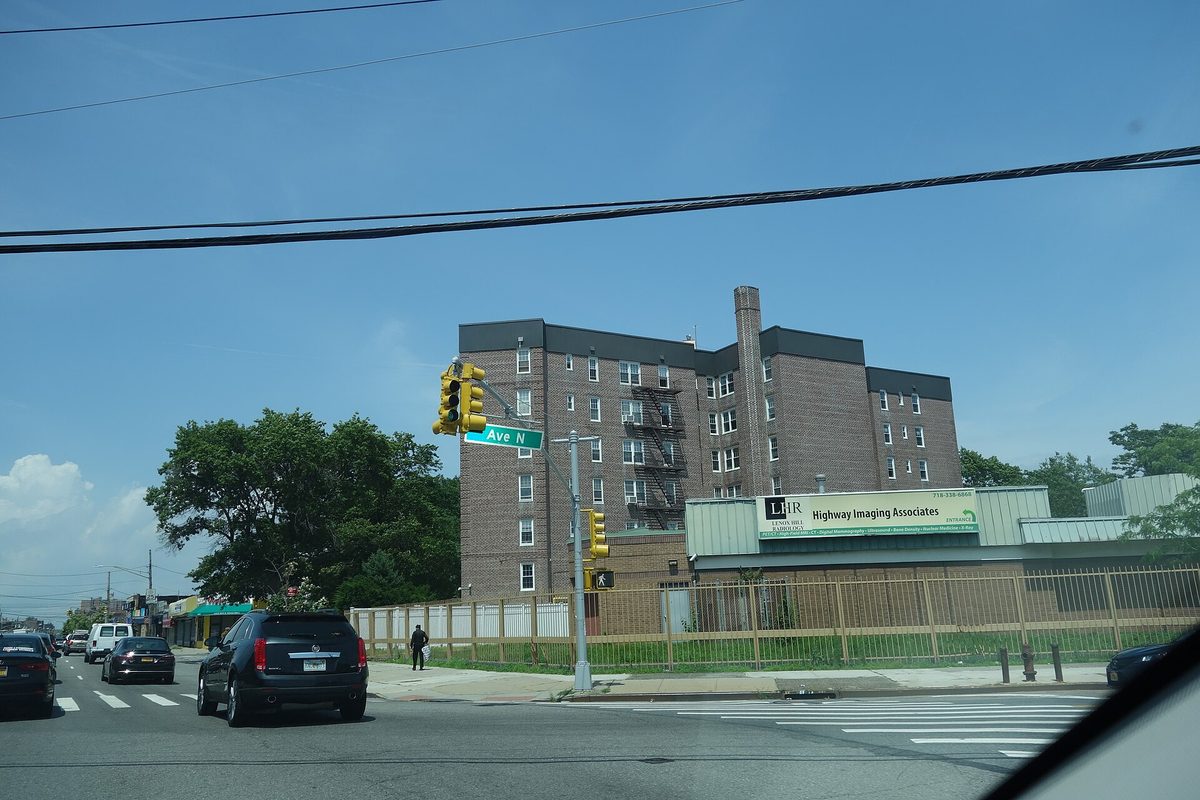
Eight people are dead and 18 others were injured after a three-story apartment building in Brooklyn's Flatbush neighborhood collapsed into a construction excavation next door on Wednesday afternoon, November 11. The building at 1321 Flatbush Avenue gave way at about 4 p.m. while construction workers were digging at the adjacent lot at 2625 Bedford Avenue, and rescue crews searched the rubble for nearly a day before fire officials said there were no more victims. As of Saturday, November 15, investigators have not determined what caused the collapse.
Police identified the eight people killed as Nicole Daniela Salvada Rodriguez, 9; Juan Daniel Salvada Guzman, 31; Kevin Santiago Reyes Gonzalez, 10; Ndiaye Mamadou, 31; Barry Mamadou, 23; Gabriel Siguencia, 22; Edgar Sapon, 26; and Jose Luis Caguana Cosquillo, 26. Two of the dead were children, ages 9 and 10, and two were construction workers at the site next door. The victims came from Mexico, Colombia, Ecuador and Trinidad, Mayor Zohran Mamdani said, and the children and one of the adults were Colombian, according to the country's consulate in New York. Of the 18 injured, four were firefighters.
Witnesses described a sudden collapse with almost no warning. James Williams, who works at a deli across the street, said he heard loud banging at the site all day Wednesday and looked outside to see bricks falling. "Two minutes later, the building collapsed," he said. Brigitte Anama, a hairstylist at a nearby salon, said customers and stylists ran onto the sidewalk as the building fell: "We heard the boom and we all rushed outside and saw smoke and dust everywhere." Firefighters pulled a pregnant woman from the rubble on Wednesday and rushed her to a hospital; she and her baby survived, and two of her cousins who had been with her did not.
Emergency workers used power saws and pickaxes to get through the debris, pulling four victims out in the early hours of Thursday, and excavators later removed larger chunks of wreckage so searchers could get deeper into the construction pit, Fire Commissioner Lillian Bonsignore said. The Fire Department ended rescue operations on Thursday afternoon after crews determined there were no more victims, and turned the site over to the Department of Buildings and the police. The collapse also tore away part of a neighboring building, leaving apartments exposed to the street.
Attention has turned to the excavation next door, where the collapse happened. Buildings Commissioner Ahmed Tigani said construction workers were excavating the empty lot when the building buckled. Records show a contractor, Mordechai "Marty" Waisbrod, notified the city that excavation would begin in September and include rock blasting, and permit applications indicated plans to dig below 15 feet. But a review of the city-approved excavation plans found they did not require crews to install additional bracing to support the adjacent structure, according to a November 15 report. The plans instead called for cutting into the soil at a 45-degree angle away from the three-story building's foundation to a depth of roughly 15 feet, and the edge of the collapsed building was the only location around the site where the plans did not require steel supports. Three structural engineers who reviewed the plans said they were surprised the city approved them without the extra support. "That's a recipe for disaster," said Abi Agheyere, a structural engineer and professor at Drexel University. "You have to have shoring."
Construction safety expert Glenn Corbett of John Jay College in New York said it is far too early to know what caused the accident. "It could be a design flaw, it could be a construction flaw, or it could be some kind of work that was going on," he said, adding that it appeared the shoring of the excavation work had failed, but that finding out why will take more investigating. The one-story building previously on the excavation site was demolished earlier this year, and building records show the collapsed building held four apartments on its upper two floors and a commercial unit on the ground floor.
City records show the project next door already had a troubled history before the collapse. Inspectors issued a stop-work order in March after concluding the building next door was being demolished without adequate overhead protection, such as netting to shield neighboring buildings. In April, inspectors found the demolition work had resumed in violation of the stop-work order. The order was lifted in May after a $10,000 fine, and the building that fell had a string of 98 violations stretching back to 1972, according to city records.
Mayor Mamdani ordered inspections at about 100 building sites involving companies related to the project on Thursday, and by Saturday the city was inspecting about 160 other sites where the companies behind the project also work. "If there is anyone, or any entity, operating in this city that bears responsibility for what happened, we will hold them fully accountable," Mamdani said during a news conference. The Brooklyn district attorney has opened a criminal probe into whether any criminal conduct contributed to the collapse, and the Department of Buildings is investigating alongside the city's Department of Investigation.
The loss has reached families far beyond Brooklyn. On the morning of Friday, November 13, relatives and community leaders gathered at a news conference where a pastor, a rabbi and a Guinean community leader each offered prayers for the dead. Caguana Cosquillo, who had been working at the construction site, was the sole provider for his family and had a pregnant wife and a young child; his wife is due to give birth on Sunday. In Guinea, the parents of Ndiaye and Barry Mamadou are seeking visas to reach New York to bury their sons, and in Guatemala, the family of Edgar Sapon is trying to raise enough money to bring his remains home. The cause of the collapse remains under investigation, and officials have said the search for answers could take a long time.
Why it matters: This collapse is no longer just a single-site tragedy; it has become a test of how New York polices construction next to occupied homes. The stop-work order, the April violation and the May fine were all in the public record before the building fell, so the investigation will have to answer whether the warning signs were missed or simply not acted on forcefully enough. The widening inspections — from about 100 sites to about 160 — show the city now treats the project behind the excavation as a system-wide risk, not a one-off accident, and the criminal probe means accountability could go beyond fines and stop-work orders this time.
Reporting: FireRescue1 · USA Today · The Generation
Spot an error? Orbit News corrects articles promptly and notes the correction in the article. See our Editorial Policy, or flag an error by messaging us on Facebook, X, or Instagram.
Related from Orbit News
Faulty Router Installed by L3Harris Likely Caused Nationwide FAA Ground Stop, Duffy Says
U.S. News · Nov 15, 2026
Bessent Publicly Blames Lutnick for Failing to Blacklist Nvidia Chip Buyer Megaspeed
U.S. News · Nov 15, 2026