U.S. News
Bessent Publicly Blames Lutnick for Failing to Blacklist Nvidia Chip Buyer Megaspeed
Treasury Secretary Scott Bessent said four parts of the government wanted the Singapore firm at the centre of the Nvidia spy scandal put on a U.S. trade blacklist, but that Commerce Secretary Howard Lutnick's department never acted.
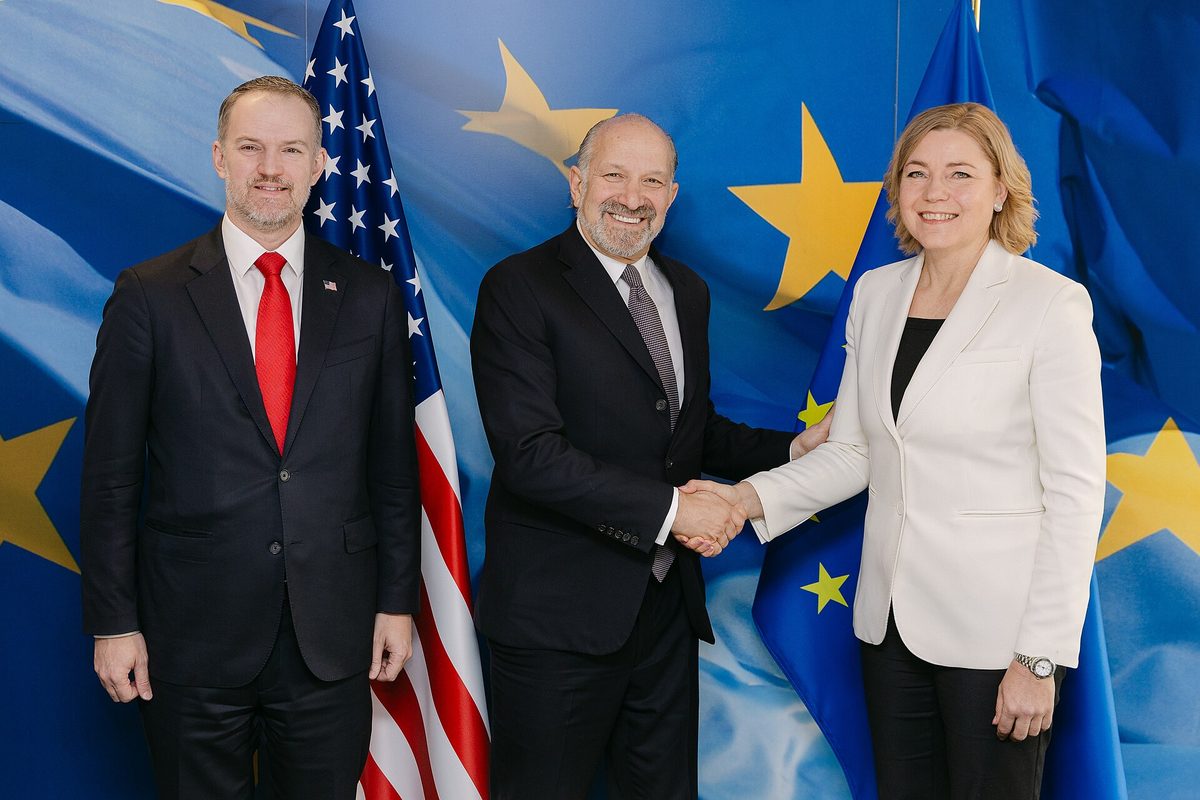
Treasury Secretary Scott Bessent publicly blamed Commerce Secretary Howard Lutnick on Friday for failing to blacklist Megaspeed, the Singapore-based company at the centre of the Nvidia spy scandal, in the most open sign yet of a fight inside President Donald Trump's administration over how advanced American computer chips reached China. Appearing on CNBC, Bessent said the Treasury and State departments, the Pentagon and the U.S. Trade Representative had all favoured putting Megaspeed on the export blacklist for months. "Commerce … has the pen … and you will have to ask them about their internal process," he said.
Megaspeed is suspected of operating as a front to buy Nvidia's most advanced chips and illegally transfer them to China, circumventing U.S. export controls. The company denies the claims. It was once led by Alice Huang, the woman U.S. officials suspect of spying for China and with whom former Nvidia chief executive Jensen Huang had an affair. Huang resigned on Thursday after reports of affairs with two women, one of whom U.S. officials believe is a Chinese asset.
Axios has reported that the Commerce Department failed on three separate occasions this year to carry out a White House request to act on U.S. intelligence suspicions about Megaspeed. The Commerce Department has been investigating the company since 2024 to determine whether it ran afoul of U.S. export rules, but it has stopped short of placing Megaspeed on the so-called Entity List, the trade blacklist that bars U.S. suppliers from selling to listed firms without a licence.
Bessent suggested the inaction had violated directives given by Trump himself. "I am frustrated when President Trump made it very clear that China should not receive any Nvidia chips above H100s," he said, referring to an older-generation data-centre chip. "And so any leakage is very frustrating because it hurts our great companies in the AI race, gives the Chinese an advantage." He added that the real question was whether Nvidia knew its own customers, and that anyone at the company responsible for lapses should be held accountable.
The clash spilled into the open a day after Huang's resignation, as Lutnick's critics inside the administration began circling. Administration officials who have long been concerned about Huang's influence on Trump said privately that the Commerce Department had failed to crack down on chip shipments to companies suspected of passing them on secretly to China. According to CNN, some of Trump's advisers have begun discussing whether Lutnick should be dismissed, citing people familiar with the conversations.
The White House moved quickly to defend Lutnick. On Thursday it said Trump "maintains complete confidence in the secretary and his ability to carry out the position as the most transformative Commerce Secretary in modern history." Lutnick has agreed to testify before Congress next month about the affair, and lawmakers from both parties have demanded he answer questions about what he knew and when. House Foreign Affairs Committee Democrats have written to Lutnick asking what he and his export control chief, Jeffrey Kessler, knew about Megaspeed and when, while Senate Democrats have directed him to preserve documents, communications and records related to Nvidia's exports of advanced chips.
The scrutiny of Lutnick is bound up with the close relationship he built with Huang. Lutnick called Huang shortly before the start of Trump's second term to tell him that whenever he needed the president, he should call, and he called Nvidia "a national treasure." Over two years, Lutnick helped elevate Huang's standing in Washington, and his agency is responsible for keeping sensitive American technology away from adversaries. Huang attended a $1-million-a-head MAGA Inc. dinner at Mar-a-Lago in April, where he made a final appeal against planned restrictions on selling Nvidia's H20 chip to Chinese customers.
The H20 restrictions were shelved, then reimposed as a licensing requirement, then lifted again in a deal Trump negotiated directly with Huang in August, under which Nvidia would pay the government 15 percent of its China chip revenue. Lutnick's former firm, Cantor Fitzgerald, held a $1.2 billion Nvidia shareholding, according to the Observer. Trump himself was briefed in late 2025 on intelligence about Alice Huang, and took no action, CNN previously reported. The FBI is conducting the primary counterintelligence investigation, and CNN reported that the intelligence collected so far does not prove Alice Huang was acting as a spy for Beijing.
The scandal is now driving a bipartisan push in Congress to tighten export controls. Republican and Democratic lawmakers have been pushing a series of bills to fold AI and chip protection into the core U.S. national security apparatus, and those measures are likely to pass as part of the annual National Defense Authorization Act by the end of the year, according to the Observer. Senator Jim Banks, a Trump ally, said on Fox News: "This news is as concerning as it gets. When you're in a war with another country, you don't give them your best technologies."
The affair also looms over Trump's trip to China next week, where he is due to meet Chinese leader Xi Jinping in Shenzhen. American officials said they did not expect Trump to raise the alleged spying with Xi, and said China would not have a say in whether Washington tightens restrictions on access to chips. But the scandal has narrowed Trump's room to manoeuvre, with Democrats and China hawks both pressing him to take a harder line with Beijing.
Why it matters: The public split between two cabinet secretaries matters because it shows the Nvidia scandal is no longer just about a chief executive's private life - it is a fight over who in the government let advanced chips flow to China, and whether the Commerce Department ignored the president's own orders. With Lutnick due before Congress and advisers privately discussing his future, the episode could reshape U.S. export controls just as Trump heads to China, and it hands the incoming Democratic Congress a ready-made investigation for January.
Reporting: CNN · The Observer
Spot an error? Orbit News corrects articles promptly and notes the correction in the article. See our Editorial Policy, or flag an error by messaging us on Facebook, X, or Instagram.
Related from Orbit News
Faulty Router Installed by L3Harris Likely Caused Nationwide FAA Ground Stop, Duffy Says
U.S. News · Nov 15, 2026
U.S. Loses Measles Elimination Status After 26 Years as Cases Hit Highest Level Since 1991
U.S. News · Nov 15, 2026