U.S. News
ULA Vulcan Rocket Fails Minutes After Liftoff, Destroying 40 Amazon Satellites in First Total Loss
United Launch Alliance's Vulcan rocket suffered an anomaly about 10 minutes into Sunday's flight from Cape Canaveral and never reached orbit, wiping out the first 40 satellites of Amazon's Leo broadband network to fly on the new rocket.
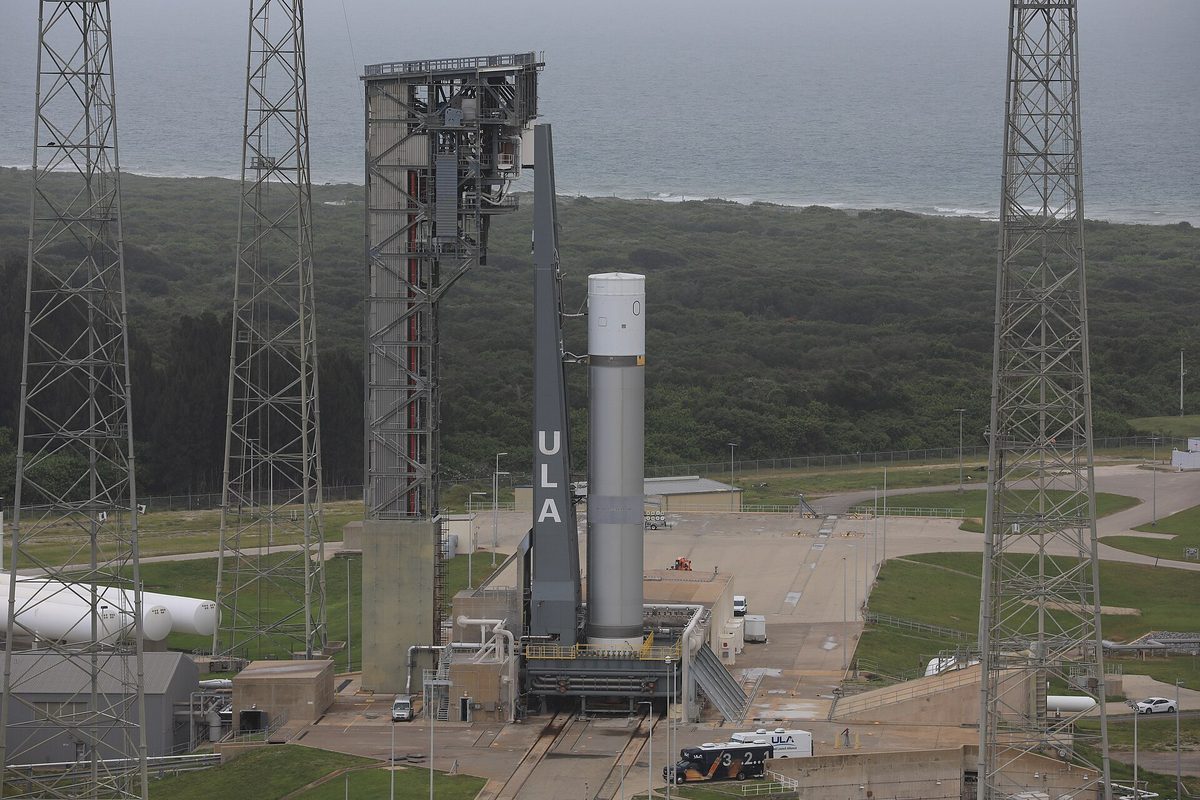
A United Launch Alliance Vulcan rocket failed about 10 minutes after lifting off from Cape Canaveral on Sunday, destroying all 40 Amazon Leo broadband satellites aboard in the first complete mission failure in the company's roughly 20-year history. The loss is a major setback for Amazon's effort to build a satellite internet network to rival SpaceX's Starlink, and for a rocket that was supposed to be returning to flight after nine months on the ground.
The Vulcan lifted off from Space Launch Complex 41 at Cape Canaveral Space Force Station at 12:40 p.m. Eastern time on Sunday, November 15, carrying the first 40 satellites of Amazon's Leo constellation to fly on the new rocket. About 50 minutes later, ULA confirmed that the vehicle "suffered an anomaly 10 minutes into the flight" and did not reach orbit. All 40 satellites on board were lost.
"Based on data received by our Launch Director, we confirm that the Vulcan vehicle launched from Space Launch Complex 41 suffered an anomaly 10 minutes into the flight and failed to deliver the Amazon mission to orbit," ULA said in a statement. "We will work closely with our customer and other appropriate organizations to find the cause, determine the appropriate corrective action, and return to flight as quickly as possible."
The flight began well. The rocket reached an altitude of 95 miles and completed the first phase of its flight, and its six solid boosters burned out and dropped away, apparently working normally. Six minutes into the mission, the main booster and payload fairing separated as planned, and ULA lit the Centaur V upper stage's engines for the first of the firings needed to reach low Earth orbit.
The trouble appears to have come during that upper-stage burn. Telemetry tracked by Spaceflight Now suggested the first stage, with its two Blue Origin BE-4 engines, ran longer than planned and separated late, and that the Centaur upper stage made odd orientation corrections early in a burn scheduled to last 12 minutes and 15 seconds. ULA itself has only said the problem occurred during the Centaur burn, and that it does not yet have specific data on what happened. "Since the anomaly just occurred, we don't have any specific data yet to understand what occurred today," the company said.
The mission, code-named LV-01, was the first of 38 planned Vulcan missions Amazon has booked with ULA, and the next flight, LV-02, was expected to follow within weeks. Those plans are now probably on hold. It was Vulcan's fifth launch and its first in nine months, and the flight was meant to show the rocket was ready again after earlier problems. The launch had already been delayed once, when a refuelling issue scrubbed a Friday attempt, and controllers called a hold at T-minus 20 seconds on Sunday before resolving an unknown technical issue and launching inside the window.
The failure is significant because this was the first Amazon launch to use a rocket designed especially for carrying its broadband satellites to low Earth orbit. ULA created the Vulcan variant, a six-booster configuration with a Centaur V upper stage, for the job. Amazon already has more than 200 satellites in orbit and had hoped to launch its satellite broadband service this year, with 20 or more launches planned in 2027. It is unclear whether the failure will change those ambitions.
The stakes are high. The Federal Communications Commission required Amazon Leo to have 1,600 satellites in orbit by July 31, 2026, but so far it only has around 390 in service, according to Engadget. The company still planned to have 3,232 satellites in orbit by July 2029, but that goal may now be harder to obtain after years of scheduling slips across its launch providers. Amazon's other launch provider, Blue Origin, suffered its own setback in May when its New Glenn rocket exploded on the launchpad.
NASA Administrator Jared Isaacman has offered the agency's help with the investigation, according to Spaceflight Now. ULA, a joint venture between Boeing and Lockheed Martin formed in 2006, had never experienced a complete mission failure before Sunday, and its Atlas V rocket has been famously dependable. Now its more powerful, more complex Vulcan will be under review by engineers and faces a possible grounding while the cause is found.
Why it matters: This is more than one lost rocket. Vulcan was Amazon's main route to orbit for the constellation it needs to compete with Starlink, and the company is already far behind the deployment schedule its regulator set. A grounding of Vulcan while investigators work would squeeze Amazon's launch manifest from every direction at once, since its other providers have slipped too. For ULA, the failure ends a 20-year unblemished record and puts its newest rocket — the vehicle meant to carry the company into the next era — under the hardest scrutiny of its life. The investigation's findings, not the wreckage, will decide how long the pause lasts.
Reporting: The Register · Engadget
Spot an error? Orbit News corrects articles promptly and notes the correction in the article. See our Editorial Policy, or flag an error by messaging us on Facebook, X, or Instagram.
Related from Orbit News
Tanker Loses Steering and Capsizes Docked New Orleans Riverboat, Sending 32 to Hospital
U.S. News · Nov 16, 2026
50-Foot Waves Batter California Coast as El Niño Supercharges the Surf
U.S. News · Nov 16, 2026