U.S. News
Tanker Loses Steering and Capsizes Docked New Orleans Riverboat, Sending 32 to Hospital
The tanker Atlantic Asphalt veered across the Mississippi River and struck the American Heritage at its New Orleans dock on Friday, rolling the riverboat onto its side. All 190 people aboard were accounted for, but 32 were taken to hospitals.
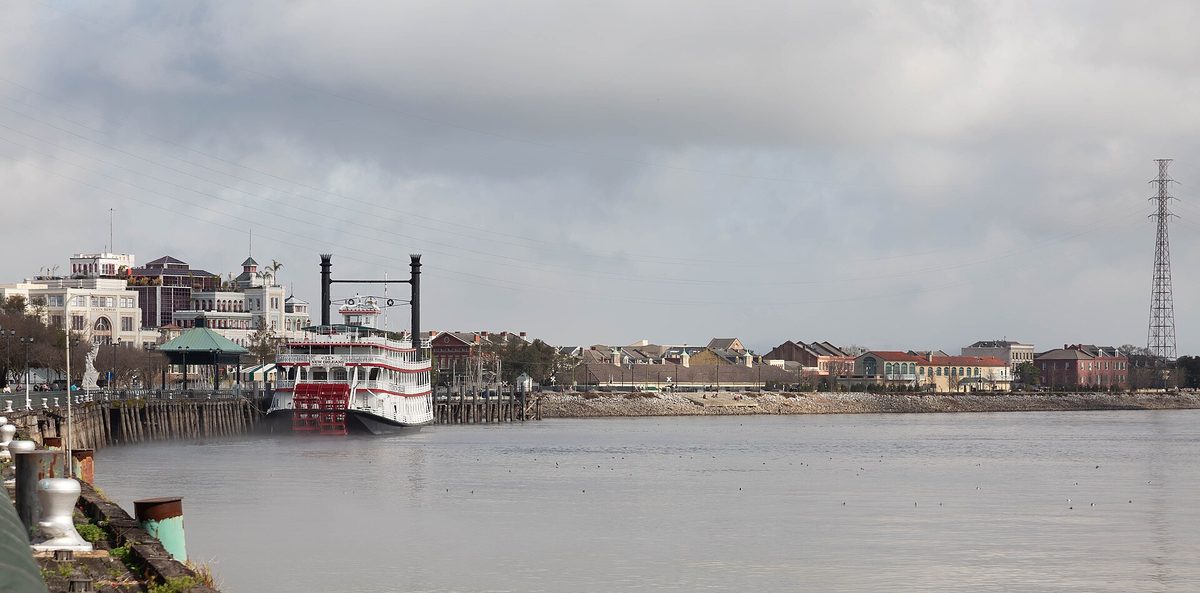
A tanker that lost steering on the Mississippi River struck a docked river cruise ship in New Orleans on Friday, capsizing the vessel and sending 32 people to hospitals in a disaster that officials say could easily have been far worse. The American Heritage, an American Cruise Lines riverboat, rolled onto its side about 22 minutes after the impact, throwing passengers and crew into the river as rescue boats rushed to the scene.
The National Transportation Safety Board said the bitumen tanker Atlantic Asphalt suffered a steering casualty shortly before striking the docked riverboat at the Thalia Street Terminal, near the Ernest N. Morial Convention Center. According to preliminary voyage data recorder findings, the failure struck at about 12:26 p.m. local time, while the tanker was heading upriver near the Crescent City Connection bridge, and the vessel hit the American Heritage about two minutes later.
"It experienced a steering casualty resulting in the rudder remaining to starboard," Bart Barnum, the NTSB's investigator in charge, said. The voyage data recorder captured sounds consistent with the ship's whistle, radio warnings and requests for assistance, commands to deploy anchors and emergency shiphandling orders. The crew spent about two minutes trying to clear the stuck rudder before the collision, but the tanker kept veering toward the east bank.
The NTSB said 140 passengers and 50 crew were aboard the American Heritage, which had been disembarking passengers after finishing a cruise when the tanker hit. The Atlantic Asphalt, a Marshall Islands-flagged vessel of about 520 feet, carried 19 crew members and a local pilot and was en route to an oil facility in Reserve, Louisiana. All of those aboard both vessels were accounted for, and none of the 32 people taken to hospitals had critical injuries. Six people remained in hospital as of Sunday, November 15.
The collision happened at about 12:30 p.m. on Friday, November 13, while the riverboat was docked, according to Marine Log. The impact caused the vessel to list heavily and eventually roll onto its side, with footage from the scene showing passengers wearing life jackets in the water. American Cruise Lines confirmed the collision and said passengers and crew had been evacuated, and that it was coordinating with the U.S. Coast Guard.
The Coast Guard closed a three-mile section of the Mississippi River to vessel traffic as emergency personnel conducted rescue operations. The New Orleans Regional Transit Authority temporarily suspended ferry service, and one of its ferries assisted in the rescue, transporting a female passenger to the Canal Street Ferry Terminal for medical evaluation.
The aftermath will take weeks to clear. The Port of New Orleans has filed an admiralty complaint against the tanker, its owner Nave Shipping and its manager Thome Ship Management, estimating damage to the terminal at more than $1 million, and a federal judge has approved the port's request to seize the tanker. The Atlantic Asphalt has been towed to Gretna, while the American Heritage remains on her side in about 25 feet of water as the Coast Guard offloads an estimated 16,000 gallons of fuel. "We are not talking days; we are talking weeks," Coast Guard Sector New Orleans commander Captain Melanie Burnham said of the recovery.
Commercial traffic has since resumed under restrictions, with a safety zone from mile markers 95.5 to 96.5 extending 500 feet from the wreck. Deep-draught vessels and tows of 10 or more barges must transit the area one way, and all vessels must coordinate with Vessel Traffic Service Lower Mississippi River.
Investigators have not yet determined what triggered the rudder lockup, and the NTSB declined to release details on the tanker's speed, saying the data was still being analysed. A preliminary NTSB report is expected within about 30 days, while a final report could take up to two years. The NTSB and the Coast Guard are conducting a joint probe, using radio, whistle and navigation recordings and crew interviews to reconstruct the sequence of events.
Why it matters: Nobody died, and that is the first thing that matters about this story — 190 people were aboard a vessel that rolled onto its side in a working river, and every one of them was accounted for. But the near-miss raises serious questions about steering redundancy on large tankers sharing a crowded river with passenger vessels, and about what happens when a mechanical failure leaves a ship with seconds to react. The legal fight is already under way, with the port seeking more than $1 million and the tanker seized, and the NTSB's preliminary report in the coming weeks will be the first authoritative account of why the rudder jammed.
Reporting: Baird Maritime · Marine Log
Spot an error? Orbit News corrects articles promptly and notes the correction in the article. See our Editorial Policy, or flag an error by messaging us on Facebook, X, or Instagram.
Related from Orbit News
ULA Vulcan Rocket Fails Minutes After Liftoff, Destroying 40 Amazon Satellites in First Total Loss
U.S. News · Nov 16, 2026
50-Foot Waves Batter California Coast as El Niño Supercharges the Surf
U.S. News · Nov 16, 2026