World
Ukraine Strike Sends Part of Putin's Bridge to Crimea Into the Sea
Ukraine struck the 19-kilometer bridge linking Russia to occupied Crimea for a second straight day, sending its road arch into the Kerch Strait. Russia answered by hitting Kyiv's two main bridges, as both sides traded their heaviest infrastructure attacks in months.
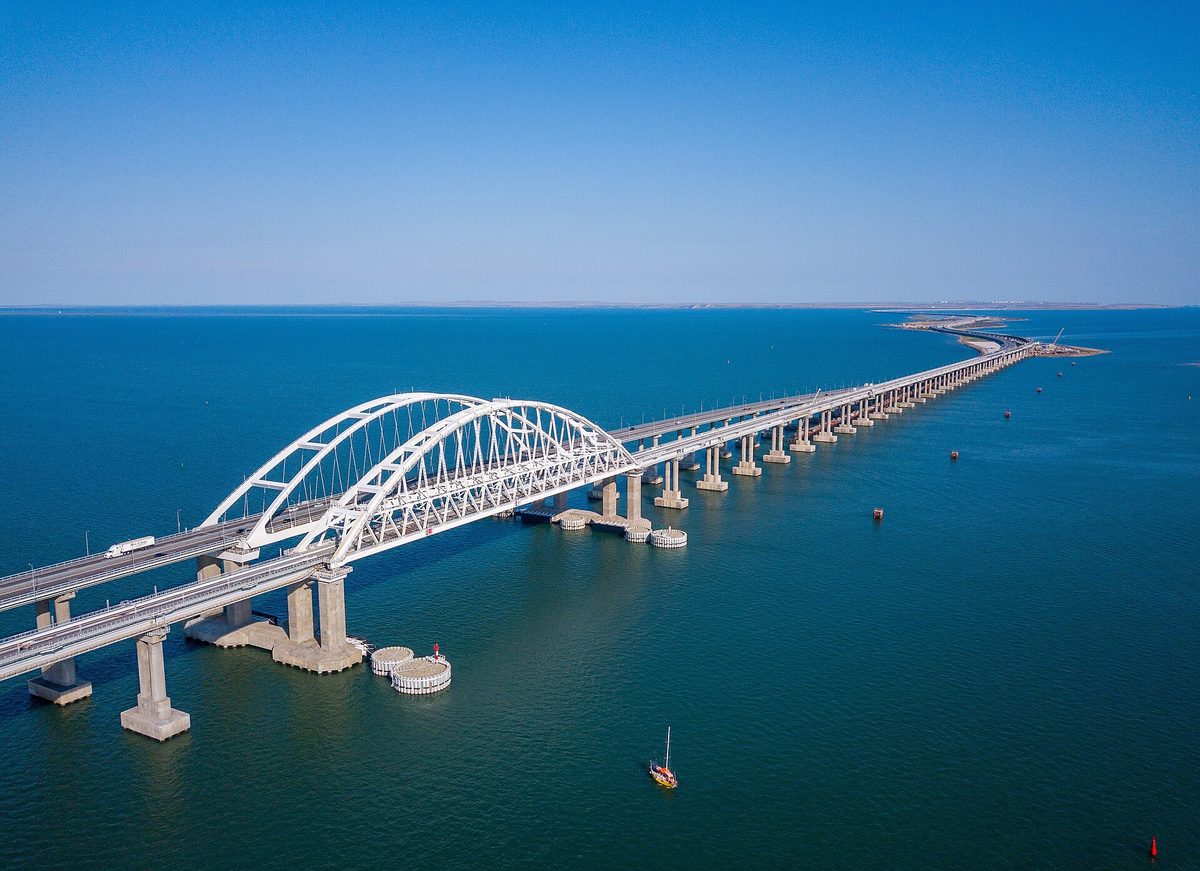
A section of the bridge linking Russia to occupied Crimea collapsed into the Kerch Strait overnight after Ukraine struck the crossing for the second time in two days, cutting Russia's only direct road and rail link to the peninsula. Videos and images geolocated by CNN appear to show a portion of the road bridge lying in the water, with the parallel rail bridge still standing and a fire burning on another section of the crossing.
Ukrainian President Volodymyr Zelensky confirmed the attack on Tuesday and said it was retaliation for Russian strikes on Ukrainian infrastructure, including bridges. "We are ... reminding Russia that war will always return to where it began," he said in a post on X. Ukraine's Security Service, the SBU, said that "one of the metal arches and the road span beneath it were completely destroyed," and that the railway section of the bridge was also "preliminarily damaged."
Zelensky said the strike used only Ukrainian-made weapons. "Today, at the key stage, the 'Palianytsia' drones performed exceptionally well, striking the road section of the bridge, while 'Neptune' missiles, 'Ruta' drones, and FP-5 drones struck the railway section," he said. Ukrainian Defense Minister Yevhenii Khmara added: "It is of fundamental importance: The strike was carried out exclusively with Ukrainian weapons — using our technologies and our solutions." Zelensky described the attack as the seventh stage of what he called "an unprecedented operation in response to Russian strikes on our infrastructure."
Russia confirmed the damage but gave conflicting accounts of the human cost. Sergei Aksyonov, Crimea's Russian-installed governor, said two people were killed in the strike and traffic across the 19-kilometer (12-mile) road and rail bridge had been suspended. Russia's transport ministry said traffic on both the road and rail sections was suspended while specialists assessed the damage, adding that preliminary reports showed no casualties. The ministry said the bridge was damaged in a drone attack. Russia's Investigative Committee opened a terrorism case over the attack, calling it a "terrorist act by Ukrainian armed groups."
The bridge had already been hit the day before. On the morning of November 16, Ukrainian drones struck the same road arch, leaving it visibly deformed and leaning, and the Kremlin dismissed the damage as minor as limited traffic resumed. The second strike, overnight into Tuesday, finished the job: open-source analysts estimated that about 270 meters of roadway and the arch above it had fallen into the strait, and the wreckage blocked the navigable channel between the Black Sea and the Sea of Azov. Train travel across the bridge resumed on Tuesday after a brief pause, and Aksyonov said passengers without vehicles could also use a ferry crossing.
The $3.7 billion bridge, which at nearly 12 miles is the longest crossing in Europe, was built to handle 40,000 cars a day and move 14 million passengers and 13 million tons of cargo per year, according to Russian state media. It opened in 2018 and became a flagship project closely associated with President Vladimir Putin after Russia annexed Crimea from Ukraine in 2014. Ukraine has repeatedly targeted it since Russia's full-scale invasion began in 2022; a truck bomb in October 2022 killed four people and limited the bridge's capacity for several months.
The same night, Russia pounded Kyiv's bridges and other infrastructure. Mayor Vitali Klitschko said Russian forces struck the capital's North and South bridges over the Dnipro River and partially damaged the metro system, causing power and water outages. "Last night, four ballistic missiles struck the Southern Bridge and three struck the Northern Bridge," Zelensky said. Two people were killed in Kyiv, officials said. The bridges carry about 600,000 vehicles a day across a river that splits the capital in half, and the attacks led to major traffic jams on both banks.
The overnight exchange was part of what data suggested was the largest Ukrainian drone attack of the war. Russia's defense ministry said its air defenses had shot down 1,441 drones over 22 regions, surpassing the previous record of 1,336 set on Monday. Moscow's mayor said around 800 Ukrainian drones had flown toward the surrounding Moscow region, 321 of which were brought down en route to the capital. Russia's military also confirmed strikes on transport, military and energy facilities in Kyiv, Zaporizhzhia, Cherkasy and Dnipropetrovsk, along with port infrastructure and cargo ships. Overnight strikes on energy infrastructure left consumers without power in eight Ukrainian regions.
The timing is pointed. The attacks came two days before a planned trilateral meeting between Trump, Xi and Putin in Shenzhen, China, on the sidelines of the Asia-Pacific Economic Cooperation leaders' summit, where the war in Ukraine is expected to be discussed. The Kremlin said Putin, who is due to start a series of meetings in China on Wednesday, had been informed about the attack. Kremlin spokesman Dmitry Peskov sought to play down the damage, saying the bridge would be rebuilt "even better than before," according to Russian state news agency TASS.
The strikes also come days after U.S.-brokered peace talks in Abu Dhabi last week, the first in nine months, which produced agreement on a major prisoner exchange but no significant breakthrough on broader issues, including territory. Russia holds about a fifth of Ukrainian land, and the front line has remained largely static for months. With both sides now trading blows against bridges and energy grids, the diplomacy in Shenzhen will open against the backdrop of the war's most destructive exchange of infrastructure attacks in months.
Why it matters: The Kerch Bridge has been attacked before, but never like this: the road arch is in the sea, the channel is blocked, and both sides are now openly trading strikes on bridges — Ukraine's on the crossing to Crimea, Russia's on the two bridges that hold Kyiv together. The timing, two days before Trump, Xi and Putin sit down in Shenzhen, is impossible to ignore, and Zelensky's framing — that the war is returning to where it began — is aimed as much at that room as at Moscow. The open question now is whether the bridge can be repaired at all while the war continues, and whether the Shenzhen meeting produces anything more than the Abu Dhabi talks did last week.
Spot an error? Orbit News corrects articles promptly and notes the correction in the article. See our Editorial Policy, or flag an error by messaging us on Facebook, X, or Instagram.