World
Japan Scrambles Jets and Protests After Suspected Russian Aircraft Breach Its Airspace
Two aircraft believed to be Russian entered Japanese airspace off Okinoshima Island early on Tuesday, each for about three minutes, prompting Japan to scramble fighter jets and lodge a stern protest with Moscow. Taiwan and South Korea reported encounters with Russian aircraft the same morning.
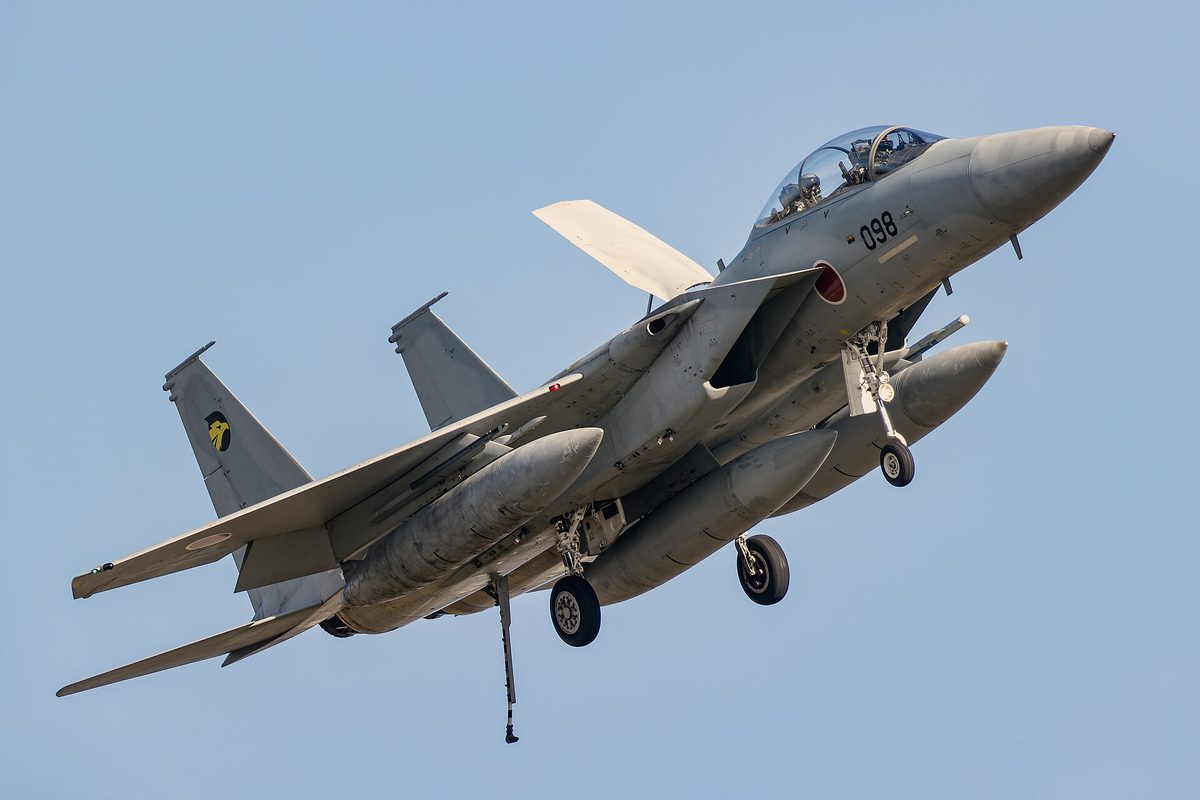
Japan lodged a strong protest with Moscow on Tuesday after two aircraft believed to be Russian violated Japanese airspace off Fukuoka prefecture's Okinoshima island in southwestern Japan, Japanese Chief Cabinet Secretary Minoru Kihara said. Japan's Air Self-Defense Force scrambled fighter jets in response, issuing radio warnings to the intruding aircraft.
According to Japan's Defense Ministry, the first aircraft entered Japanese airspace northwest of Okinoshima Island at about 4:07 a.m. local time and left at about 4:10 a.m. A second aircraft entered at about 4:09 a.m. and left at about 4:12 a.m., putting each aircraft inside Japanese airspace for approximately three minutes. The ministry described the aircraft as suspected Russian planes; their nationality and mission remained under examination, and the aircraft types were not publicly identified.
Kihara condemned the intrusion in blunt terms. "The violation of Japan's airspace by Russian aircraft is a serious infringement of Japan's sovereignty. It also threatens our safety and is completely unacceptable," he said. "We lodged a strong protest with Russia and urged it to prevent a recurrence." Defense Minister Shinjiro Koizumi said Japan would maintain heightened surveillance of Russian military activities and closely monitor its airspace to prevent similar incidents.
The suspected Russian aircraft then flew on through the Tsushima Strait, the waterway between southwestern Japan and the Korean Peninsula, before passing between Japan's westernmost island of Yonaguni and Taiwan and continuing into the Pacific Ocean, according to the Defense Ministry. Japan said it would maintain close surveillance of Russian military activity and remain prepared to respond to any further airspace violations.
The incident was the first confirmed violation of Japanese airspace by Russian aircraft since September 23, 2024, when a Russian military patrol plane entered Japanese airspace off Rebun Island in Hokkaido, according to the Defense Ministry. Territorial airspace extends over a country's land and territorial waters, up to 12 nautical miles, or about 22 kilometers, from its coastline, and foreign military aircraft entering it without permission is extremely unusual.
The same morning brought similar reports from Japan's neighbors. Taiwan's Defense Ministry said it detected early on Tuesday two Russian military aircraft entering the island's air defense identification zone from the northeast, monitoring them with joint intelligence, surveillance and reconnaissance means until they exited the zone south of the eastern county of Taitung. South Korea also scrambled fighter jets after Russian military aircraft entered the Korea Air Defense Identification Zone over the East Sea. The reports were probably about the same aircraft, according to Reuters, which noted that the encounters came ahead of Russian President Vladimir Putin's arrival in the southern Chinese city of Shenzhen for this week's summit of Asia-Pacific leaders.
Moscow had not commented on the incident as of Tuesday, and the purpose of the flights remains unexplained. Japan and Russia have longstanding tensions over territorial claims to the Kuril Islands, known in Japan as the Northern Territories, and relations have deteriorated further since Tokyo joined international sanctions against Moscow following Russia's full-scale invasion of Ukraine in February 2022.
The timing adds to the questions. The airspace violation came days before Putin is due to meet U.S. President Donald Trump and Chinese President Xi Jinping in Shenzhen, a gathering the Kremlin has framed as a "New Yalta" in a nod to the 1945 conference that redrew the global map. Whether the flights were a probe of Japanese and allied response times, a show of force ahead of the summit, or a navigational error is something Tokyo says it is still analyzing. For now, the facts are narrow but serious: two aircraft crossed into sovereign Japanese airspace, Japan's fighters went up, and a formal protest went to Moscow through diplomatic channels.
Why it matters: A three-minute incursion is easy to dismiss and dangerous to ignore. Japan treats airspace violations as sovereignty violations for a reason: the response time of its fighters, the clarity of its protest and the speed of its diplomacy are all part of the deterrent, and Moscow will be watching how each of those performed. The fact that Taiwan and South Korea reported encounters with Russian aircraft on the same morning — probably the same planes — turns a bilateral incident into a regional one, and the timing, days before Putin meets Trump and Xi in Shenzhen, suggests the flights were meant to be noticed. What Tokyo does next, beyond the protest, will tell Moscow how much attention the incursion actually bought.
Spot an error? Orbit News corrects articles promptly and notes the correction in the article. See our Editorial Policy, or flag an error by messaging us on Facebook, X, or Instagram.