World
Turkey and Qatar Sign Mutual Defence Pact Pledging a United Front Against Attack
The agreement, signed in Istanbul by President Erdogan and Qatar's emir, commits the two countries to consult on security threats and expand joint military exercises and defence-industry ties.
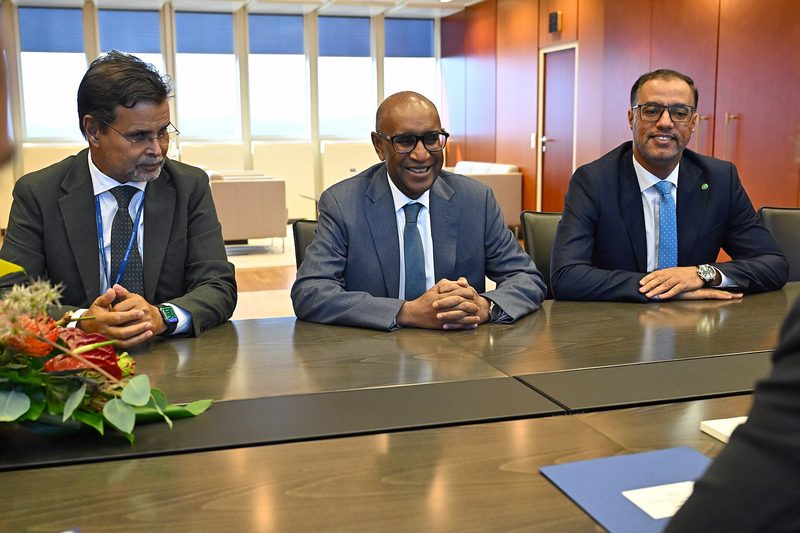
Turkey and Qatar signed a mutual defence agreement on Friday, November 13, the office of President Tayyip Erdogan said, as the Turkish leader met the Qatari Emir Sheikh Tamim bin Hamad al-Thani in Istanbul. The pact was signed during the 12th meeting of the two countries' Supreme Strategic Committee, and it pledges a unified stance against any external armed attack targeting either country, according to a joint statement issued after talks between their leaders.
The two sides agreed to consult on threats to their security, as well as regional and global security issues and defence policies, and to expand cooperation through joint military exercises, defence-industry cooperation and personnel training exchanges. The joint communique issued after the talks pledges a unified stance against any external armed attack targeting either country. Neither government has published the full text of the agreement, and no ratification schedule or entry-into-force date has been announced.
"President Erdogan stated that we would continue working together to prevent the resurgence of war in the Gulf region and establish a basis for dialogue and achieve peace," the Turkish presidency said in a statement on X, which did not provide details on the defence accord. The statement cited Erdogan as saying that Turkey and Qatar were working to develop and diversify their energy partnership, and that their cooperation in the defence industry would continue to grow. "President Erdogan stated that the Mutual Defence Agreement signed today by Turkey and Qatar would add another dimension to our brotherhood," the statement added.
The signing took place at the Dolmabahce Presidential Working Office in Istanbul, where Erdogan and the emir led the 12th session of the Supreme Strategic Committee. Ministers signed four other documents alongside the defence pact, covering education, consumer protection, cooperation on peace and conflict resolution, and the committee's joint statement. The leaders also discussed energy, Gaza, Syria and Libya, according to the Turkish presidency.
The pact comes at a moment of acute insecurity across the Gulf. In August, Turkey, Saudi Arabia and Pakistan signed a joint defence agreement in Mecca, bringing together the Sunni Muslim U.S. allies at a time of conflict across the region. Under that agreement, signed by the three regional powers in August, an attack on one party constitutes an attack on all. Turkey's parliament ratified the so-called Mecca Joint Defence Agreement last week, clearing the way for Ankara to send military support to Saudi Arabia, which has been struggling to fend off attacks by Yemen's Iran-backed Houthi militants.
The new agreement with Qatar fits the same pattern of Gulf states binding themselves closer together as the war with Iran redraws the region's security map. The signing came a day after Yemen's Houthis claimed attacks on a pumping station on Saudi Arabia's East-West oil pipeline, an oil facility in the Red Sea city of Yanbu and an Aramco building in Riyadh, a reminder that the Gulf's energy infrastructure is now a front line. Qatar itself sustained heavy damage in an Iranian attack in March, which forced it to declare force majeure on liquefied natural gas deliveries and pushed Poland's Orlen to drop a long-term Qatari LNG deal this week.
What the pact actually obliges either side to do remains unclear. The presidency's statement gave no details on the defence accord itself, and the joint communique's language of a "unified stance" stops short of spelling out when, or how, one country would come to the other's aid. That ambiguity matters: the Mecca agreement's language was explicit that an attack on one signatory counts as an attack on all, while the Qatar communique speaks of consultation and a shared posture without publishing the underlying commitments.
The agreement also deepens a partnership that already spans energy and defence. Qatar is one of the world's largest exporters of liquefied natural gas, and Turkey has positioned itself as a hub and partner for Gulf energy flows, while Turkish defence firms have become major suppliers across the region. The two governments said their energy partnership would continue to develop and diversify, and that defence-industry cooperation would keep growing, but they announced no arms contract, quantity or value alongside the pact.
Whether the agreement changes anything on the ground will depend on what follows: ratification in both capitals, the first joint exercise held under its banner, and any test of the unified stance it proclaims. For now, its significance is political as much as military. Two of the region's most active powers have put in writing that an attack on one is a concern for both, and they have done it in the middle of a war that has already hit Gulf energy infrastructure and forced one of the world's biggest gas exporters to suspend deliveries.
Why it matters: Orbit has tracked the Gulf's security realignment all autumn, from the Mecca defence pact in August to the Houthi attacks on Saudi oil infrastructure this week. The Turkey-Qatar agreement is the latest piece of that pattern: states that once relied on American protection are now writing their own mutual-defence commitments, in public, while the war with Iran is still running. The open question is whether these pacts deter attacks or simply spread the risk — and the answer will come the next time a missile or drone tests whether a "unified stance" means a unified response.
Reporting: Reuters · Algemeiner
Spot an error? Orbit News corrects articles promptly and notes the correction in the article. See our Editorial Policy, or flag an error by messaging us on Facebook, X, or Instagram.