World
China Stages Unannounced Pacific Drills Around Taiwan, Taipei Says
Taiwan says more than 100 Chinese naval and coast guard vessels massed around the island in early November, in drills its defence minister calls 'area denial' exercises.
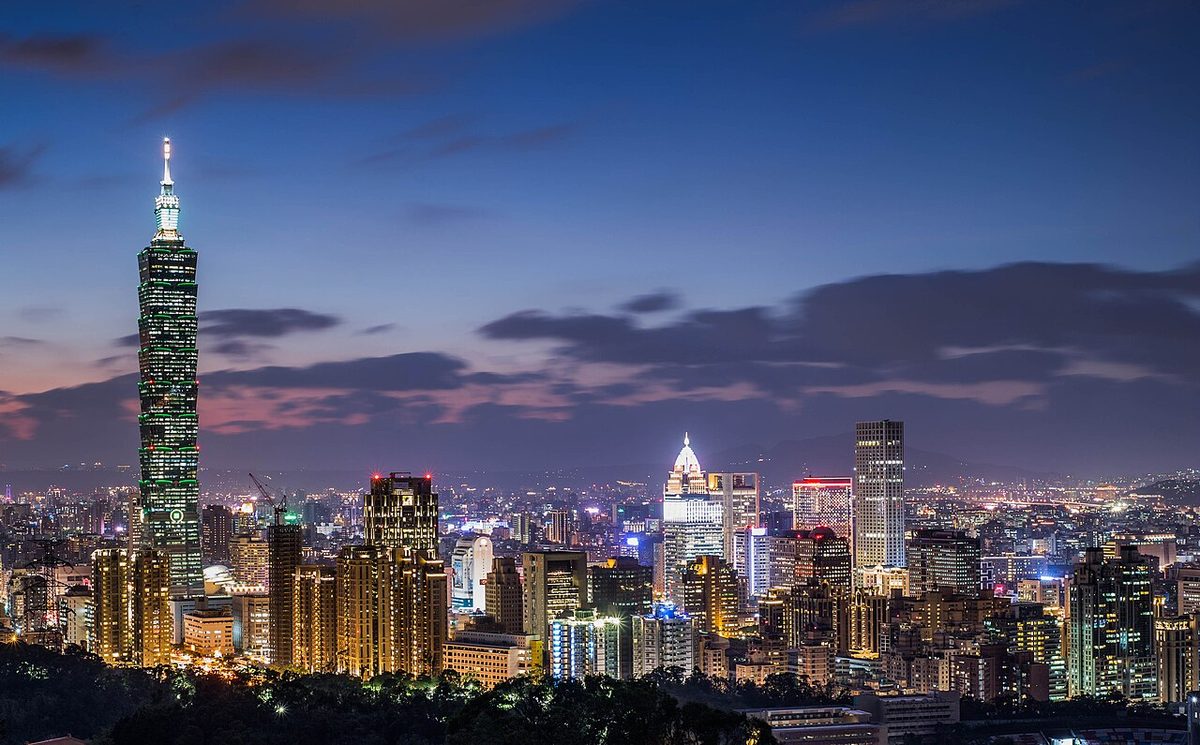
China carried out a large, unannounced military exercise across the western Pacific and around Taiwan in early November, in a deployment Taipei sees as an effort to intimidate the island and its backers before major international meetings. The deployment, which Taiwanese officials say involved more than 100 vessels at its peak, drew on naval forces from all three of China's coastal theatre commands.
A senior Taiwan security official, speaking on condition of anonymity due to the sensitivity of the matter, said China's military and coast guard had at one point massed more than 100 vessels in the region early this month. The deployment drew on naval task forces from China's eastern, northern and southern theatre commands, including the Liaoning carrier strike group operating between Taiwan and Guam.
Taiwan's Defence Minister Wellington Koo described Beijing's continuing actions on Tuesday, November 10, as "area denial drills," aimed in this case at stopping U.S. or other allied forces from coming to Taipei's aid should Beijing attack. Taiwan's Ministry of National Defense said on November 10 that a People's Liberation Army Navy task group built around the aircraft carrier Liaoning, together with naval formations from other PLA theater commands, had recently carried out "area denial" training in the Western Pacific. Koo told reporters in Taipei that the exercises threatened regional peace and stability, and said Taiwan would track the activity through joint intelligence, surveillance and reconnaissance cooperation with partner countries.
The Chinese drills involved coordinated naval forces from its eastern, northern and southern theatre commands, a scale that suggested Beijing was rehearsing not only a Taiwan blockade scenario but broader operations across the western Pacific, the Taiwan official said. The Liaoning carrier strike group operated with other naval task forces between Taiwan and Guam, a simultaneous movement of major surface combatants from three different theatres that analysts called unusual.
The timeline of the deployment stretches back more than a month. Late last month, Taiwan said dozens of warships from China's Eastern, Northern and Southern Theatre commands had begun moving around the island and in the Western Pacific, including towards the US territory of Guam, calling it 'an obvious threat'. The Liaoning carrier strike group passed through the Basilan Strait in the southern Philippines from October 23 to 26. On November 3, Taiwan's National Security Council Secretary-General Joseph Wu said more than 100 PLA Navy and China Coast Guard ships were at sea simultaneously across the Taiwan Strait, the South China Sea and the wider Western Pacific. On November 6, the Washington-based Institute for the Study of War, publishing jointly with the American Enterprise Institute's Coalition Defense of Taiwan project, assessed that China could be conducting a major exercise simulating the isolation of Taiwan.
Beijing has offered a different account. China, which has never renounced the use of force to bring Taiwan under its control, has said the carrier is on "routine" training "not directed against any country." While prior major Chinese regional drills often came with announcements, television footage and warnings against "Taiwan independence forces," this time Beijing said it was routine training not directed against any country. Although China has never renounced the use of force to bring Taiwan, which rejects its sovereignty claims, under its control, it says it would prefer "peaceful reunification."
Analysts see the drills as a message aimed well beyond Taiwan. The Institute for the Study of War went further than Taipei's own assessment, saying that with the U.S. distracted by the aftermath of the midterm elections and conflict in the Middle East and Ukraine, China appeared to be demonstrating its ability to blockade Taiwan any time it wished. If that reading holds, the drills would mark a step toward the PLA demonstrating it can mass and coordinate surface forces from all three of its coastal theater commands in a single far-seas operation, rather than deploying one theater's assets at a time. An isolation or blockade scenario around Taiwan would require exactly that kind of cross-theater coordination.
For now, few officials or regional analysts predict any immediate direct military action by Beijing. They see China's military command chain as still recovering from the mass dismissal of generals in late 2025 and early this year, and officials and analysts do not expect a blockade until after Taiwan's elections in 2028, and only then if the opposition Kuomintang and its increasingly openly pro-Beijing leader Cheng Li-wun lose. But with U.S. President Donald Trump and Chinese counterpart Xi Jinping expected to meet next week on the sidelines of the Asia-Pacific Economic Cooperation forum in the Chinese city of Shenzhen, Beijing appears to be sending a clear signal of its military strength before the two leaders sit down.
Independent confirmation of the exercise's full scope is limited. The 100-plus vessel figure comes from Taiwan's government rather than from satellite imagery or a third-party tracker, and Beijing has described the activity only as routine training. Readers should treat the scale and intent described above as Taiwan's and the Institute for the Study of War's assessment, not as an independently verified fact. Taiwan's defence ministry said it would continue monitoring through joint intelligence-sharing with partner countries, suggesting further disclosures are likely if PLA activity continues or expands.
Why it matters: This is the largest Chinese naval show of force around Taiwan in a year, and its most important feature is what Beijing did not do: it did not announce the drills in advance, breaking with recent practice and leaving Taipei and its partners to discover the deployment as it happened. Whether the exercise was a rehearsal for a blockade, a signal ahead of the Trump-Xi meeting in Shenzhen, or both, it underscores how much of Taiwan's defence now depends on early warning and allied intelligence-sharing rather than on matching Chinese naval mass ship for ship — and how quickly the balance of risk in the Taiwan Strait can shift without a shot being fired.
Reporting: Reuters · Aju Press
Spot an error? Orbit News corrects articles promptly and notes the correction in the article. See our Editorial Policy, or flag an error by messaging us on Facebook, X, or Instagram.
Related from Orbit News
Ukraine Fires Nearly 1,200 Drones at Russia in One of Its Biggest Attacks of the War
World · Nov 14, 2026
Turkey and Qatar Sign Mutual Defence Pact Pledging a United Front Against Attack
World · Nov 14, 2026