Politics
Trump Says He Will Be 'Unbelievably Productive' With a Democratic Congress
In a Fox News interview, the president said his veto power gives him leverage over the incoming Democratic majorities and predicted deals would follow his vetoes.
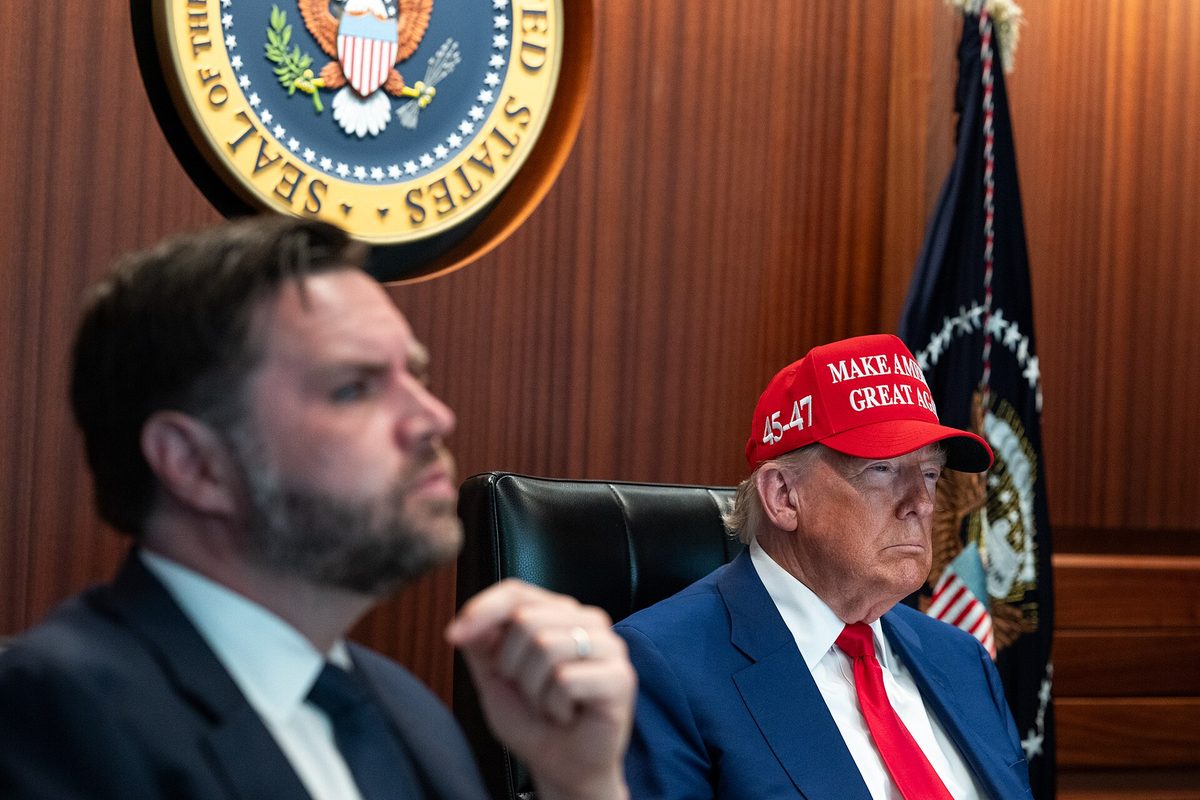
President Donald Trump said he expects to be more productive with the incoming Democratic Congress than he was with the Republican-led one during the first two years of his second term, telling Fox News that his veto power will force Democrats to the negotiating table. The interview, with Fox News correspondent Jacqui Heinrich in Shenzhen, China, aired on November 19 on "The Ingraham Angle."
"And I have a feeling that this is going to be an unbelievably productive two years. They'll send me — well, they'll send me a bill on healthcare, and I'll say, 'No way,' and I'll veto it. And then they'll call me, and they'll say — and we'll sit down. And that's what I do," Trump said.
Trump said he believes the opportunity to "make deals" with the incoming Congress is stronger now because he holds the executive power to veto, handing him leverage over Democrats. "The top of the line people that I was very critical of, because I want Republicans to win — they want to make deals," he said. "I have the veto power. It's very strong, so they can do all the bills they want. I just go veto, veto, veto. They want to make deals."
The president said he had been called by Democrats "at a level that's pretty amazing, nobody would even believe it," since the midterm elections swept Democrats into control of both chambers. He added that he would be happy to host Democrats at the White House because he respects that they won. "Sure, I'll have (them) — I respect them; they won. Politics is a nasty game, and they won," he said.
Trump also argued that governing with a Republican majority had been harder than it looked, because rebels in his own party fought leadership at every turn. He praised Senate Majority Leader John Thune and House Speaker Mike Johnson as "two very quality guys," but said they struggled to corral "people that are very difficult." "I think I can do, in many ways, better now," Trump said. "It was very tough. I mean, it was very tough for Mike Johnson, who I think is fantastic, and John Thune. By the way, this is the history of the Republican Party. The Democrats stick together with bad policy. The Republicans don't stick together with great policy."
Trump's comments come only weeks after Democrats had one of their best electoral nights in recent memory, flipping nine Senate seats and winning more than 250 House seats, securing their largest majority in the House in more than a decade. Democrats will hold a 56-44 majority in the Senate when the new Congress convenes in January 2027.
Some Democrats are already signaling a willingness to work with the president. Senator-elect James Talarico of Texas told a gathering of Democrats in Denver that they must work with Trump in the last two years of his administration. "Some of these reforms might not pass until 2029, but the American people cannot wait two years for change. So we must work with President Trump," Talarico said. In a more lighthearted tone, Michigan Senator-elect Abdul El-Sayed posted a mock-up of "Trump Care" health insurance cards to get the president's support for universal health care, writing, "Donald, this is on the table. Guarantee healthcare for every American, from cradle to grave."
The Democratic base, however, wants a more combative stance. In a Pew Research Center poll released November 19, 72% of Democrats said their party should stand up to Trump "even if it means it's harder to address critical problems." That contrasts with 53% of Republicans who want the president to reach across the aisle for support. According to the same poll, 80% of respondents believe Trump will be "unsuccessful getting his policies passed" in the last two years of his second term.
Trump has trended toward embracing bipartisanship since the midterm losses. On election night, he first signaled he would be open to making an immigration deal with Democrats, embracing a softer tone toward the left, and later emphasized the desire to sit down with the opposition on immigration. He has said his strict immigration policy "hurt" Republicans in the midterms, conceded he was "too tough" on deportations, and indicated he wants to offer a path to "legal status" for immigrants whose only crime was crossing the border illegally.
Whether Trump's veto-first theory of dealmaking works will not be tested until the new Congress convenes in January. Democrats are arriving with their own agenda — including the investigations mapped out by incoming Oversight Chair Robert Garcia and a promised vote on Medicare for All — and with a base that overwhelmingly wants confrontation rather than compromise. The president's bet is that the veto pen turns that confrontation into negotiation; the Democrats' bet is that their majorities let them set the terms.
Why it matters: Trump's pitch reframes the midterm repudiation as an advantage: with Democrats writing the bills and him holding the veto, every negotiation starts from his desk rather than from a divided Republican caucus. It is a plausible theory of divided government — vetoes have forced bargains before — but it collides with two facts in the same week's polling: nearly three-quarters of Democrats want their party to fight rather than deal, and four in five Americans expect Trump to fail at passing his agenda in his final two years. The next two years will test whether the veto is a bargaining tool or simply a blockade, and the first healthcare bill Democrats send him will provide the answer.
Reporting: USA Today · Washington Examiner
Spot an error? Orbit News corrects articles promptly and notes the correction in the article. See our Editorial Policy, or flag an error by messaging us on Facebook, X, or Instagram.
Related from Orbit News
Senate Rejects Iran War Powers Resolution in 51-48 Vote, Backing Trump Weeks After Midterm Losses
Politics · Nov 20, 2026
Incoming Oversight Chair Garcia Orders Trump Family and Top Officials to Preserve Records Ahead of Probes
Politics · Nov 20, 2026