Politics
Trump Pressures Congress to Pass Farm Bill Before Democrats Take Control in January
The president urged Republican majorities to finish the long-stalled five-year farm bill in the session's remaining days, warning farmers need certainty before the 2027 planting season.
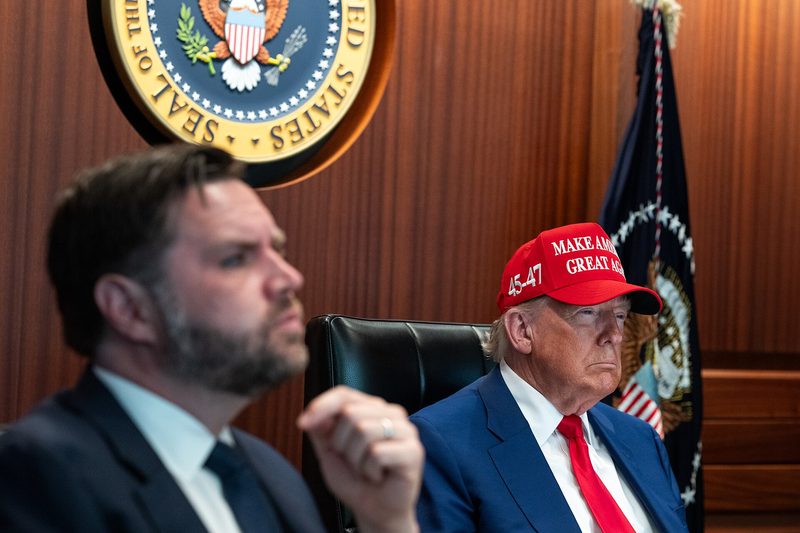
President Donald Trump on Thursday urged Republicans in Congress to pass a new farm bill before Democrats take control of Congress in January, pressing lawmakers to use their remaining weeks to deliver legislation that farmers say they desperately need ahead of the next growing season. Trump issued the demand in a Truth Social post from Air Force One as he returned from a trip to Asia that included a summit in China.
"Our Great Farmers and Ranchers NEED and DESERVE certainty ahead of the 2027 planting season because FOOD SECURITY IS NATIONAL SECURITY! Congressional Republican Majorities, YOU MUST PASS A NEW FARM BILL DURING THE REMAINING DAYS OF CONGRESS. FARMERS AND RANCHERS ARE NOT INTERESTED IN FURTHER DELAYS," Trump wrote in the post.
The House passed its version of a five-year farm bill in April, but the sweeping legislation, which funds agricultural and food aid programs, still needs to pass the Senate before it can advance to Trump's desk. The farm bill has historically been bipartisan, but it has faced hurdles since the previous bill expired in 2023, as Republicans and Democrats in both chambers battle over provisions ranging from farm subsidies to food stamps.
The pressure comes as the farm economy faces significant financial headwinds. Higher fuel and fertilizer prices, driven in part by the war in Iran, are adding to production expenses, while lower commodity prices continue to squeeze farm income and erode already-tight profit margins. For producers preparing financing, input purchases, and production plans for 2027, the outcome of the farm bill fight could have significant implications heading into another growing season.
Trump has also announced plans to provide $8 billion in farm diesel assistance, although the administration has not disclosed when producers can expect the funding to become available. The diesel aid is separate from the farm bill itself, but the White House has presented it as part of a broader effort to support farmers squeezed by costs.
Senate Agriculture Committee Chairman John Boozman, a Republican, and Ranking Member Amy Klobuchar, a Democrat, have both said they hope to finish the bill this year. Klobuchar emphasized the need for a bipartisan agreement during a November 10 Agriculture Committee hearing, saying, "I hope we can find a compromise that will return the farm bill to a bipartisan process and bring the votes that we need to get it over the finish line."
Klobuchar will leave Congress at the end of this session to become governor of Minnesota, and her departure adds another layer of uncertainty to the negotiations. She is one of seven members leaving the Senate Agriculture Committee, which will change the makeup of the panel that must shepherd any deal through the chamber.
One of the biggest sticking points involves the Supplemental Nutrition Assistance Program, commonly known as food stamps, and provisions included in Trump's 2025 tax law. Democrats are seeking a two-year delay in implementing a provision that requires states to share more of the costs associated with SNAP benefits with the federal government, and the disagreement has become a significant obstacle in negotiations over a bill that has historically attracted bipartisan support.
The push for passage is not coming from the White House alone. More than 400 agricultural and food organizations sent a letter to congressional leadership on Wednesday, November 18, urging lawmakers to reach an agreement and pass a new farm bill before the year ends. The coalition warned that additional delays would leave farmers, rural communities, and state agencies without the policy certainty and support needed to carry out critical agricultural programs.
"If Congress does not act this year, farmers, American communities, and the states that implement many of the farm bill programs will be waiting even longer for the certainty and support they desperately need," the organizations stated in their letter. According to the Senate's tentative schedule, lawmakers have just 17 more scheduled workdays remaining in 2026 before the end of the congressional session and the transfer of power in January.
Why it matters: The farm bill is one of the last pieces of major legislation that could plausibly pass before the parties swap control of Congress, and Trump's intervention turns it into a test of whether the lame-duck session can still legislate. The politics cut both ways: Republicans want the bill done on their terms before Democrats take the gavel, while Democrats want a two-year delay on the SNAP cost-sharing rule they oppose — and with only 17 Senate workdays left, the same narrow window that makes a deal urgent also makes it easy to run out the clock. If Congress fails, farmers head into the 2027 planting season without the certainty Trump says they need, and the bill becomes one of the first fights of a Democratic Congress instead of the last achievement of a Republican one.
Reporting: Reuters · Hoosier Ag Today
Spot an error? Orbit News corrects articles promptly and notes the correction in the article. See our Editorial Policy, or flag an error by messaging us on Facebook, X, or Instagram.
Related from Orbit News
Senate Rejects Iran War Powers Resolution in 51-48 Vote, Backing Trump Weeks After Midterm Losses
Politics · Nov 20, 2026
Incoming Oversight Chair Garcia Orders Trump Family and Top Officials to Preserve Records Ahead of Probes
Politics · Nov 20, 2026