Technology
Tesla Opens Cybercab Orders at $29,990, but the Car Won't Move Without a $299 Monthly Fee
Tesla has started inviting select customers to order its steering-wheel-free Cybercab for personal use, but the $29,990 two-seater only works inside the company's robotaxi zones and needs a $299-a-month subscription to drive at all — a price Elon Musk himself called too high.
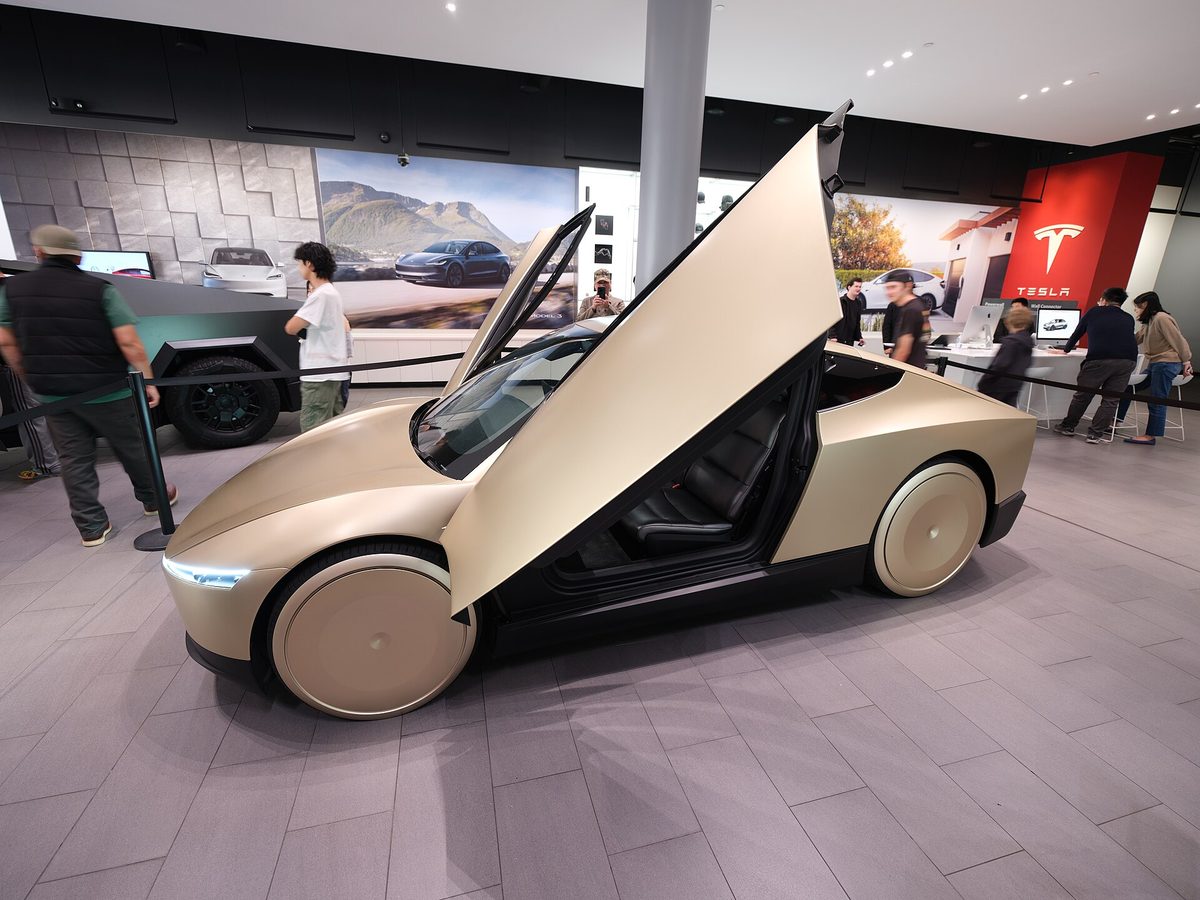
Tesla has begun inviting select customers to order its autonomous Cybercab for personal use, putting a price on a car with no steering wheel and no pedals for the first time. The order page lists the two-seater at $29,990 before taxes, with an estimated delivery of December 2026 in Austin, Texas, and a $1,000 deposit that is not refundable. It is the company's first step toward selling a fully driverless car to ordinary buyers rather than operating it only as part of a robotaxi fleet.
The headline price comes with a catch that changes the deal. Buyers must also pay $299 a month for what Tesla calls an Autonomy Subscription, which is pre-checked on the order page with the first month included. The fine print on the page states that a subscription and regular vehicle maintenance are required to operate the car, and the invitation email sent to customers adds that the Cybercab is only available in supported service areas and that a subscription is required for operation. Without the monthly payment, the car does not move.
The car is also geographically limited. Tesla says the Cybercab will only work inside its existing Robotaxi service areas, which cover eight cities: Austin, Dallas, Houston, Fort Worth and San Antonio in Texas, and Miami, Orlando and Tampa in Florida. A buyer outside those zones would have a car that cannot legally or practically drive itself anywhere, which makes the early orders a test aimed at people who already live inside Tesla's mapped territory.
The subscription math quickly dwarfs the sticker price. At $299 a month, the fee adds up to $3,588 a year, and over five years the total cost of the car and the subscription reaches about $47,600 before insurance, maintenance, taxes and charging are counted. That is roughly $17,600 more than the purchase price alone, and it keeps rising for as long as the owner wants to keep driving. For comparison, Tesla's Full Self-Driving package for its other models costs far less per month, which is exactly the point Musk himself raised.
On Saturday, November 14, Musk replied to reviewer Marques Brownlee on X that the $299 fee is too high and should match the cost of Full Self-Driving and connectivity on Tesla's other models, which he put at more like $115 a month. He did not announce a price change, and the order page still showed $299 as of Saturday. Musk also said the Cybercab will be available nationwide as the company receives regulatory approval, suggesting the geographic limits could eventually fall away even if the subscription does not.
The Cybercab is a radical departure from anything Tesla has sold before. It has two seats, butterfly doors and no steering wheel, brake pedal or accelerator, and it is designed to operate only as part of Tesla's autonomous network. That design is also a regulatory risk: federal safety rules were written around cars with human controls, and Tesla will need approval in each market before the car can operate more widely. The company has been running robotaxi services in Austin and other cities with safety monitors, but a privately owned car with no controls at all is a different proposition.
The launch comes at a moment when Tesla is trying to prove that autonomy can become a real business rather than a demonstration. The company has spent years promising a car that can drive itself, and the Cybercab is the purest version of that promise. Selling it to consumers, rather than keeping it inside a fleet the company controls, shifts the cost of the vehicle onto buyers while Tesla keeps collecting a monthly fee for the software that makes it work.
For now, the invitation is narrow. Tesla has not said how many customers received the offer or how many have placed orders, and the December delivery estimate applies only to Austin. Buyers in the other seven cities will have to wait for their own timelines, and everyone else will have to wait for regulatory approval that Musk says is still to come.
What happens next will depend on two things: whether Tesla lowers the subscription after Musk's public criticism, and whether regulators accept a car with no steering wheel on public roads. If the fee stays at $299, the Cybercab will be one of the most expensive cars in its class to own over five years despite having one of the lowest sticker prices. If the fee drops toward the $115 Musk suggested, the economics change completely — but the car would still only work in eight cities until approvals expand.
Why it matters: The Cybercab matters because it is the first time Tesla has tried to sell a car that cannot be driven by a human at all, and the pricing shows how the company plans to make money from autonomy: a low sticker price that gets buyers in the door, then a recurring fee that never stops. Musk calling his own $299 charge too high within a day of the launch suggests the price was not settled, and the gap between $299 and $115 is the difference between a novelty for enthusiasts in eight cities and a product ordinary buyers might consider. Watch whether Tesla revises the fee before December deliveries, and whether regulators in Texas and Florida accept a steering-wheel-free car on public roads.
Reporting: TechCrunch · Electrek
Spot an error? Orbit News corrects articles promptly and notes the correction in the article. See our Editorial Policy, or flag an error by messaging us on Facebook, X, or Instagram.
Related from Orbit News
Microsoft Says Global Microsoft 365 Outage Is Over After More Than a Day Offline
Technology · Nov 15, 2026
Intel Stages Surprise Desktop CPU Comeback as AMD Falls Below 30%
Technology · Nov 15, 2026