U.S. News
Supreme Court Agrees to Decide Whether Trump Can Bar Asylum at the Southern Border
The justices will review the border asylum ban President Trump imposed on his first day back in office, in a case that could define how far presidential power reaches over the asylum system.
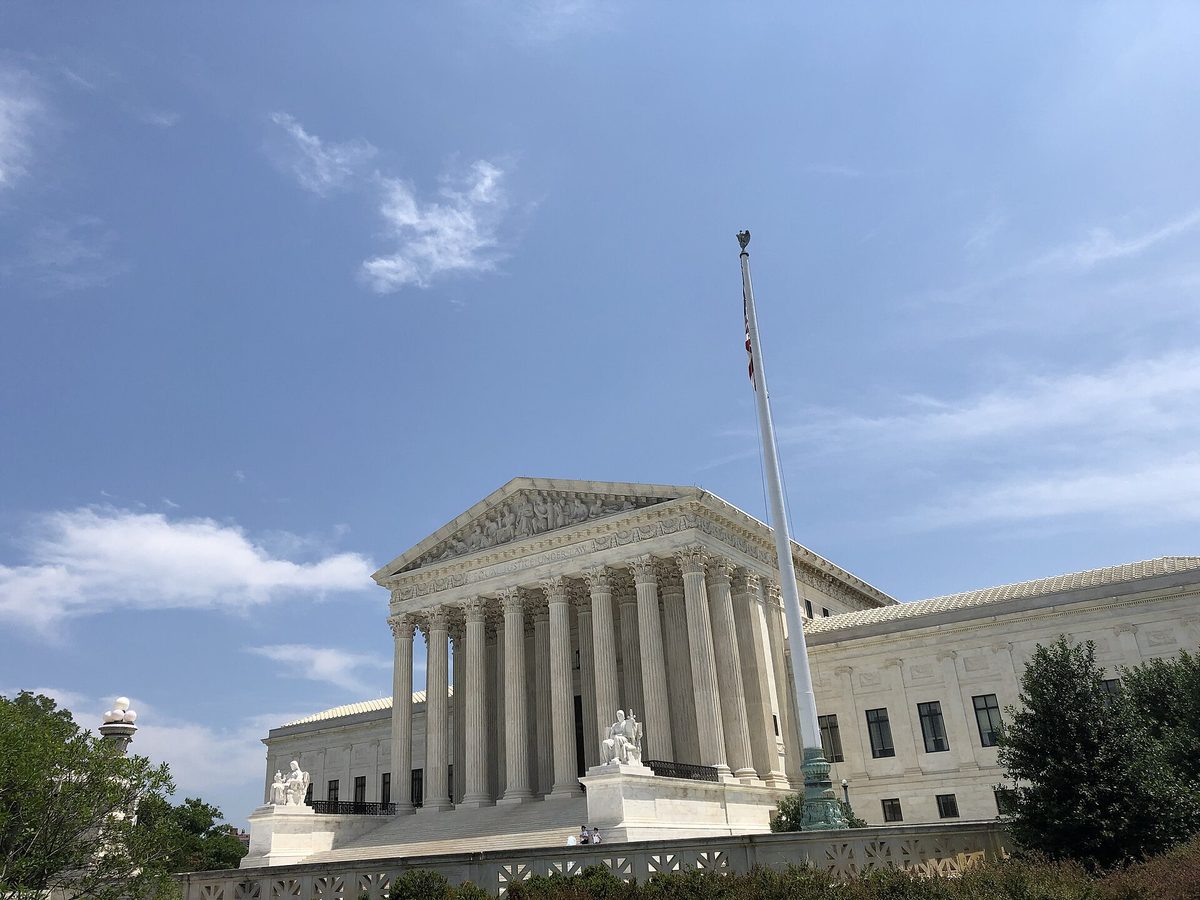
The Supreme Court agreed on Friday, November 13, 2026, to decide the legality of the border asylum ban President Trump imposed on his first day back in office. The court granted the government's petition in Mullin v. Refugee and Immigrant Center for Education and Legal Services, but limited its review to the first two of the three questions the government asked, leaving out a challenge to the certified class of people covered by the case.
The policy at the center of the case is the proclamation Trump signed on January 20, 2025, hours after returning to the White House, declaring crossings at the southern border an "invasion." Relying on Section 212(f) of the Immigration and Nationality Act, the proclamation suspended the entry of people crossing the southern border between official ports of entry and barred them from invoking asylum and other protections that would let them remain. It described migration at the southern border as an "invasion" and said the restrictions would stay in place until the president determined that invasion had ended. The policy also covers some migrants who arrive at official border crossings but lack specified medical or criminal-history information.
Immigrant rights groups sued within weeks. The lawsuit was brought on behalf of a nationwide class of people barred from seeking protection in the United States under the proclamation, as well as three immigrant legal service providers including the Refugee and Immigrant Center for Education and Legal Services, known as RAICES, with the American Civil Liberties Union and the National Immigrant Justice Center among the groups bringing the case. The plaintiffs included would-be asylum seekers who said they were denied a credible fear interview before facing deportation, the screening meant to assess whether a person seeking asylum may face persecution because of race, religion, nationality, membership in a particular social group or political opinion.
On July 2, 2025, U.S. District Judge Randolph D. Moss ruled for the challengers, finding that neither the Constitution nor federal immigration law authorized the administration to replace procedures established by Congress, and that the president lacked unilateral authority to limit noncitizens' ability to seek asylum or other protections. Moss certified a class covering people affected by the proclamation and barred the administration from enforcing the policy against them. On August 1, 2025, the U.S. Court of Appeals for the District of Columbia Circuit partly stayed that judgment, pausing the parts dealing with asylum while leaving in place the parts protecting access to withholding of removal, Convention Against Torture protection and expedited-removal procedures.
A divided three-judge panel of the D.C. Circuit upheld Moss's ruling on April 24, 2026, finding that the proclamation and related guidance exceeded presidential authority. The majority said Section 212(f) governs entry, not removal, and does not let the executive remove people without the Immigration and Nationality Act's removal procedures; that the asylum bar violates the statute because discretionary denials must be individualized; and that the guidance was unlawful to the extent it circumvented statutory withholding and torture-convention protections. Judge Childs wrote for the court, joined by Judge Pillard, while Judge Walker concurred in part and dissented in part. The full D.C. Circuit later denied rehearing.
The government filed its petition for Supreme Court review on August 24, 2026, through Solicitor General D. John Sauer. The justices agreed to decide two questions: whether the proclamation and its implementing guidance are lawful, and whether the law bars the classwide relief the district court entered. The third question, about whether the class definition satisfies the requirements for class-wide relief, was not granted, so the case will turn on the statute and the remedy rather than on class-action procedure.
The two sides are asking the court to answer fundamentally different questions about presidential power. The administration argues the president has broad discretion over asylum and may suspend the system if he has decided not to grant claims. The Justice Department says that because the decision whether to grant asylum is up to the government, the president can also broadly decide that anyone who crosses the border illegally is not eligible for asylum. The challengers rely on federal immigration law, which allows anyone in the country or at an official entry port to apply for asylum. Immigrant rights groups argue that Trump is eviscerating the protections Congress created for people escaping dangerous situations.
Nothing changes on the ground for now. The partial stay remains in place, so the asylum bar for covered border crossers continues while the justices consider the case. The court is expected to hear arguments in the spring of 2027 and issue a decision by the end of June or early July 2027, and more filings on both sides are likely as briefing gets underway.
The asylum case joins a crowded immigration docket. The court has largely sided with the administration on immigration this year: in June it upheld the government's authority to turn away asylum seekers at ports of entry deemed too overburdened, and in September it let removals to third countries resume. Arguments in that separate third-country removal case are set for December 9, 2026. How the justices handle the classwide-relief question in the asylum case could also shape challenges to other enforcement policies, since many rely on the same distinction the D.C. Circuit drew between orders that block removals and orders that only require the government to follow the statute.
Why it matters: This is the most consequential test yet of whether a president can switch off asylum by proclamation. The lower courts said no, but the ban has stayed in force throughout the litigation, so the Supreme Court's answer will decide the law going forward rather than undoing anything on the ground. The second question matters almost as much as the first: if the court rules that classwide relief is barred, future challenges to immigration enforcement would have to be fought person by person, which would change the shape of immigration litigation well beyond this one proclamation.
Reporting: Reuters · USA Today · RAICES
Spot an error? Orbit News corrects articles promptly and notes the correction in the article. See our Editorial Policy, or flag an error by messaging us on Facebook, X, or Instagram.
Related from Orbit News

FAA Lifts Nationwide Ground Stop After Communications Outage Strands Thousands
U.S. News · Nov 14, 2026
An 8-Year-Old Went to an ICE Check-In With His Uncle. He Left in Federal Custody.
U.S. News · Nov 14, 2026