U.S. News
FAA Lifts Nationwide Ground Stop After Communications Outage Strands Thousands
The Federal Aviation Administration ended a nationwide halt to departures on Friday night after an air traffic control communications failure grounded flights across the country for more than four hours.
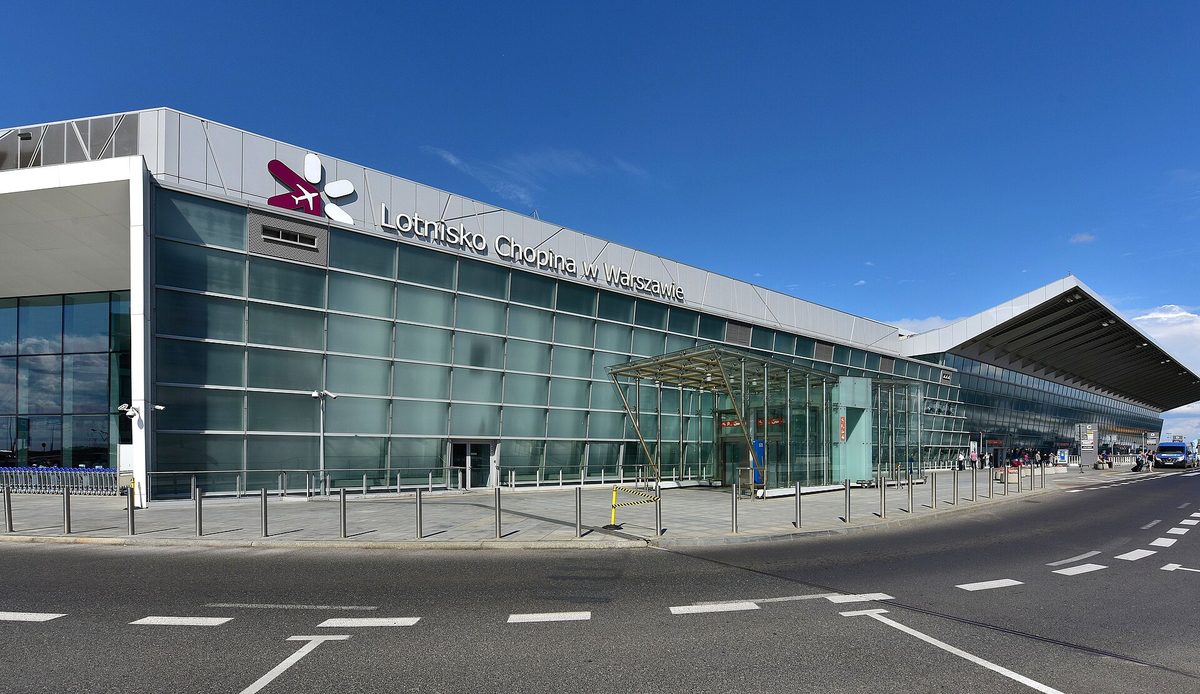
The Federal Aviation Administration lifted its nationwide ground stop on Friday night, ending more than four hours in which no commercial flight was allowed to depart anywhere in the United States. The agency announced the cancellation on its website around 8:30 p.m. ET on Friday, November 13, after a communications outage in the air traffic control system brought air travel to a near standstill and left thousands of travelers stranded in airports or scrambling for rental cars, trains and buses.
The scale of the disruption was enormous. As of Friday night, more than 9,000 flights had been delayed and more than 6,000 canceled, while more than 827 flights were diverted, according to the latest reported figures. By Saturday morning, another 2,500 flights had been canceled and hundreds more were delayed, according to flight-tracking service FlightAware. More than 3,500 airplanes were in the sky when the ground stop was issued; by 8 p.m., fewer than 400 remained airborne as planes landed and none took off to replace them.
Transportation Secretary Sean Duffy told reporters at the White House that the trouble began when the FAA started detecting instability in radar and communications systems at air traffic control centers at 3:36 p.m. ET. The ground stop began around 4 p.m. ET. Duffy blamed the country's aging air traffic control technology, saying switches and routers in the system's analog equipment became overloaded with data and started returning inconsistent information. The communications outage has been tied to an update on a network operated by the contractor L3Harris that air traffic control relies on.
Officials moved quickly to rule out foul play. The White House said there was no indication of a terrorist threat or cyberattack connected to the outage, and Homeland Security Secretary Markwayne Mullin told reporters there was no evidence the failure was caused by a cyberattack or rogue artificial intelligence. Microsoft also said it had no indication the ground stop was related to its own services, after a separate worldwide Microsoft outage disrupted its services for more than 24 hours. Mullin stressed repeatedly that the public was never in danger and no flights were at risk, saying the stop was imposed out of an abundance of caution.
The FAA confirmed it did not lose all radar or telecommunications during the outage, and exceptions were made so critical medical evacuation flights, life-saving cargo and law enforcement flights could keep operating. But for ordinary travelers, the evening was chaos. Several airlines, including JetBlue, canceled their remaining flights for Friday night, and Air Canada canceled all of its flights to and from the United States for the rest of the evening. Delta offered free changes for Friday and Saturday flights, while United waived change fees and fare differences on qualifying flights through November 20.
President Donald Trump has declared the air traffic control failures a national emergency, Mullin said, and Duffy used the White House briefing to renew the administration's request for Congress to fund a sweeping upgrade. Trump had asked for $30 billion; Duffy raised the request to $50 billion. Duffy pointed to isolated breakdowns in New York and Newark in recent years as warnings, saying the nationwide stop could be a taste of what is to come without investment. "You will have more of these. You will have more of them, unless the American people and in Congress tell us to build," he said.
Recovery will take days, not hours. Duffy said it would take "some time" to get flights back to capacity. An airline consultant said equipment and crews were left out of position and some crews had timed out. He said he expected flights to be "back up and operational as we come into the heat of travel during Thanksgiving," which falls on November 26, but he could not guarantee the failure would not happen again. The days leading up to Thanksgiving are typically among the busiest travel days of the year, and airlines were focused on resetting their schedules for the weekend.
Friday's stoppage was the longest nationwide ground stop in 25 years. The last nationwide ground stops of this scale occurred on September 11, 2001, and in January 2023, when the FAA's system for distributing critical flight safety notices failed. Duffy noted that the air traffic control centers running newer digital internet-protocol systems did not break down during Friday's outage, which he said underscored the case for finishing the modernization work with additional resources.
The disruption rippled well beyond airports. College and professional football teams were grounded ahead of Saturday's games, and Mississippi's game at Oklahoma was moved from Saturday to Sunday at 1 p.m. because of travel problems, while Auburn opted to take a bus to Mississippi State. Fans headed to Munich for Sunday's NFL game between the Detroit Lions and the New England Patriots were among those stuck. Weather could make the recovery harder still: the West Coast is expecting multiple rounds of rain this weekend, while parts of the Northeast are still cleaning up after a nor'easter, so travelers who manage to rebook could face further delays.
Why it matters: This was not a weather delay or an airline problem; it was the national air traffic control system itself failing, and it happened 12 days before Thanksgiving, the busiest travel week of the year. The outage turns an abstract infrastructure debate into a concrete one: the FAA's own secretary says the analog backbone overloaded with data, that the digital centers held up, and that more failures will follow without a $50 billion rebuild. Whether Congress funds that ask, and whether the FAA can explain exactly what went wrong with the L3Harris network update, are now the questions that will decide how much confidence travelers can have in the system.
Reporting: USA Today · The Weather Channel
Spot an error? Orbit News corrects articles promptly and notes the correction in the article. See our Editorial Policy, or flag an error by messaging us on Facebook, X, or Instagram.
Related from Orbit News
Supreme Court Agrees to Decide Whether Trump Can Bar Asylum at the Southern Border
U.S. News · Nov 14, 2026
An 8-Year-Old Went to an ICE Check-In With His Uncle. He Left in Federal Custody.
U.S. News · Nov 14, 2026