Politics
Supreme Court Turns Away Challenge to How the Federal Judiciary Handles Harassment Complaints
The justices declined on Monday to hear former federal public defender Caryn Strickland's case, leaving in place a system in which the judiciary's 30,000 employees must pursue misconduct complaints through an internal process with no independent decision-maker.
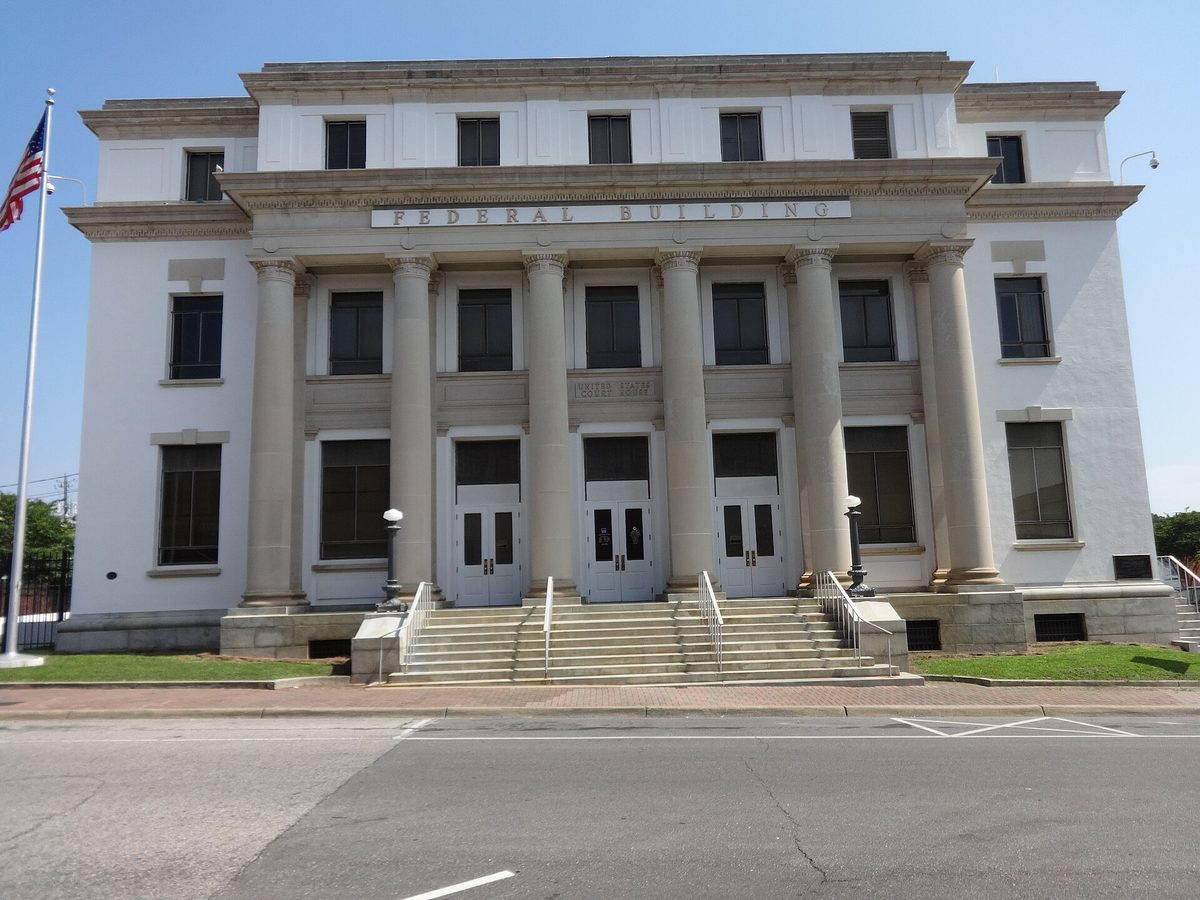
The U.S. Supreme Court on Monday declined to take up a case challenging how the federal judiciary handles employee misconduct complaints, rejecting an appeal by a former federal public defender who said she was sexually harassed by her supervisor. The decision, issued without explanation as the court customarily does, likely ends years of litigation by Caryn Strickland — and leaves unresolved the question of whether the judiciary's internal complaint system is constitutional.
Strickland worked from 2017 to 2019 in the Western District of North Carolina in the Federal Public Defender's Office, which provides lawyers for defendants who cannot afford them and is part of the federal judiciary. She sued in 2020, alleging her rights were violated through the mishandling of her complaint about her direct supervisor. She cited a May 18, 2018, email he sent after they had drinks together, offering to help her career and saying he had a 'plan' to help her raise her pay, adding, 'just remember I deal in pay-for-stay :).'
The case turned on a gap in federal workplace law. The judiciary's roughly 30,000 employees, unlike other federal government workers, are not covered by statutes protecting them against discrimination. Instead, federal defenders and other judiciary employees must pursue misconduct claims through an internal process known as the Employment Dispute Resolution Plan, which is run by the courts themselves. Strickland argued that the system lacks an independent decision-maker, meaningful procedural safeguards and adequate remedies — and that requiring employees to use it violates their constitutional rights to equal protection and due process under the Fifth Amendment.
The lower courts did not agree that her rights had been violated, even as they acknowledged the process was flawed. A three-judge panel of the 4th U.S. Circuit Court of Appeals concluded last year that while judiciary employees 'behaved imperfectly' and made 'missteps' as Strickland's complaint moved through the court's internal employment dispute resolution process, the system was not so fundamentally unfair that it violated her rights. The panel upheld a ruling against Strickland issued by a Boston-based judge brought in to hear the case because of conflicts within North Carolina, where she had worked.
Her case had already made unusual history before it reached the Supreme Court. It was the subject of a rare trial that examined how the judiciary handles complaints of workplace misconduct — a trial in which a federal judge, William Young, ruled against Strickland in August 2024 but joined calls to reform the system, writing that if 'judges are serious about sexual harassment, we must own the process.' Strickland was also among a group of female former judiciary employees who testified to Congress in 2022 in support of legislation to give judicial employees greater rights, a proposal Democratic lawmakers continue to pursue.
Strickland's attorney, Emory University law professor Paul Koster, argued in the petition that the case presented an opportunity for the justices 'to clarify the role of the federal judiciary in ensuring a workplace free from harassment and discrimination for its employees.' He wrote that 'the federal judiciary has been aware of sexual harassment occurring within its workplace for decades,' yet 'despite its expertise in establishing sound processes and procedures, inadequate protection of its employees remains.' The Justice Department, which has represented the judiciary throughout the years-long litigation, countered that the case was a poor vehicle to address those arguments and said Strickland's claims were meritless.
Koster said in a statement that the Supreme Court's decision not to hear the case was disappointing, and he called on Congress to act. 'Employment by the federal judiciary should not mean losing essential protections against workplace discrimination and harassment,' he said. The Administrative Office of the U.S. Courts, the judiciary's administrative arm, did not respond to requests for comment.
The denial is not a judgment on the underlying arguments — a refusal to review a case is not the same as a ruling that the judiciary's system is lawful — but it does close the last step available inside the federal court system. Bloomberg Law reported that the decision likely ends years of litigation by the former public defender, and the case is Strickland v. United States, No. 25-1303.
The fight now moves to Congress, where lawmakers in both parties have been pressed for years to extend anti-discrimination protections to judiciary employees. With the court declining to intervene, the only route to changing the system is legislation — and the advocates who stood behind Strickland say they will redouble their efforts to get it passed.
Why it matters: The Strickland case exposed an awkward fact about the branch of government that decides everyone else's rights: the judiciary polices its own workplace, with no independent forum and no Title VII protection for its 30,000 employees. The Supreme Court's refusal to hear the case does not settle whether that system is constitutional, but it does mean the courts will not fix it themselves. The question now belongs to Congress, which has been debating the same legislation since Strickland and other former employees testified in 2022 — and which has yet to pass it.
Reporting: Reuters · Bloomberg Law
Spot an error? Orbit News corrects articles promptly and notes the correction in the article. See our Editorial Policy, or flag an error by messaging us on Facebook, X, or Instagram.
Related from Orbit News
Duffy's $50 Billion Air Traffic Ask Meets a Skeptical Congress After Ground Stop Chaos
Politics · Nov 17, 2026
Newly Elected Democrats in Denver Urge Party to Work With Trump, Not Just Investigate Him
Politics · Nov 17, 2026