Politics
Duffy's $50 Billion Air Traffic Ask Meets a Skeptical Congress After Ground Stop Chaos
Days after a nationwide ground stop stranded more than a million passengers, Transportation Secretary Sean Duffy is pressing Congress for as much as $50 billion to rebuild air traffic control — and lawmakers in both parties are demanding to know what happened to the last $12.5 billion first.
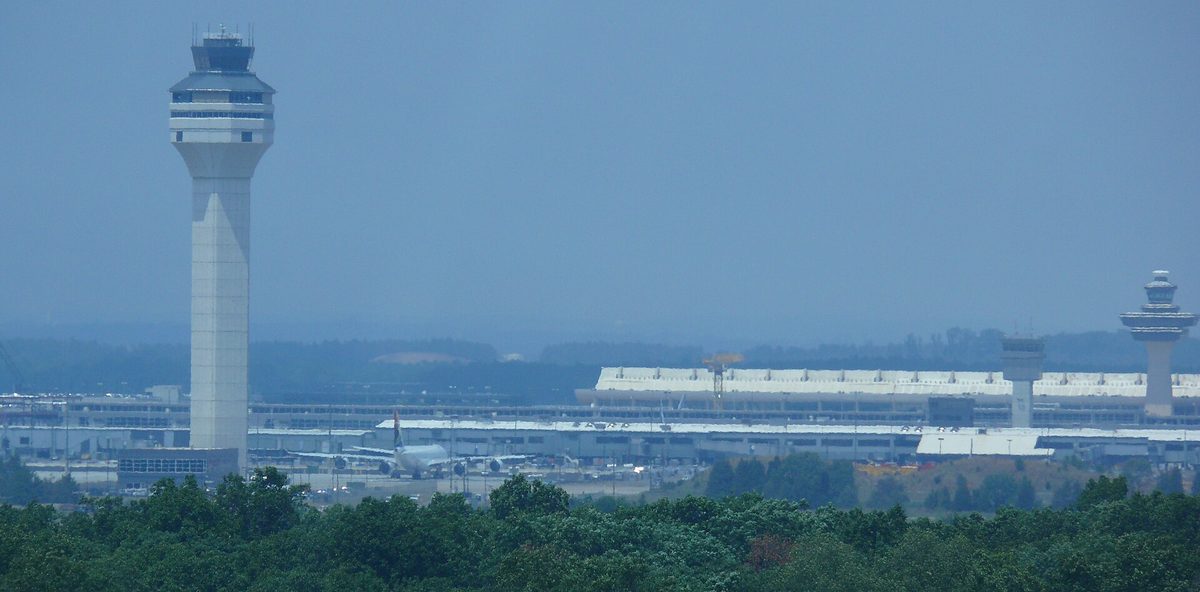
Transportation Secretary Sean Duffy's request for as much as $50 billion in emergency funding to modernize America's air traffic control system is running into stiff resistance on Capitol Hill, just days after a nationwide ground stop stranded more than a million passengers. Duffy is scheduled to make his case in person on Tuesday, November 17, when he sits in on the Senate Republicans' weekly lunch, but key Republicans — including Senate Majority Leader John Thune — say they want answers about the last big tranche of funding before they consider writing another check.
The crisis began on Friday, November 13, when a breakdown in the Federal Aviation Administration's communications network forced a nationwide ground stop. According to federal officials, the failure was prompted by the replacement of a router at a facility in El Dorado, Arkansas, as part of an ongoing effort to swap old copper wiring for fiber-optic cable. President Donald Trump weighed in on the situation for the first time on Monday, November 16, telling reporters that what passengers saw on Friday was 'very, very old equipment that had a heart attack.'
Duffy has spent the weekend arguing that only a major new infusion can prevent a repeat. He is asking lawmakers to fast-track a package of up to $50 billion for new hardware, software and telecommunications, after spending the last few months pitching an initial $30 billion. 'They just need to do a better job of explaining it to us,' said Sen. John Kennedy of Louisiana, who told USA Today he would support more money but did not understand why the request had grown 'overnight.' Retiring Sen. Thom Tillis of North Carolina was blunter, saying lawmakers needed an explanation for 'really even the basis for the $30 billion, let alone the additional $20 billion.'
The main obstacle is not disagreement about the state of the system — almost everyone in Washington agrees it is outdated — but a fight over money Congress already provided. Lawmakers approved $12.5 billion for air traffic control upgrades last year as part of the president's sweeping spending and policy bill, and Thune said on Monday that 'about $8 billion of that [is] still sitting around.' Representative Eric Larsen, the top Democrat on the House Transportation and Infrastructure Committee, put the unspent figure even higher, at $11 billion.
The spending record, as of June, is thin. According to data from a congressional source shared with CNN, the FAA had spent only $474.9 million of the $12.5 billion by then. Congress set aside $1.9 billion specifically to build a new air traffic control center, and none of that money had been spent as of June, while $4.75 billion earmarked for telecommunications infrastructure had seen only $309 million spent. Democrats have seized on the gap: Representative Rosa DeLauro, the top Democrat on the House Appropriations Committee, called Duffy's request a '$50 billion ransom without a real plan to deliver.'
Duffy and the Transportation Department say the numbers are misleading. A department source told CNN that all $12.5 billion has been 'allocated' to specific projects, and money counts as spent only once the equipment is installed and working. Duffy has said publicly that the full amount will be spent by the end of December 2028, and the department says Congress fenced the money into categories it cannot move between. 'I have no money in that $12.5 billion that I can use for a new architecture for telecom,' Duffy said on CNN's 'State of the Union' on Sunday. 'I can't build new software to manage our airplanes in the airspace because it dates back to the 1990s, but there's no money for that. There's no money for towers. Our towers are old.'
Republican senators, who control both chambers until January, are not ruling out more money — air traffic modernization has been a priority for both parties for decades — but they are making clear they will not simply approve $50 billion on the administration's say-so. 'I think it's highly unlikely that Congress is just going to write a check for $50 billion just because he says so,' Sen. John Cornyn of Texas said. 'When you do things really fast around here, you make mistakes. And that's why the whole system is designed to move methodically and deliberatively.' Sen. Susan Collins, a top Senate appropriator, said she did not yet see 'the justification yet for that much,' while Sen. Rand Paul called for a methodical look at 'what happened, what mistakes were made, where the money is being spent, before we just immediately throw more money at the problem.'
Democrats are also skeptical, though for a different reason: several have signaled they would risk a shutdown to pressure the president to end the war in Iran, and the new FAA request could become another bargaining chip in the funding talks ahead of the December 11 deadline, when government funding runs out. Sen. Chris Van Hollen of Maryland said Congress had 'given the administration what they asked for' but left the door open, saying, 'If they need more, they should come up and justify it. I will support what is necessary to have a safe system and a reliable system.'
What happens next is a week of briefings. Key lawmakers are due to be briefed behind closed doors on Tuesday, and Transportation Department and FAA staff will brief congressional staffers on the funding request during the week. One Republican, Sen. Tim Sheehy of Montana, also wants a deeper investigation into whether the outage was connected to other recent technology failures, noting that Microsoft went down on Thursday, air traffic on Friday and banks on Monday. 'I want a deeper dive. I think we too quickly dismissed that there was no malicious acts,' Sheehy said. With the lame-duck session winding down and Democrats taking over Congress in January, few lawmakers believe a $50 billion package can move in the final weeks of Republican control — which means the ground stop may end up as the incoming majority's first aviation fight.
Why it matters: The ground stop turned an old infrastructure problem into a live political fight, and the numbers explain why: Congress already handed the FAA $12.5 billion, most of it unspent, and now the administration wants four times that amount with no detailed plan attached. The dispute is about trust as much as money — lawmakers do not doubt the system is aging, but they doubt the administration's accounting. With funding expiring on December 11 and control of Congress about to change hands, the most likely outcome is a short-term fix and a much bigger fight in January, when Democrats inherit both the funding deadline and the investigation.
Spot an error? Orbit News corrects articles promptly and notes the correction in the article. See our Editorial Policy, or flag an error by messaging us on Facebook, X, or Instagram.
Related from Orbit News
Newly Elected Democrats in Denver Urge Party to Work With Trump, Not Just Investigate Him
Politics · Nov 17, 2026
Supreme Court Leaves Maryland's 'Sensitive Places' Gun Law Standing, but Thomas Signals Doubts
Politics · Nov 17, 2026