Politics
Supreme Court Leaves Maryland's 'Sensitive Places' Gun Law Standing, but Thomas Signals Doubts
The justices declined on Monday to decide whether Maryland can ban guns in stadiums, bars, parks and other 'sensitive places,' leaving the 2023 law in force — while Justice Clarence Thomas wrote that he is skeptical the restrictions are lawful.
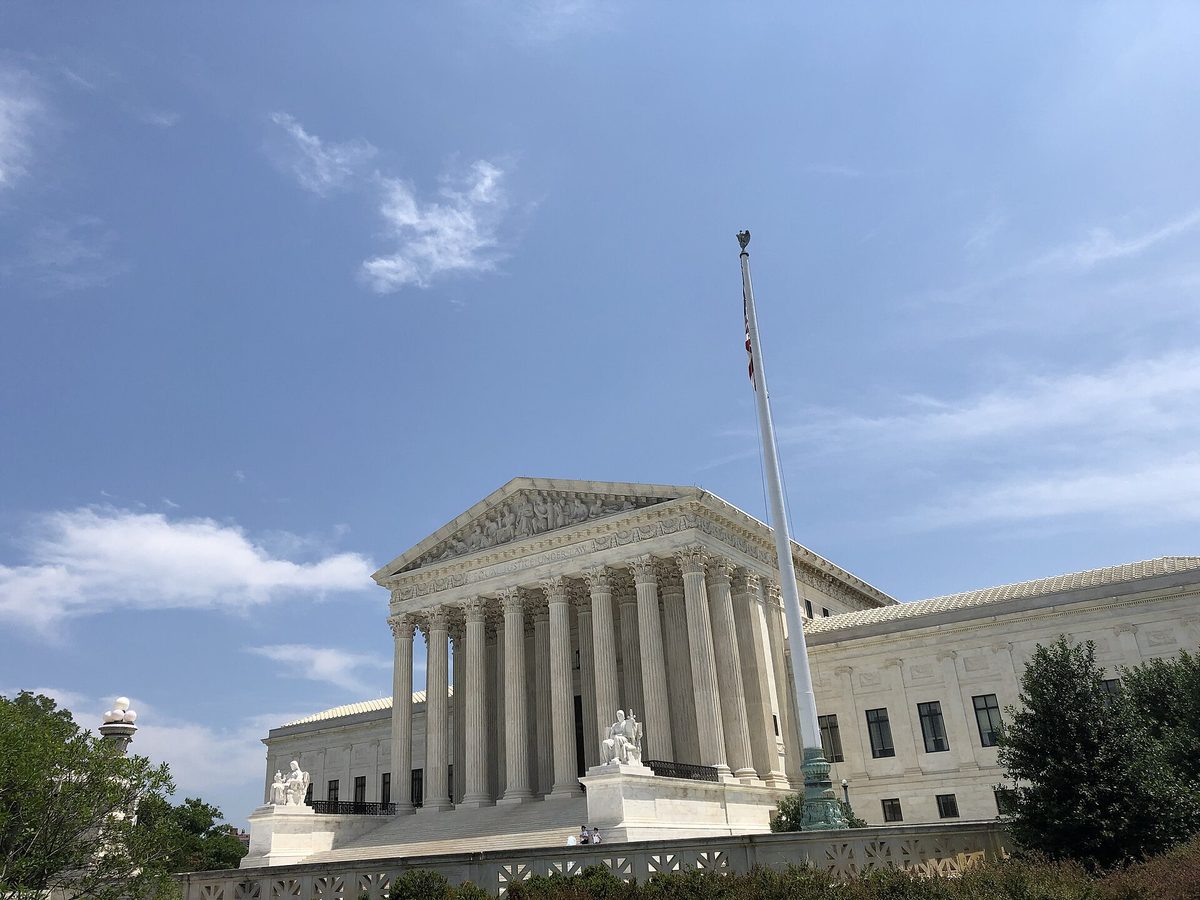
The U.S. Supreme Court on Monday declined to decide whether a Maryland law banning the carry of guns in certain 'sensitive places' violates constitutional gun rights, leaving one of the country's broadest post-2022 gun restrictions in force. The justices turned away an appeal by gun rights advocates of a lower court's decision finding that the restrictions comply with the Second Amendment's right to 'keep and bear arms.'
Maryland was one of several states to enact new restrictions on carrying firearms in locations deemed 'sensitive' after the Supreme Court's landmark 2022 ruling in New York State Rifle & Pistol Association v. Bruen expanded gun rights. The state's 2023 law, signed by Democratic Governor Wes Moore, prohibited guns in places including college campuses, hospitals, power plants, amusement parks, stadiums, bars and public parks, as well as places that sell alcohol or cannabis for on-site consumption. Those bans built on Maryland's longstanding limits covering public transit, casinos, schools and public protest sites.
The legal fight turned on the test the court set out in Bruen, which declared for the first time that the Second Amendment protects an individual's right to carry a handgun in public for self-defense. Under that test, gun control measures must be 'consistent with this nation's historical tradition of firearm regulation' — not simply advance an important government interest — to comply with the amendment. Gun rights groups, including the Second Amendment Foundation, and several firearms-owning residents sued, arguing that a number of the state's location-based restrictions failed that test.
A federal judge in 2023 upheld some of the location-based restrictions while blocking others, prompting separate appeals by the gun rights groups challenging the law and Maryland officials defending it. On appeal, the Richmond-based 4th U.S. Circuit Court of Appeals approved all of Maryland's disputed location bans, and the challengers then asked the Supreme Court to intervene. By declining the case on Monday, the justices left that appeals court ruling in place — but the decision is not a ruling that every challenged restriction is constitutional.
The court declined the case without comment, but Justice Clarence Thomas, who authored the Bruen ruling, wrote separately to say he was skeptical that Maryland's restrictions are lawful. Thomas agreed with the decision to turn away the case, saying the broad challenge by the plaintiffs would complicate the court's review. 'In an appropriate and more narrowly focused case, however, we should consider the scope of states' authority to ban firearms in 'sensitive places,'' Thomas wrote, signaling that he would be open to taking up the issue again in a case that challenges fewer provisions at once.
The Second Amendment Foundation expressed disappointment but noted that its challenge to New York's firearm restrictions in public parks is also pending before the court. 'We are hopeful the court takes a very hard look at that case and elects to restore the right to carry for the Americans all over the country that are subject to these unconstitutional laws,' foundation official Bill Sack said. The Associated Press reported that the law prohibits carrying concealed weapons into schools, mass transit, bars and other areas deemed sensitive places, and that Thomas expressed support for weighing the issue again in a 'more narrowly focused case.'
The refusal comes as the court has moved in both directions on gun rights this year. In a 6-3 ruling powered by its conservative majority, the justices in June struck down a Hawaii law that required gun owners to get an owner's permission before bringing a handgun onto private property open to the public, such as most businesses. The justices also decided unanimously in June to limit the application of a decades-old federal law that bars firearms possession by certain drug users, narrowing a measure that had threatened the gun rights of millions of Americans who use marijuana and own firearms.
The court's attention now turns to December 2, when the justices will hear a challenge to the legality of state restrictions on assault-style rifles, giving them another chance to expand gun rights in a case that involves a type of weapon often associated with mass shootings. That argument, rather than the Maryland case, is now the next major test of how far the court's gun-rights majority is willing to go.
For now, nothing changes for Maryland gun owners: the sensitive-places rules that were already on the books remain the law, and the state's bans in parks, trains, clinics, stadiums and alcohol-serving businesses stay in effect. But Thomas's statement leaves the door open, and gun rights groups are already pointing to the pending New York parks case as the narrower vehicle the justice said he is waiting for.
Why it matters: The Maryland decision shows a Supreme Court that is willing to expand gun rights in some cases while declining to answer the hardest question — what counts as a 'sensitive place' — in others. By turning the case away on procedural grounds while Thomas openly doubted the law, the court kept Maryland's bans alive without endorsing them, and it set up the December 2 assault-weapons argument as the next real test. For gun owners and state legislatures alike, the message is that the boundaries of the Second Amendment after Bruen are still being drawn one case at a time.
Reporting: KWSN · The Baltimore Banner
Spot an error? Orbit News corrects articles promptly and notes the correction in the article. See our Editorial Policy, or flag an error by messaging us on Facebook, X, or Instagram.
Related from Orbit News

Duffy's $50 Billion Air Traffic Ask Meets a Skeptical Congress After Ground Stop Chaos
Politics · Nov 17, 2026
Newly Elected Democrats in Denver Urge Party to Work With Trump, Not Just Investigate Him
Politics · Nov 17, 2026