Business
Stocks End Mixed Friday but Wall Street Still Notches a Winning Week
The S&P 500 slipped 0.4% and the Nasdaq fell 0.9% as chip stocks gave back Thursday's gains, but all three major indexes still finished the week higher.
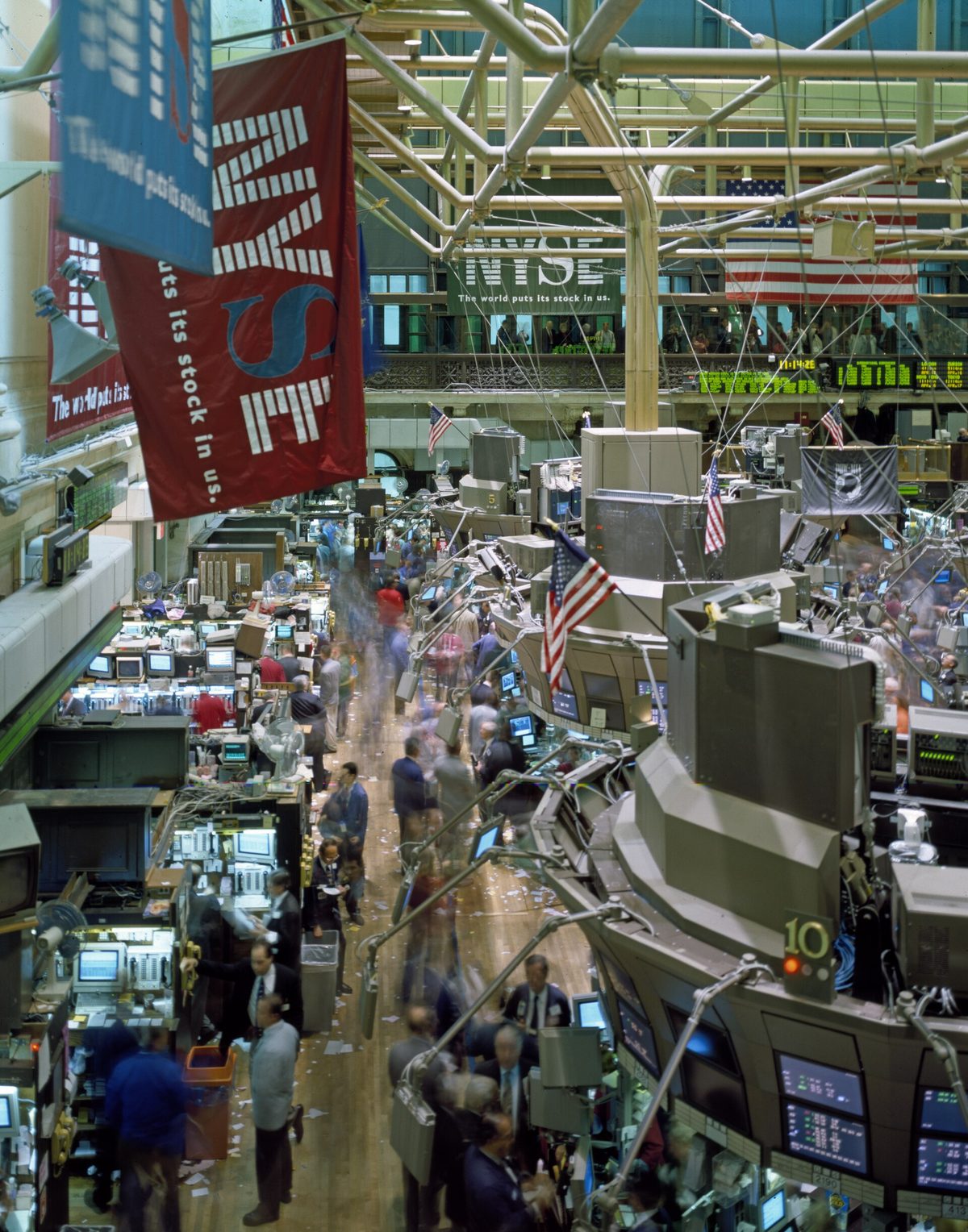
U.S. stocks closed lower on Friday as a pullback in big AI-focused companies weighed on the market, capping a turbulent week on Wall Street. The S&P 500 fell 30.73 points, or 0.4 percent, to 7,561.67, while the Nasdaq composite gave up 229.82 points, or 0.9 percent, to close at 25,136.27. The Dow Jones Industrial Average recovered from an early slide and eked out a 0.1 percent gain, rising 50.46 points to 52,347.55.
The down Friday did not erase the week's gains. The S&P 500 managed a 2.5 percent gain for the week, its first winning week since October and its biggest weekly gain since August, and the index is up 10.5 percent so far this year. The Nasdaq rose 2.3 percent for the week, its first weekly gain in five weeks, and the Dow added 2.1 percent.
Nvidia was again among the heaviest weights. The chipmaker fell 2 percent on Friday after losing just under $600 billion in market value this week. The stock has been slipping for weeks amid wider concerns about whether AI will produce enough profit to justify the costly investments and big stock values behind it.
The selling spread across the chip complex as Thursday's rally unwound. Advanced Micro Devices lost 8.8 percent, after surging earlier in the week, Broadcom fell 4.8 percent and Cisco dropped 6 percent, while Dell Technologies slid 7 percent. Even so, the selling stayed narrow: more than 60 percent of the stocks within the S&P 500 rose on Friday.
Nvidia's longtime chief financial officer, Colette Kress, will serve as interim chief executive after Jensen Huang stepped down this week. Huang stepped down after his affair with a Chinese tech executive raised U.S. national security concerns, and the fallout has put the whole AI trade under a microscope.
Bond yields told the other half of Friday's story. The yield on the 10-year Treasury rose to 5.15 percent from 5.10 percent late Thursday, while the two-year yield rose to 4.87 percent. A report on Friday showed wholesale inflation cooled a bit last month, but remains very high, and inflation at the consumer level is still running well above 3 percent.
The inflation picture keeps the Federal Reserve on course to raise its benchmark interest rate at its December meeting, with another hike likely to follow in January, economists say. The central bank held rates steady at its last meeting. Rising energy prices because of the U.S. war with Iran have been fueling inflation, and household budgets are being squeezed directly by higher gasoline costs.
Outside the AI trade, the session was calmer. Microsoft rose 0.2 percent despite suffering a global outage for its web services that disrupted email accounts and other applications. Eli Lilly rose 1.3 percent, and payment processors Visa and Mastercard also closed 1.3 percent higher. Brent crude, the international standard, settled at $95.84 a barrel, and bitcoin was trading near $68,300, extending a month-long slide.
What to watch next is whether the selling stays confined to chips — more than 60 percent of S&P 500 stocks rose on Friday even as the indexes fell — and whether the Federal Reserve follows through with the December rate hike economists now expect, with another likely to follow in January.
Why it matters: Friday's split close is the market's verdict on a week that had everything: a CEO resignation at the face of the AI industry, stubbornly hot wholesale inflation, and a 10-year yield at 5.15 percent. The week still ended higher because the selling stayed inside one crowded trade — chips — while more than 60 percent of S&P stocks rose on Friday. But the warning signs are stacking up: Nvidia has been slipping for weeks, and the bond market is pricing rate hikes, not cuts, into December and January. The weeks ahead will show whether the AI trade is stabilizing or whether the rotation out of it has further to run.
Reporting: Barchart · Investopedia
Spot an error? Orbit News corrects articles promptly and notes the correction in the article. See our Editorial Policy, or flag an error by messaging us on Facebook, X, or Instagram.