Business
SoftBank's Son Weighed a $1 Trillion Bid for SK Hynix — Then Shelved It
SoftBank chief Masayoshi Son approached Wall Street banks about financing a roughly $1 trillion buyout of memory chipmaker SK Hynix — then shelved the idea, with the company worth about $578 billion and Korean approval standing in the way.
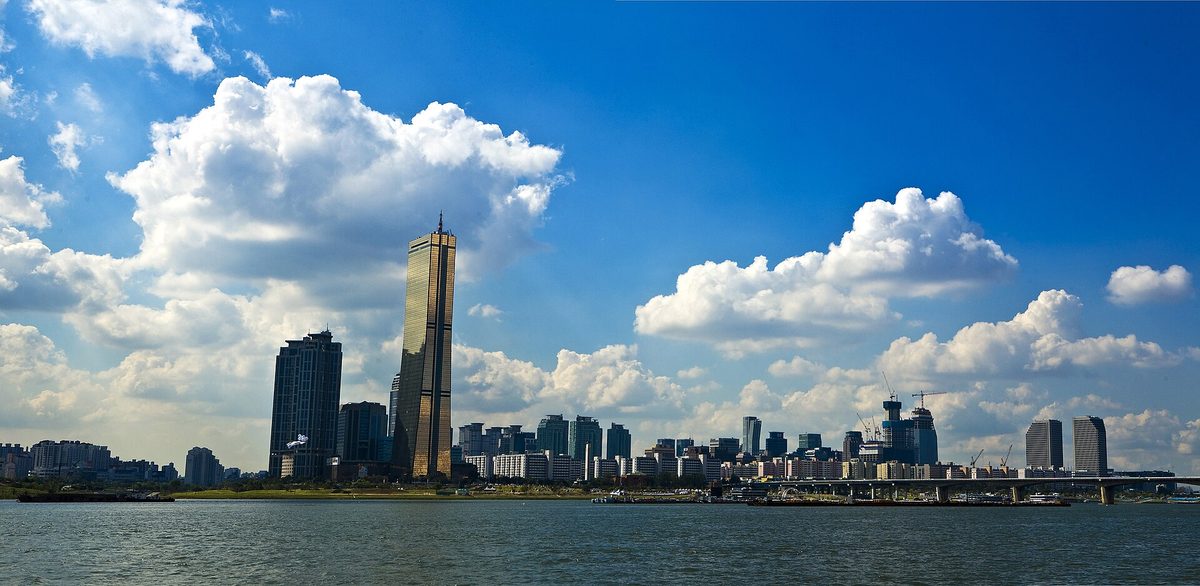
SoftBank Group Chairman Masayoshi Son sounded out Wall Street institutions about financing a possible $1 trillion acquisition of South Korean memory chipmaker SK Hynix — and then dropped the idea almost as quickly as it surfaced. The proposal, reported by The Information on Friday, Nov. 20, is no longer under active consideration, according to a SoftBank spokesperson.
'SoftBank explores many opportunities, and this one is no longer under active consideration,' the spokesperson said. The disclosure came after the company was approached about the reported discussions, bringing an early end to what would have been one of the most ambitious semiconductor acquisitions ever attempted. There is no indication that SK Hynix was involved in formal takeover negotiations, and no formal offer was ever disclosed.
SK Hynix said it had no knowledge of the matter described in the report and stressed that any foreign acquisition of the company would require prior approval from the South Korean government. The company is one of South Korea's most strategically important businesses, and Seoul would have a decisive say over any transfer of foreign control.
The scale of the proposal is what made it remarkable. SK Hynix had a market value of about $577.7 billion, or 777 trillion won, as of Friday — down sharply from a peak reached about a month earlier. A $1 trillion purchase price would have stood roughly 73 percent above that market value. Korean coverage said the $1 trillion figure reflected the stock's peak valuation plus a roughly 40 percent control premium.
The reported approach nevertheless offers an insight into Son's ambitions to secure a greater share of the artificial intelligence supply chain. SK Hynix is the world's second-largest memory chipmaker and one of only three suppliers of high-bandwidth memory — the fast memory that sits alongside AI processors — along with Samsung Electronics and Micron Technology of the United States. The boom in AI accelerators has pushed profit margins at the three memory makers toward 80 percent, and their shares more than doubled in the first half of this year before entering a correction.
Memory is the one piece of the AI supply chain SoftBank has yet to secure. The conglomerate is the largest shareholder in Arm, the chip design company, and owns Ampere Computing, a server chip designer, and DigitalBridge, a data center investment firm, as well as SB Energy, which operates data center and power businesses. It has also taken large stakes in Intel and OpenAI. Owning SK Hynix would have connected those businesses directly to the supply of memory that AI processors need, rather than relying on investments in companies that develop or deploy AI technology.
The financing, however, looked close to impossible. Son has relied on borrowing for each of his large investments — he financed the OpenAI stake, worth $64.6 billion, by pledging Arm shares as collateral, and earlier borrowed against his Alibaba holding and ultimately sold the stake to help cover costs including the $32 billion purchase of Arm. The Information reported that SoftBank's balance sheet was already stretched by its commitments to OpenAI, and there is no evidence that Wall Street banks agreed to provide the capital a $1 trillion deal would have required, or that a formal financing package was ever assembled.
Regulatory approval would have presented another major obstacle. SK Group's investment holding company, SK Square, is the largest shareholder in SK Hynix, with a reported stake of approximately 20.67 percent, so a transaction would have involved the interests of existing shareholders as well as the South Korean authorities. The memory industry's cyclical nature adds a further risk: demand for high-bandwidth memory is being driven by the rapid expansion of AI infrastructure, but semiconductor memory has historically swung between periods of shortage and oversupply, and paying a premium valuation at the height of an investment cycle could expose an acquirer to heavy losses if demand or pricing weakens.
For SoftBank, the decision to stop considering the transaction removes an enormous potential financial commitment at a time when its AI investments already require substantial capital. It does not signal a retreat from the semiconductor or AI sectors. The reported approach shows how far Son was prepared to consider expanding SoftBank's role in the AI supply chain — but owning a critical supplier is different from holding stakes in technology companies, and this time the price, the politics and the balance sheet all pointed the same way: no.
Why it matters: The story here is not a deal — there never was one — but the ambition it reveals. Son has spent the AI boom buying the layers of the stack he can afford: chip design, servers, data centers, energy. Memory, the layer Nvidia's accelerators cannot run without, is the one he does not control, and the $1 trillion number shows how far he was willing to reach for it. That the idea died within days, killed by its own financing and by Korean approval rules, is a useful reality check on the scale of AI dealmaking: even the most aggressive buyer in tech cannot simply buy his way into the memory business.
Reporting: Seoul Economic Daily · Tekedia
Spot an error? Orbit News corrects articles promptly and notes the correction in the article. See our Editorial Policy, or flag an error by messaging us on Facebook, X, or Instagram.
Related from Orbit News
EU and Indonesia Sign Landmark Trade Deal After a Decade of Talks
Business · Nov 22, 2026
Bitcoin Briefly Traded at $17,000 on Kraken's Canadian Market — and the Exchange Says the Trades Stand
Business · Nov 22, 2026