Business
Gas Prices Post Biggest Three-Week Drop Since 2008 Ahead of Thanksgiving Travel
The national average for regular gasoline fell 50.5 cents in three weeks to $3.72 a gallon — the biggest drop since 2008 outside a financial crisis — just as 72.9 million Americans prepare to drive for Thanksgiving.
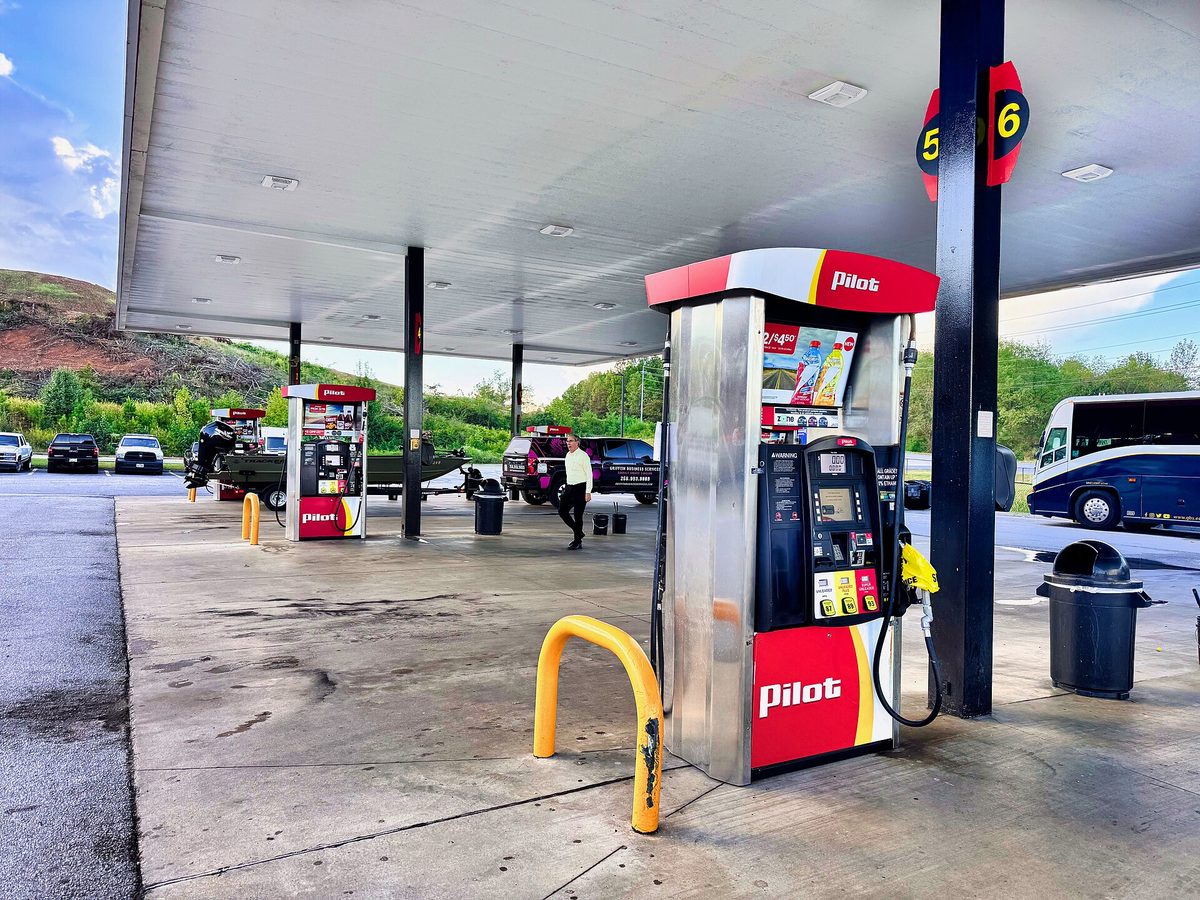
Gas prices are collapsing at a historic pace just as tens of millions of Americans prepare to drive for Thanksgiving. The national average for regular gasoline plunged by 50.5 cents between Oct. 29 and Thursday, Nov. 19, to $3.72 a gallon — the lowest since March 16, and the biggest three-week drop on record outside the 2008 financial crisis, according to a CNN review of AAA data going back to 2000.
On a percentage basis, gas prices have tumbled by about 12 percent over those three weeks. It is the biggest percentage drop since the Covid-19 pandemic lockdowns in early 2020 crashed demand and sent oil and fuel prices nosediving. Pump prices have now fallen for 26 days in a row through Thursday, the longest streak since a 33-day run that ended in late June.
The decline is broad. Prices fell in all 50 states and the District of Columbia this week, with Montana posting the largest week-over-week decrease at 38 cents and Hawaii the smallest at 3 cents. The cheapest gas in the nation is in North Carolina, at $3.09 a gallon, while Hawaii is the most expensive at $5.60, followed by California at $5.54.
The relief is real, but gas is not cheap. The $3.72 national average on Nov. 19 was 63 cents above the $3.09 average a year earlier, and Americans have spent an extra $162 billion on gasoline and diesel since the Iran war started, according to research from Brown University — more than $1,200 per household. On Feb. 28, the day the United States and Israel launched airstrikes against Iran, the national average was $2.98 a gallon.
The timing is fortunate for holiday travelers. AAA projects 81.5 million Americans will travel 50 miles or more from home for Thanksgiving, between Nov. 24 and Nov. 30 — down about 121,000, or 0.1 percent, from last year's 81.6 million, ending three straight years of record Thanksgiving travel. About 72.9 million of those travelers will go by car. Transportation data firm INRIX expects the heaviest outbound traffic on Tuesday and Wednesday, with another wave on Sunday and Monday as travelers return.
The decline may not be done. GasBuddy's Patrick De Haan told CNN that prices could slide to the mid-$3 range in the coming weeks and months — unless the Iran war seriously heats back up. Even so, Thanksgiving gas remains expensive by historical standards: the 2022 Thanksgiving Day average of $3.55 a gallon, the highest on record according to GasBuddy, is the mark this year's decline is measured against. Whether the average keeps falling will show how much of the recent decline carries through the travel week.
Why are prices falling so fast? The calendar is part of it. Demand for gas almost always declines as days get shorter and temperatures drop — 'the colder the weather gets, the less Americans drive,' said Patrick De Haan, GasBuddy's head of petroleum analysis. The switch to cheaper winter-blend fuel, which costs less to produce, is also pulling prices down, as it does every fall.
Oil markets are helping too. Crude futures have retreated from triple-digit territory, driven in part by the fact that the feared reescalation of the Iran war has not happened, at least not yet. Crude continues to exit the Strait of Hormuz even as the United States and Iran contest the narrow waterway, which has helped rebuild commercial stockpiles in the United States. West Texas Intermediate, the U.S. benchmark, was trading around $86 a barrel as of Nov. 17, against $59.91 a year earlier. Refinery outages that caused prices to skyrocket in the Great Lakes region earlier this year have also subsided.
De Haan said gas prices could slide to the mid-$3 range in the coming weeks and months — unless the Iran war seriously heats back up. 'Any sudden reescalation would likely stop or reverse the recent decline. Geopolitics are still the biggest wildcard,' he said. Diesel, meanwhile, has also eased: the national average fell 17 cents this week to $5.98 a gallon, dropping below $6 for the first time since mid-November, though it remains far above the $3.77 average of a year ago.
For drivers, the message is mixed but welcome: the cheapest fill-ups since March are arriving just in time for the busiest driving week of the year, yet prices remain well above where they were before the Iran war began, and the same geopolitics that pushed them up can push them back up again. For now, the pump is giving American families a break they have not had in months.
Why it matters: The gas price story is really two stories. The first is seasonal and mechanical: winter-blend fuel, falling demand and cheaper crude always push prices down in November. The second is geopolitical: prices are still 63 cents above a year ago because the Iran war pushed them up in the first place, and the same conflict that is now holding them down — through a blockade and tanker attacks in the Strait of Hormuz — could reverse the decline overnight. For the 72.9 million Americans driving this week, the timing is lucky; for anyone reading the trend as a lasting break, the war is the reason to be cautious.
Reporting: CNN · AAA Oregon/Idaho
Spot an error? Orbit News corrects articles promptly and notes the correction in the article. See our Editorial Policy, or flag an error by messaging us on Facebook, X, or Instagram.
Related from Orbit News

EU and Indonesia Sign Landmark Trade Deal After a Decade of Talks
Business · Nov 22, 2026
SoftBank's Son Weighed a $1 Trillion Bid for SK Hynix — Then Shelved It
Business · Nov 22, 2026