Politics
Senate Republicans Race to Confirm Trump's Judges, but Their Own Members Are Slowing the Push
With 54 days left in the majority, Senate Republicans have confirmed 58 of President Trump's second-term judicial nominees — but blue-slip fights and objections from departing senators are stalling the final sprint.
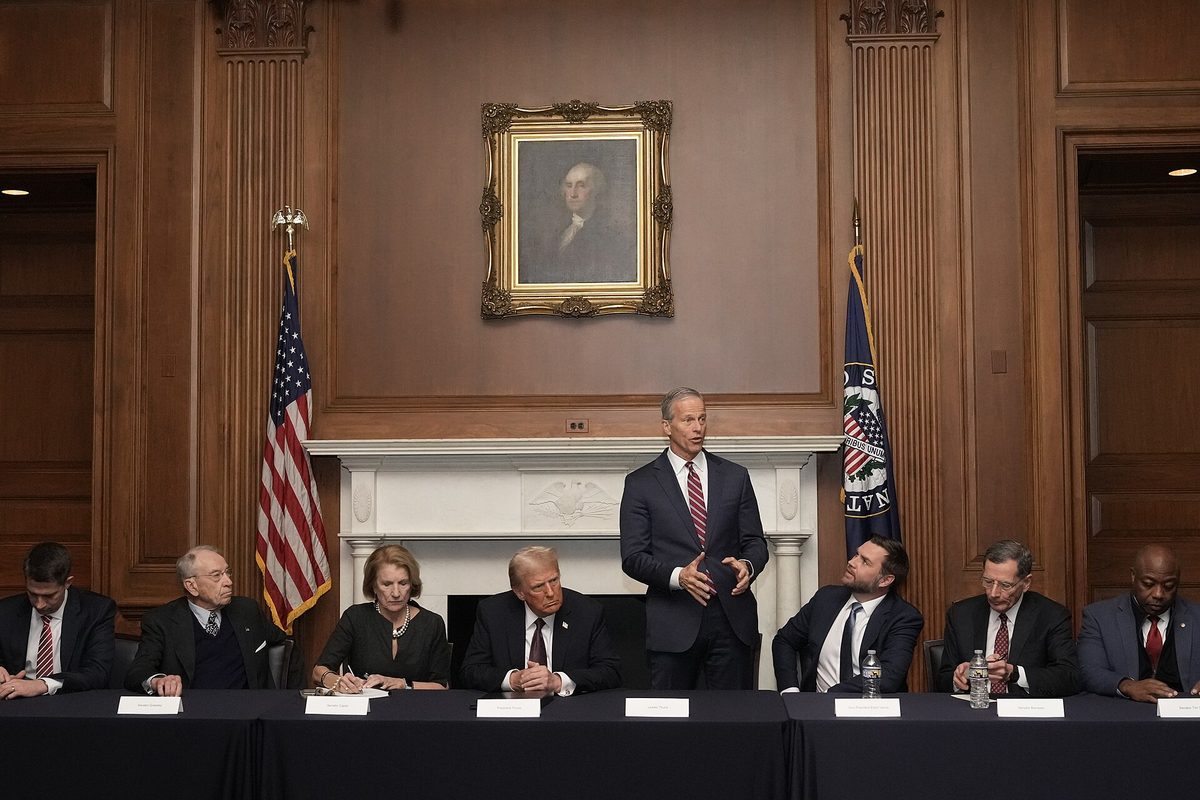
President Donald Trump is pressing Senate Republicans to confirm his pending judicial nominees before Democrats take control of the chamber in January, but the lame-duck confirmation blitz is running into resistance from inside the Republican caucus itself. A handful of Republican senators who object to nominees picked for their home states are slowing the effort, even as party leaders insist the remaining nominees can still be confirmed this year.
Senate Majority Leader John Thune and the Republican conference agreed on a resolution to make full use of the 54 days they have left in the majority, with confirming judges at the top of the agenda alongside keeping the government funded and passing defense legislation. As of last Wednesday, 24 of Trump's judicial nominees were awaiting action, according to the Senate Judiciary Committee, and Senate Republicans have confirmed 58 of his second-term judicial nominees to lifetime seats on district and appeals courts so far. Roughly one-third of active federal judges now hold Trump appointments.
The Senate confirmed its first lame-duck judicial nominee on Thursday, leaving 23 pending, and the pace is the point. Judiciary Committee Chairman Chuck Grassley wrote in a Wall Street Journal op-ed published November 10 that the committee has moved judicial confirmations 'at the fastest pace since the Reagan administration' and that he has scheduled two hearings within an eight-day span this month to consider district and appellate nominees. 'By year's end, Mr. Trump will have confirmed over 300 lifetime judges across his two terms,' Grassley wrote. 'I will have shepherded about half of those judges as Judiciary chairman during Mr. Trump's first and second terms.'
The obstacle is a long-established Senate practice: a home-state senator can block a district court nominee by not sending a 'blue slip' to the Judiciary Committee, the slip that tells the committee the senator supports the nominee. The White House has generally respected that practice, though on several occasions it has opted for its own choice rather than the preference of Republican senators — and two departing Republicans on the Judiciary Committee can deny nominees the votes they need to advance.
The flashpoint is Oklahoma. Opposition from Sen. Thom Tillis, who is acting on behalf of appointed Oklahoma Senator Alan Armstrong, leaves Oklahoma judicial nominee Zachary West short of the votes he needs at Tuesday's committee vote. Armstrong initially returned a favorable blue slip for West, a lawyer in the Oklahoma attorney general's office, then withdrew it. Tillis, who is retiring and has a fractured relationship with Trump, said senators deserve more 'respect' from the White House when it selects judges for their states. 'When I've got two Republicans from the state telling me to move on it, I move on it,' Tillis said. 'If I have one or more asking me not to, then I'm not.'
The White House has already been forced into one retreat. On Tuesday, it took the rare step of withdrawing the nomination of U.S. District Judge Lee Rudofsky to the 8th U.S. Circuit Court of Appeals in St. Louis, after Senators John Boozman and Tom Cotton of Arkansas blocked him. The administration replaced Rudofsky — a Trump first-term district appointee who issued a ruling that weakened enforcement of a major voting rights law — with Arkansas Supreme Court Justice J. Cody Hiland, the candidate Boozman preferred.
Senator John Cornyn of Texas, who lost his primary to a Trump-backed challenger, has declined to commit to supporting T. Elliot Gaiser, Trump's nominee for a federal judgeship in Dallas. Gaiser is from Ohio, and the White House picked him without going through the senatorial screening process that Texas normally uses. He currently heads the Office of Legal Counsel at the Justice Department, and he will not be able to appear at the Judiciary Committee hearing on Wednesday without Cornyn's blue slip.
Grassley has warned that Democrats intend to use their newfound power next Congress to wage an obstruction campaign, noting that blocking Trump's nominees was one of Minority Leader Chuck Schumer's stated motivations for taking back the Senate, and that the incoming Democratic chairman of the Judiciary Committee has called for a 'hard reset on the nominations process.' Democrats have signaled they will also try to slow the push: Schumer told the Associated Press after the midterms that Democrats will not fill the bench with 'crappy nominees.' There is no judicial filibuster, so a simple majority can confirm.
The stakes are generational, which is why both sides are fighting over the calendar. Trump appointed 234 judges during his first term, from 2017 to 2021, including 54 appellate judges and three of the justices in the Supreme Court's current 6-3 conservative majority. Barack Obama confirmed 329 judges and George W. Bush confirmed 340, though each served eight years to Trump's four, and Joe Biden surpassed Trump's first-term total only at the very end of his presidency. The White House signaled it intends to keep pushing: 'We expect all judicial nominees pending in the Senate to be confirmed this year,' a White House official said. Whether the Republican senators standing in the way let that happen is now the question.
Why it matters: The judicial confirmation fight is the lame duck's most durable prize: federal judges serve for life, so every seat filled now outlasts the coming Democratic majority by decades. That is why Grassley is running hearings eight days apart and why Trump is pressing so hard — and also why the resistance matters. The blue-slip fights in Oklahoma, Arkansas and Texas show that the final obstacle is not Democratic opposition but Republican senators using their last weeks in office to settle scores with the White House. If the confirmations stall, Democrats will inherit the vacancies in January.
Reporting: ZeroHedge · U.S. Senate
Spot an error? Orbit News corrects articles promptly and notes the correction in the article. See our Editorial Policy, or flag an error by messaging us on Facebook, X, or Instagram.
Related from Orbit News
Duffy's $50 Billion Air Traffic Ask Meets a Skeptical Congress After Ground Stop Chaos
Politics · Nov 17, 2026
Newly Elected Democrats in Denver Urge Party to Work With Trump, Not Just Investigate Him
Politics · Nov 17, 2026