World
Russian Missiles Land in Poland During Huge Ukraine Barrage as NATO Calls It a Grave Violation
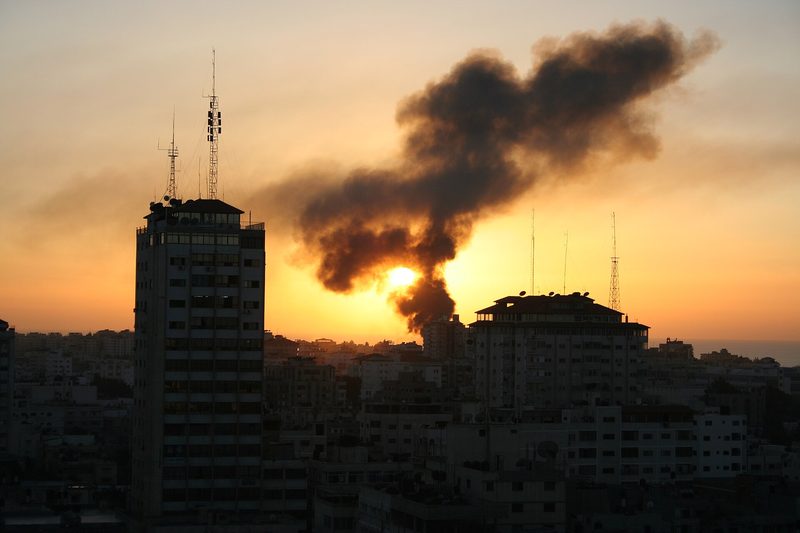
Two Russian missiles and a suspected drone came down in southeastern Poland on Friday during one of the largest air attacks of the war, in what Warsaw called a deliberate provocation timed to coincide with European military exercises.
Two Russian missiles and a suspected drone came down in Poland on Friday in what its prime minister said was likely a provocation timed to coincide with European military exercises in his country for a possible postwar mission in Ukraine. No one was hurt and no damage to infrastructure was reported, but the incursion stoked tensions between Europe and Moscow just as the United States tries to add momentum to talks it is mediating on ending the war.
Polish Prime Minister Donald Tusk said it appeared that “we are dealing with an intentional provocation” by Russia. “We know that what landed on Polish soil came from Russia. Therefore — and this is not just my own assessment, but also that of our foreign partners, including those within NATO — it does not look like an accident,” Tusk said. Defence Minister Władysław Kosiniak-Kamysz described the incursion as a Russian provocation. Tusk said the timing did not seem to be a coincidence.
One Russian missile, a Kh-101 cruise missile, went down near Nowy Lipowiec, roughly 50 kilometres (30 miles) from the Ukraine border, in an open field several hundred metres from the nearest houses. A second object, which Polish officials said could also be described as a missile, came down near Rudnik nad Sanem, about 35 kilometres (22 miles) from where the military exercises were taking place. A third object, believed to be a jet-powered drone, hit near Mołodycz, about 30 kilometres (20 miles) from the border.
European troops were taking part Friday in an unprecedented two-week military exercise that began Nov. 9 in southeastern Poland, at the Nowa Dęba training area. Thousands of personnel from 11 European nations in the Coalition of the Willing are rehearsing a possible postwar stabilisation mission in Ukraine, aimed at helping to stabilise the country and rebuild its military once the war ends. Polish officials noted that one missile crashed roughly 22 miles from the drills, and Tusk said the timing did not seem to be a coincidence.
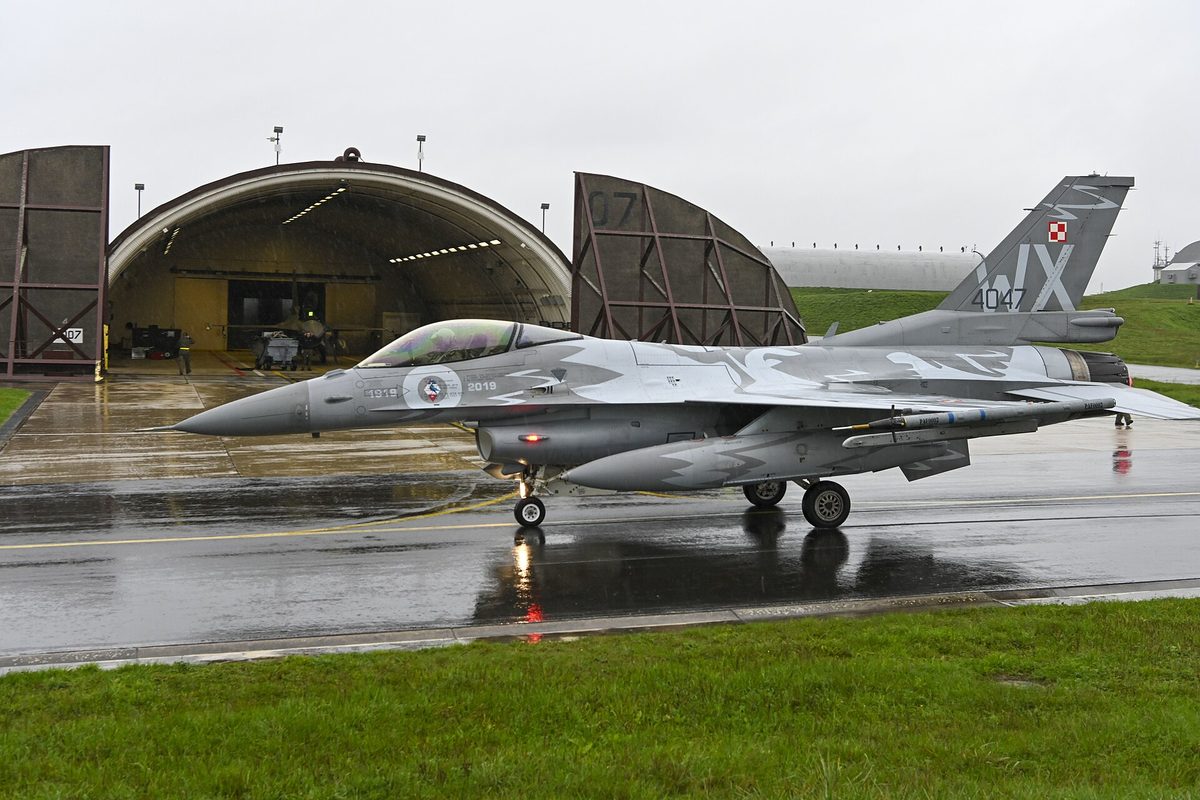
Poland’s air defences were already on heightened alert. NATO scrambled Polish, Swedish and Dutch aircraft in response, including Polish F-16s and Swedish Gripens. Polish forces tracked 11 objects that came close enough to threaten Polish airspace, and three entered it. Poland and NATO did not try to shoot the missiles and drone down, because the conditions did not meet Polish rules of engagement and the projected impact sites were in open farmland.
The incursion came during a massive overnight Russian strike on Ukraine. President Volodymyr Zelenskyy said Russia fired more than 400 drones and over 110 missiles, 27 of them ballistic and some carrying cluster warheads, killing at least eight Ukrainian civilians and wounding more than two dozen. The attack hit bridges, power plants, substations and transmission lines, forcing Ukraine’s three operational nuclear power plants to reduce generation and bringing emergency outages in 11 regions. Strikes also hit the Austrian embassy in Kyiv and landed near the Netherlands embassy, prompting France to call for a meeting of the United Nations Security Council.
Russia’s Defence Ministry said the sites it hit Friday were linked to the Ukrainian military, including a facility where missiles are assembled, a plant making components for rocket fuel and a facility where drones are assembled. The barrage came hours after President Vladimir Putin vowed a “much more painful” response to Ukrainian strikes this week that badly damaged the Kerch Bridge linking occupied Crimea with the Russian mainland. Russian Deputy Foreign Minister Sergei Ryabkov said Friday that even NATO-like security guarantees for postwar Ukraine would be unacceptable to Moscow.
NATO Secretary-General Mark Rutte called the development a “grave violation” of Polish airspace. “This incident is clearly dangerous — a consequence of Russia’s ongoing war against Ukraine,” Rutte wrote on X, adding that the alliance stands “in solidarity with Poland and will continue to strengthen our ability to deter and defend.” Rutte is expected to travel to Poland on Saturday, Nov. 21, in response. Poland has formally requested additional NATO assets, including air-defence reinforcements, under Operation Eastern Sentry, the alliance’s eastern-flank air-defence mission.
The reaction across Europe was swift. British Prime Minister Andy Burnham described the incident as “utterly unacceptable.” European Council President António Costa said Russia “continues to spread (its) threats,” and Germany’s Foreign Ministry called it “yet another example of Russia’s ongoing provocations.” Ukrainian Foreign Minister Andrii Sybiha said the incident “demonstrates the threats posed by Russian aggression to the whole of Europe and the trans-Atlantic community.” Under NATO’s Article 5, an attack on one member is considered an attack on all 32, but the clause is not triggered automatically — it is a political decision all members must agree to — and Poland also has the option of invoking Article 4, which provides for emergency consultations only.
Britain’s chief of defence intelligence struck a more measured note later Friday, saying he was confident that Russia “does not actively seek war with NATO.” But Lt. Gen. Matthew Jones, speaking at a college in Cambridge, said his greatest fear “is the risk of a significant miscalculation,” adding: “There are too many recent examples of reckless Russian behavior where, if the incident had been slightly different, the results could have been extremely serious.” Drones and missiles have repeatedly entered the airspace of Poland and other NATO countries since Russia launched its full-scale invasion in February 2022, but Friday’s incursion — three weapons, on the day of a high-profile allied exercise — is the most direct test yet of how the alliance answers.
Why it matters: This matters because it moves the war in Ukraine onto NATO soil in a way designed to be seen. Warsaw is treating the timing — the same morning allied troops were rehearsing a postwar mission in Ukraine — as the message, and the Kremlin has already said it would treat European troops deployed to Ukraine as legitimate targets. The practical question now is what NATO actually sends: Poland has asked for more air-defence assets, and Rutte’s visit on Saturday will show whether the alliance answers with hardware or only words. The wider risk, as Britain’s defence intelligence chief put it, is miscalculation — a weapon landing a few hundred metres differently, on a house instead of a field.
Reporting: The Daily Reflector · Institute for the Study of War
Spot an error? Orbit News corrects articles promptly and notes the correction in the article. See our Editorial Policy, or flag an error by messaging us on Facebook, X, or Instagram.
Related from Orbit News

COP31 Climate Talks Run Into Overtime as Draft Deal Drops All Mention of Fossil Fuels
World · Nov 21, 2026
Denmark Expels Russian Defence Attaché Over Alleged Plot to Kill Ukrainian Rapper
World · Nov 21, 2026