World
Israeli Tanks Cross Gaza Ceasefire Line in First Ground Operation Since Truce
Israeli tanks crossed the Yellow Line in central Gaza for the first time since the October 2025 truce, displacing about 6,000 people, as the board overseeing the ceasefire warned the deal risks collapse.
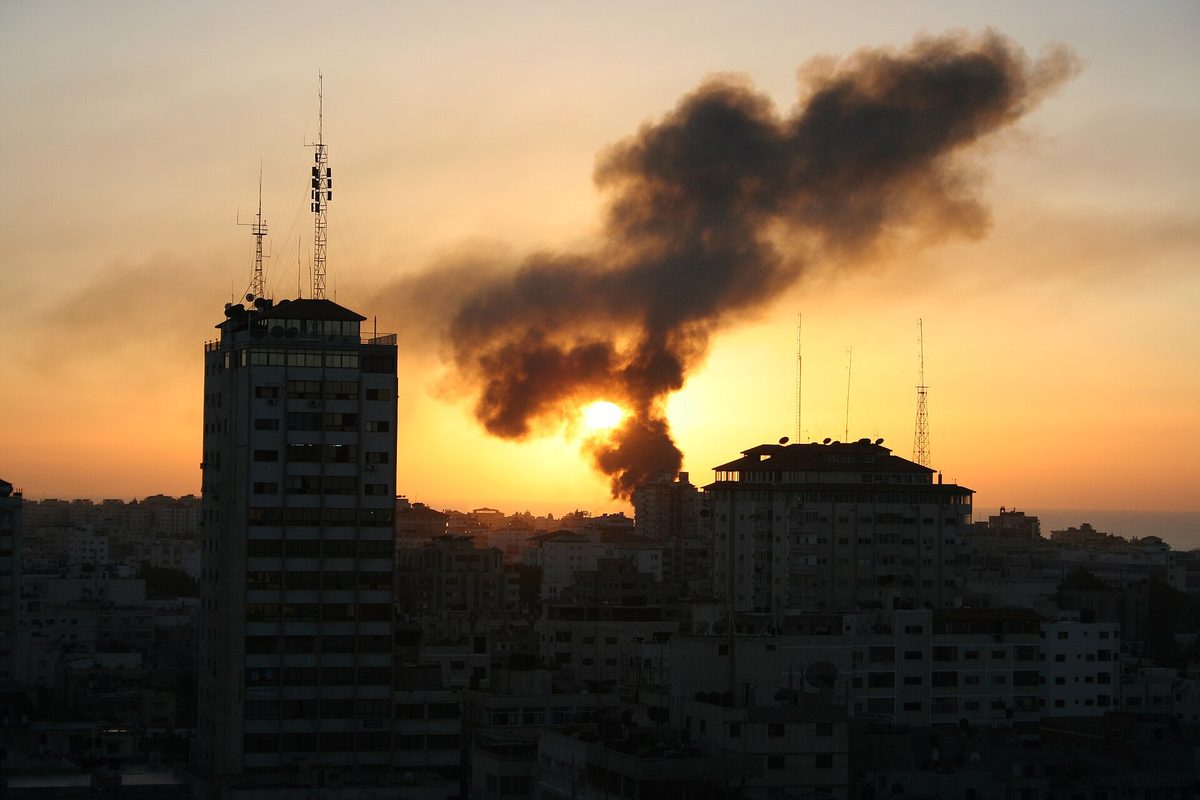
Israeli tanks crossed the ceasefire “Yellow Line” in central Gaza on Wednesday in the first ground operation across the boundary since the U.S.-brokered truce took hold in October 2025, forcing thousands of displaced Palestinians to flee their shelters. The Israeli military said the raid near the Nuseirat and Bureij refugee camps was a limited effort to destroy a Hamas tunnel that posed an immediate threat to its forces. By Thursday morning the operation was over, the military said, and Gaza’s main north-south road had reopened — but the crossing has become the sharpest test yet of a ceasefire that the body overseeing it now warns could collapse.
Israeli tanks and engineering vehicles pushed west of the Yellow Line into Hamas-controlled central Gaza on Wednesday, the Israeli military confirmed, in a joint operation with the Shin Bet security service. Troops under Southern Command moved along Salah al-Din Road, the main north-south route through the enclave, while artillery fire covered the advance north of the Nuseirat camp. The Coordinator of Government Activities in the Territories, the Israeli body overseeing civilian affairs, ordered residents in three blocks north of Nuseirat and Bureij — marked 660, 661 and 666 on military maps — to stay clear, and closed that stretch of Salah al-Din Road until further notice.
The military said the operation was launched to “dismantle a terror tunnel west of the Yellow Line that posed an immediate and direct threat to IDF troops.” Israeli media, citing military sources, reported that the advance extended approximately 300 to 400 metres beyond the line and was expected to last several days. Verified videos of the aftermath reviewed by the BBC showed destruction, earth banks and heavy vehicle tracks more than 1.2 kilometres beyond the line — believed to be the furthest Israeli troops have advanced into central Gaza since they occupied the Netzarim Corridor before the ceasefire. The military did not publicly provide a detailed account of the tunnel’s location or dimensions.
Families fled the northern part of the Nuseirat refugee camp and nearby shelters as the raid, gunfire and tank shells reached the area, witnesses and correspondents said. The Gaza government media office estimated that around 6,000 people were forced to flee their homes and tents, calling it the war crime of forced displacement. An Israeli airstrike on the town of al-Mughraqa, north of the camp, killed one person and wounded several others, an official at al-Awda Hospital in Nuseirat said. Gaza’s Hamas-run Civil Defence agency said three people were killed in three separate Israeli drone strikes on Wednesday. Gaza’s civil defence said Israeli strikes killed six more people on Friday.
Hamas called the operation and the forced evacuations northeast of Nuseirat “a dangerous development and a flagrant violation of the ceasefire agreement,” and urged mediators to “intervene immediately.” The Yellow Line was established under the October 10, 2025, ceasefire and marks the boundary of the area of Gaza that remains under Israeli control. Israel has continued to move that line gradually, and it now encompasses around two-thirds of the enclave, according to Al Jazeera. The truce, negotiated with the involvement of the United States, has been in force for 13 months, but near-daily Israeli strikes have continued throughout that period.
The ground operation came a day after the U.S.-backed Board of Peace, which oversees the ceasefire framework, accused both Israel and Hamas of failing to meet their commitments to end hostilities. In a report delivered to the United Nations Security Council on Tuesday — its first annual assessment — the board warned that the fragile agreement risks collapse if its terms are not fully implemented, saying the distance between what was agreed and what is happening on the ground is the principal risk to the process. “A ceasefire that delivers nothing visible cannot be sustained indefinitely,” the report said, according to the Associated Press, which obtained a copy.
The report, a copy of which was obtained by the AP, said the interim administration meant to govern Gaza has not been admitted to the territory, and that the stabilisation force, Israeli withdrawal and reconstruction have all been delayed behind it. Hamas formally accepted the Board of Peace roadmap in July, committing to give up its weapons, but Israel has refused to sign the agreement letting the International Stabilization Force deploy in Gaza, and has not approved paperwork letting vetted recruits for Gaza’s new Palestinian police force leave the Strip for training in Egypt and return. Donors have pledged about $18 billion for Gaza’s reconstruction through the board, but rebuilding has yet to begin, and most of the $280 million requested for the initial building phase remained unspent as of September.
Israel’s formal response to the report was blunt. Defence Minister Israel Katz said on Wednesday that Israel will not withdraw until Hamas is dismantled and Gaza is demilitarised. Egypt’s foreign minister said Hamas must carry out disarmament understandings. The board’s mandate under Security Council Resolution 2803 ends on December 31, 2027, unless the council extends it. For the families who fled Nuseirat this week, the argument over who is failing the deal is secondary to the fact that, 13 months into a ceasefire, tanks are again rolling down Salah al-Din Road.
Why it matters: This is the first time Israeli ground forces have publicly crossed the Yellow Line since the truce began, and it matters precisely because the crossing was announced, limited and completed within a day — a deliberate demonstration that Israel will still send tanks into Hamas-held territory when it chooses. The Board of Peace report, delivered the same week, frames the deeper problem: the ceasefire’s institutions barely exist. There is no interim administration in Gaza, no stabilisation force, no reconstruction and no agreed disarmament, and both sides are now blaming each other for the gap. A truce that delivers nothing visible, as the board put it, cannot be sustained indefinitely — and this week showed how quickly it can start to look like war again.
Reporting: AAP · Washington Examiner
Spot an error? Orbit News corrects articles promptly and notes the correction in the article. See our Editorial Policy, or flag an error by messaging us on Facebook, X, or Instagram.
Related from Orbit News
Russian Missiles Land in Poland During Huge Ukraine Barrage as NATO Calls It a Grave Violation
World · Nov 21, 2026
COP31 Climate Talks Run Into Overtime as Draft Deal Drops All Mention of Fossil Fuels
World · Nov 21, 2026