World
Russia Hits Kyiv Bridges in Massive Overnight Barrage Hours After Trump Calls Putin ‘Tired’ and Ready for a Deal
More than 400 drones and 110 missiles struck Ukraine overnight, killing at least eight people, knocking out power as temperatures fall below zero, and spilling into Polish airspace.
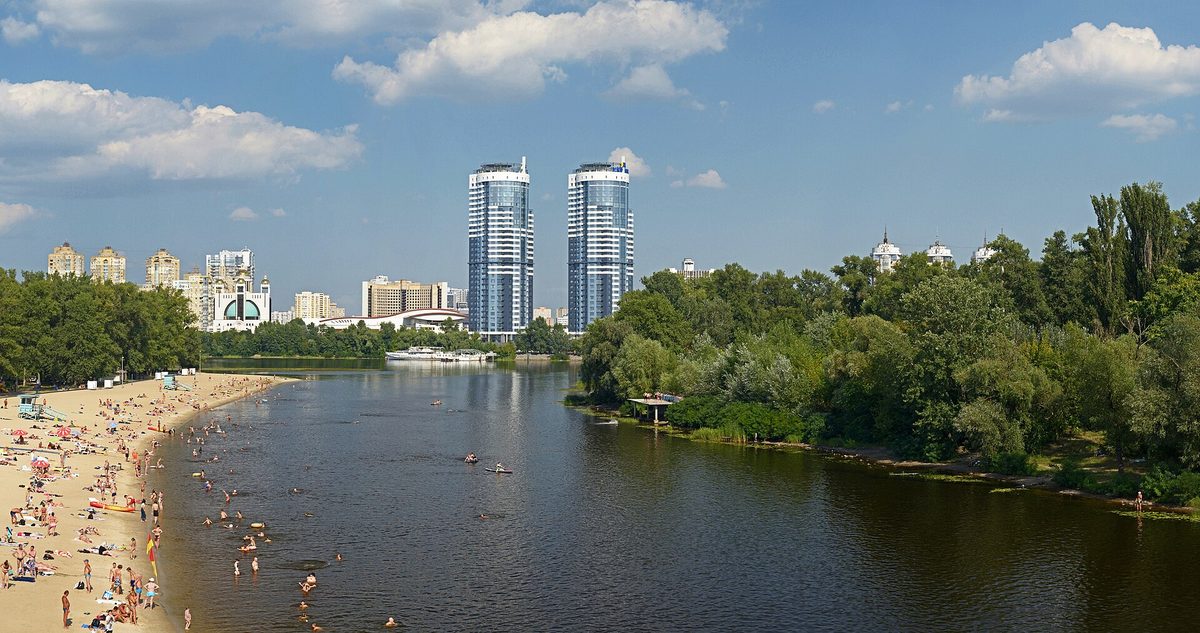
Russia launched one of the largest missile and drone attacks of the war on Ukraine overnight into Friday, hours after President Vladimir Putin met his American and Chinese counterparts for historic trilateral talks in which the three powers billed themselves as a force for peace. Kyiv said Russia fired at least 110 missiles overnight, an unusually large number even amid Russia's frequent aerial assaults, along with more than 400 drones. At least eight people were killed and 28 injured in the attack, which lasted more than ten hours, according to Ukrainian authorities.
The strikes hit three of Kyiv's bridges, the Podilsko-Voskresenskyi, Darnytskyi and Pivdennyi bridges that cross the Dnipro River and link the two sides of the capital, in what Ukrainian officials said were the biggest strikes on the crossings since Russia's full-scale invasion began in February 2022. Mayor Vitali Klitschko said the bridges were damaged and urged residents to avoid traveling to work by car. More than a third of the capital's 3 million residents lived on the eastern bank of the river before the war, but the vast majority work on the western bank, where most government institutions and companies are located, so the damage threatens to snarl the city for days.
Six people were killed in Kyiv, and two more died when a strike hit the Sknyliv railway station in the western city of Lviv, where at least 10 people were injured. An attack on a Kyiv water utility facility killed three employees, and water pressure dropped in four districts of the capital, with some buildings facing a temporary loss of water supply. Russian drones also hit a hospital in Kharkiv, Ukraine's second-biggest city, wounding four people, and struck apartment buildings in the southeastern Dnipropetrovsk region, injuring five more.
The attack also knocked out power across much of the country just as temperatures are beginning to drop below zero. Several districts in Kyiv were left without power, according to energy company DTEK, and the state grid operator Ukrenergo introduced emergency power outages in the western regions of Lviv, Zakarpattia and Ivano-Frankivsk, calling the situation in the power grid “extremely critical.” Ukraine's air force said it shot down 380 Russian drones, 79 cruise missiles and three ballistic missiles, but of the 27 ballistic missiles Russia fired, only three were intercepted, reflecting Ukraine's critical shortage of missiles for its American-made Patriot air defense system.
President Volodymyr Zelensky said the tactics were designed to make the damage worse. “This was one of the largest attacks. The strike tactics were particularly vicious this time: several groups of missiles were launched, with pauses of 20 to 30 minutes between them to make it harder to put out fires, clear rubble, and carry out repairs,” he said. Zelensky said Russia also used missiles with cluster warheads in the assault. Russia's defense ministry said in a post to Telegram that it had launched a “massive strike using high-precision weapons from land, sea, and air,” as well as drones, targeting Ukrainian military and energy facilities, port infrastructure in the Odesa region and transport infrastructure in Kyiv. Zelensky answered that “absolutely all the targets were ordinary civilian infrastructure, things that literally sustain people's lives.”
The assault came hours after Putin left China following a day of meetings in Shenzhen with U.S. President Donald Trump and Chinese leader Xi Jinping. The talks failed to produce any breakthrough in Moscow's more than four-year war in Ukraine, and appeared to be used by Putin as an opportunity to repeat his maximalist demands in front of a global audience. Putin hailed the summit as historic and told reporters the discussions took place in a “relaxed and very intimate atmosphere.”
Trump spoke with European leaders after the summit and, according to a senior European official with knowledge of the call, described Putin as “tired” and ready for peace, with the message that Europe should “reach out and grasp at the opportunity.” The Europeans were described as constructive in response but wanting proof. Poland's Prime Minister Donald Tusk, who was part of the call, said Trump sounded “fairly optimistic,” but that his words were received “very cautiously in the room.” Tusk added, “I don't hide the fact that I've heard this very often from President Trump. His belief in Putin's goodwill seems unshakable, even though so far there are no facts to support it.”
Putin had promised retaliation after Ukraine struck the strategic multibillion-dollar bridge linking Russia with occupied Crimea for a third time this week, destroying a span of the road bridge and damaging the parallel railway line. “There will be no negotiations,” he said on Thursday. “I believe our response, as I have just said, will be far more painful than what the Kyiv regime did to the bridge.” Ukraine said it also hit a Russian oil pumping station in Tatarstan, a critical part of the Druzhba pipeline, and three Russian ballistic launchers.
The attack spilled beyond Ukraine's borders. The Polish government said Polish and NATO fighter jets were scrambled and Patriot air defense systems activated early on Friday after Poland's airspace was violated, with objects flying in and falling inside the country's territory. Poland's defense minister said three objects, likely two missiles and a drone, had crossed the border, and confirmed that a Kh-101 cruise missile came down at Nowy Lipowiec, about 50 kilometers from the Ukrainian border. Prime Minister Tusk denounced what he called a deliberate provocation by Moscow, saying, “We know that what landed on Polish soil came from Russia,” and NATO Secretary General Mark Rutte condemned the attack and its spillover into alliance territory. No one was hurt in Poland and no infrastructure was destroyed.
With frontline advances largely frozen this year, both sides have stepped up air attacks, with Kyiv pounding Russia's refinery network and Moscow striking Ukraine's electricity infrastructure and transport logistics. The overnight barrage was the largest yet on the Dnipro bridges, and it landed on the eve of winter, when long power cuts in freezing temperatures are themselves a weapon. Zelensky said on Telegram that “Putin launched this attack in a highly demonstrative manner,” adding, “Russia is trying to compensate for its military and diplomatic impotence with precisely this kind of terror, precisely these attacks on life.”
Why it matters: This attack matters because it exposes the gap between the diplomacy in Shenzhen and the war on the ground: within hours of Trump telling European leaders that Putin is tired and ready for a deal, Russia launched one of its biggest air assaults of the war and violated Polish airspace. The targeting of Kyiv's bridges and power grid as winter begins shows Moscow's strategy is to make Ukrainian cities unlivable, while the spillover into Poland tests NATO's patience. Whether Europe treats the strike as proof that Putin is not ready for peace will shape the talks that follow.
Spot an error? Orbit News corrects articles promptly and notes the correction in the article. See our Editorial Policy, or flag an error by messaging us on Facebook, X, or Instagram.
Related from Orbit News
Britain to Give Ukraine More Than 1,000 Long-Range Strike Drones in £260 Million Package
World · Nov 20, 2026
Young People Walk Out Across Europe in Coordinated Strike Over Living Costs and Military Spending
World · Nov 20, 2026