World
Young People Walk Out Across Europe in Coordinated Strike Over Living Costs and Military Spending
Students in more than 25 countries walked out of school on Friday, demanding money for housing and education instead of weapons, as trade unions staged a general strike in Italy.
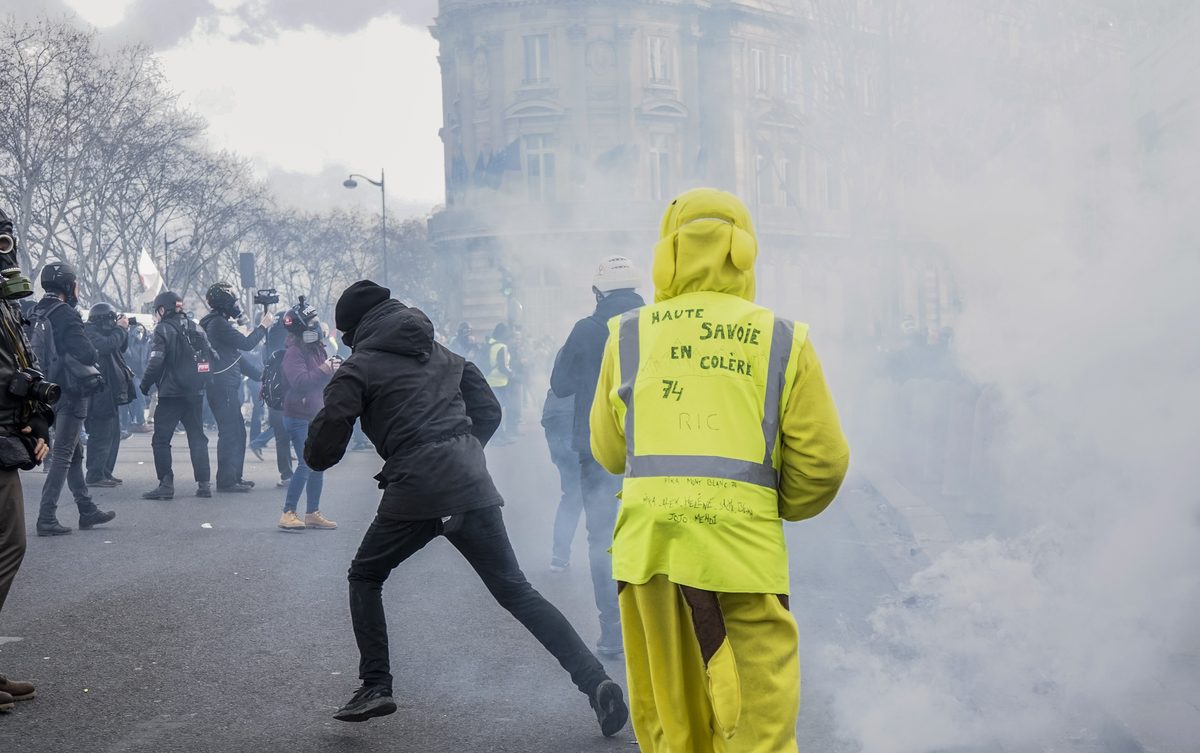
Tens of thousands of young people filled Europe's streets on Friday in an organized international youth-led day of action across more than 25 nations, walking out of schools and universities over the rising cost of living, tuition fees and underfunded education systems, and what they cast as their leaders' complicity in war. The action, coordinated by a coalition of more than 50 youth and student groups under the slogan “Fight for our future, not their wars,” is set to run through the weekend, with demonstrations planned in dozens of cities from Friday to Sunday.
The demands stitch together the grievances of a generation. The coalition, which calls itself Youth Strike, wants affordable housing, properly funded public education and healthcare, higher wages and action on the climate crisis, and it wants governments to stop pouring money into rearmament. “We are united by the same demands: a dignified life, with access to education, housing, welfare and a future worth fighting for,” said Alessandro Di Miceli of the Italian organization Rete della Conoscenza on the campaign's website. Organizers say billions are being spent on the military “at the same time that these resources are desperately needed for investments in education, youth policy, housing and social welfare.”
In Britain alone, students from more than 350 schools, colleges and universities were expected to walk out, according to Socialist Students, one of the groups taking part. “Young people will not sit quietly while our schools, colleges and universities are cut and billions are found for war,” the group's national chair, Adam Powell-Davies, said in a statement. “Fight for our future, not their wars.”
In Germany, up to 10,000 students were expected at rallies in the western city of Cologne, and the loose alliance of groups calling itself “GenZ regelt,” roughly “Gen Z rules,” said it expected 15,000 people to join protests in Berlin. Alongside the economic demands, German students are protesting against possible changes in military policy, including fears that mandatory military service could be reintroduced and military training expanded. Demonstrators in Frankfurt carried signs against underfunded schools, social services, culture and healthcare, rising living costs and military conscription.
Italy saw some of the largest actions of the day. Thousands of students and workers protested across the country as the CGIL, Italy's largest trade union confederation, staged a general strike against Prime Minister Giorgia Meloni's economic policies, demanding higher wages and more spending on public services. The unions announced around one hundred demonstrations across Italy, and the stoppage, scheduled to last the entire working day, affected schools, medical facilities, the public sector and part of public transport. Students marched in Rome, Genoa, Bologna and Milan calling for an end to rearmament, and in the capital protesters chanted “Money for schools, not war” and “We want to live life without the high cost of living.”
The protests have been building for months in several countries at once. Student protests began in France in September, where demonstrators are demanding more resources for education, the renovation of dilapidated schools and more trained staff, and French high schools have been blockaded since mid-September. France's Yellow Vest movement, which rattled President Emmanuel Macron with street protests in 2018 and 2019, is among the organizers of this week's actions, which in France coincide with the eighth anniversary of that movement. In Spain, the housing crisis has driven the protests since September, when an 87-year-old pensioner was evicted from his rental apartment after the property manager sharply increased the rent, and Friday's demonstrations fall on the anniversary of the death of dictator Francisco Franco, with youth demonstrations expected at midday and anti-fascist rallies in the evening.
The organizers' case is that the money exists but is going to the wrong place. Representatives of organizations in France, Spain, Italy, the UK, Portugal, Greece and Belgium hope to bring “millions” of people onto the streets from November 20 to 22, and their six broad demands range from a guaranteed right to housing for everyone to taxing the rich and ending rearmament policies. Climate is also at the heart of the calls for a better future, and many protesters are also speaking out against right-wing extremism and police violence they say they have encountered during demonstrations.
Governments answer that the rearmament is not a choice but a necessity. The demonstrations come as Russia's invasion of Ukraine approaches its fifth year and the European Union seeks to rearm in the face of the Russian threat, and officials argue that defense spending is required to keep the continent safe. The protest organizers say funds allocated to rearmament should instead be spent on education, youth policies and housing, and that young people are being asked to pay for a war economy with their futures. Earlier this fall, Gen-Z protests erupted across the continent over growing disenchantment that governments have not future-proofed against unregulated artificial intelligence, high unemployment and the climate crisis.
Whether the weekend lives up to the organizers' hopes will be clear by Sunday night. Turnout figures have not yet been reported, and the expected participation numbers are the organizers' projections. But the coordination itself is new: more than 50 student and youth organizations, trade unions and housing rights activists, acting together across more than 25 countries, with a single slogan and a shared set of demands, in a week when the war in Ukraine and the cost of living are colliding in every European capital at once.
Why it matters: This strike matters because it turns two separate European arguments, the cost of living and the rearmament drive, into a single generational challenge. Governments say defense spending is the price of safety while Russia's war grinds on, but the protesters argue that safety without affordable housing, funded schools and a livable future is not safety at all. With elections due in Spain, France, Italy and Greece, the question of who pays for Europe's rearmament is about to become an electoral one, and the young people in the streets this weekend are staking their claim to the answer.
Reporting: CNN · Sweden Herald
Spot an error? Orbit News corrects articles promptly and notes the correction in the article. See our Editorial Policy, or flag an error by messaging us on Facebook, X, or Instagram.
Related from Orbit News
Russia Hits Kyiv Bridges in Massive Overnight Barrage Hours After Trump Calls Putin ‘Tired’ and Ready for a Deal
World · Nov 20, 2026
Britain to Give Ukraine More Than 1,000 Long-Range Strike Drones in £260 Million Package
World · Nov 20, 2026