World
Hundreds of Thousands Fill Prague's Letná Park to Defend Public Media From Government Overhaul
Hundreds of thousands of Czechs filled Prague's Letná Park on Sunday to oppose a government plan to scrap the public broadcasting fee and fund Czech Television and Czech Radio from the state budget — a move critics say would hand politicians control over the media.
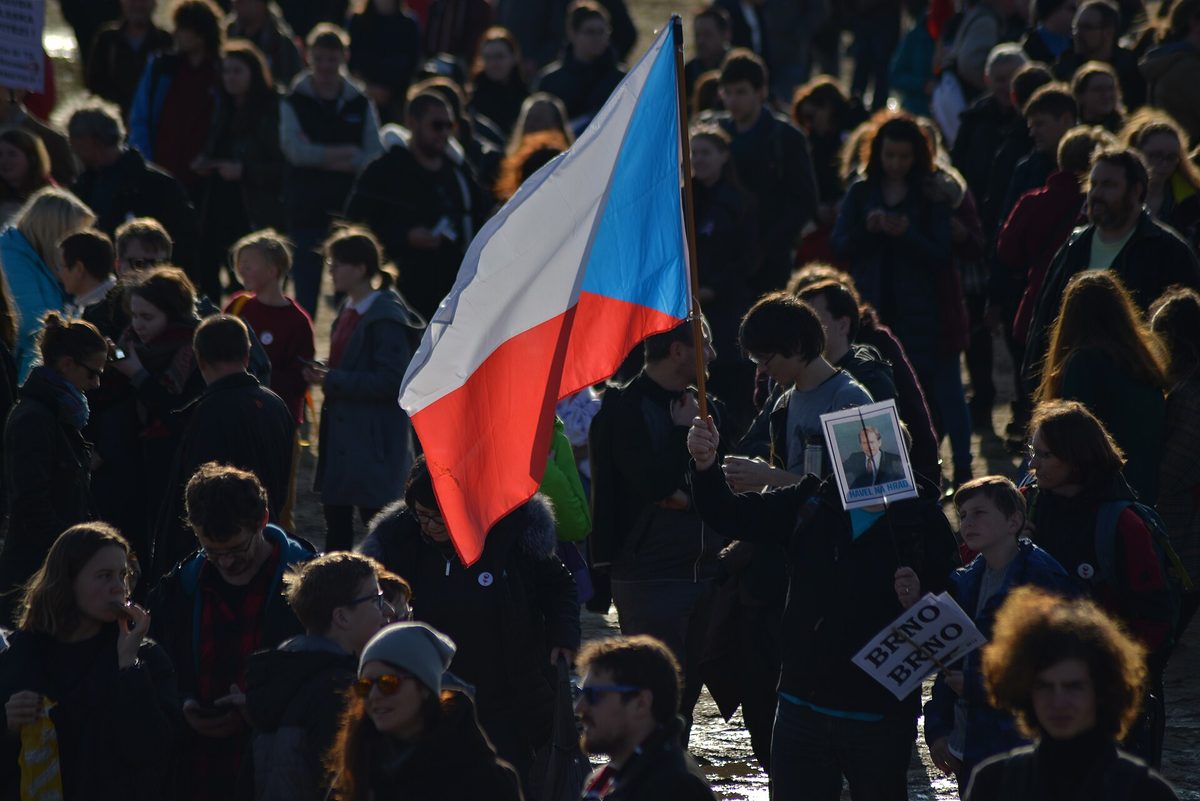
Hundreds of thousands of Czechs rallied in Prague on Sunday against a government plan to cut a public media fee and move funding to the state budget, in what organisers said could end up as the largest demonstration since the Velvet Revolution in 1989. The protest filled Letná Park, the plain overlooking the Czech capital that is closely associated with the mass mobilisation that swept away Communist rule, two days before the anniversary of the revolution's start.
Organisers said Sunday's turnout exceeded an anti-government protest of more than 200,000 people in March. Mikuláš Minar, chairman of the civic group Milion Chvilek (A Million Moments) that organised Sunday's protest, estimated some 400,000 attended. Protesters, carrying signs that read "Hands off the media" and "Let media deal with politicians", clogged nearby metro stations and filled Letná Park. Speakers included students, soldiers and former dissidents who signed the Charter 77 initiative, and many in the crowd wore pointed hats folded out of newspapers as a tribute to an animated character who has introduced Czech Television's nightly children's bedtime stories for decades.
At the centre of the dispute is a draft bill from the populist government of billionaire Prime Minister Andrej Babiš, backed by the far-right SPD and the eurosceptic Motorists parties, which accuses Czech private and public media of bias. The bill would cancel a 205-crown ($9.26) monthly household broadcasting fee currently used to fund Czech Television and Czech Radio, and pay both broadcasters from the state budget instead. A 15 percent financing cut proposed as part of the change would reduce television's nominal budget to the level of 2008 and that of radio to 2005, and broadcasters say that is unworkable.
The financial consequences would be substantial. According to assessments by broadcaster management, Czech Television's 2027 budget would fall by approximately 1 billion korunas, or 41 million euros, to around 237 million euros, while Czech Radio faces a reduction of approximately 400 million korunas, or 16 million euros, bringing its annual resources to around 85 million euros. Management projections indicate that between 450 and 700 positions could disappear across the two broadcasters — 300 to 500 at Czech Television and 150 to 200 at Czech Radio — with investigative reporting, regional news operations and original production among the activities facing cuts.
Critics have compared the government's media bill to changes in Hungary under former Prime Minister Viktor Orbán, who built an array of pro-government media. Opposition parties and civic groups also slammed the government for rushing through the initial bill in the middle of the night in October, calling for the ruling coalition to rescind the law. The proposal passed its first reading in the Chamber of Deputies at 4:36 a.m. in late October, and the parliamentary committee considering the bill suspended its deliberations on October 30.
The controversy has drawn warnings from across Europe. The European Broadcasting Union, European Federation of Journalists, Reporters Without Borders and International Press Institute have warned that the proposed combination of state financing and reduced resources could undermine the autonomy of Czech public media. European Commissioner for Justice Michael McGrath has emphasised that public-service broadcasting must be financed according to transparent and objective criteria, with funding that remains sufficient, stable and predictable.
"An elected government has the right to govern but it does not have the right to do whatever it wants and to dismantle democratic institutions," Minar told the crowd. "Show that your aim is not to take control of them and let experts propose genuine safeguards for their independence from political power." The government rejects accusations that its objective is political control. Babiš says the government is merely meeting a promise to lighten the financial burden on people, and ministers maintain that the reform fulfils an electoral commitment and deny that it is intended to interfere with journalistic independence.
For the protesters, the issue is institutional rather than simply financial. Critics say shifting funding to the state budget would undercut the media's relationship with paying viewers and make the sector susceptible to political pressure, even without any direct instruction to censor. A broadcaster can remain formally independent while becoming increasingly constrained by the political authorities controlling its resources — and the examples of Hungary, Poland, Slovakia and Serbia have already raised concerns about how durable the protections for independent journalism really are.
The dispute has been building for weeks. Earlier this month, Czech public television and radio workers escalated the fight with a one-day strike that led to broadcast curbs and protests backed by artists and students. Organisers estimated attendance at between 350,000 and 400,000, although international news agencies reported varying figures, ranging from tens of thousands to several hundred thousand. The bill has passed a preliminary vote and awaits further debate, and its final provisions remain unsettled. "I know that our entire Czech Television is a guarantee of truth and objectivity," pensioner Milana Rudolfova, 72, told Reuters. "If we do not have public television and radio then unfortunately we will not be able to believe anything anymore."
Why it matters: The size of the crowd is the story, but the argument behind it is about how a democracy pays for the journalism that holds it to account. A licence fee is an imperfect system, but it puts a wall — however thin — between the broadcasters and the politicians they cover. Replacing it with direct budget funding plus a 15 percent cut does the opposite: it makes Czech Television and Czech Radio dependent on the very government they are expected to scrutinise, at the moment that government is accusing them of bias. The bill still has further parliamentary stages to go, and the protest two days before the Velvet Revolution anniversary was designed to make sure the country notices what is at stake.
Reporting: KWSN · Nexus Europa
Spot an error? Orbit News corrects articles promptly and notes the correction in the article. See our Editorial Policy, or flag an error by messaging us on Facebook, X, or Instagram.
Related from Orbit News

Congo's Ebola Outbreak Tops 11,000 Cases Six Months In, With No End in Sight
World · Nov 16, 2026
Spain Heads to Snap Election With Far Right Poised to Enter Government for First Time Since Franco
World · Nov 16, 2026