World
Congo's Ebola Outbreak Tops 11,000 Cases Six Months In, With No End in Sight
Six months after it was declared, Congo's Ebola outbreak has infected 11,376 people and killed 5,568, and health officials say it is still not under control. Two-thirds of the dead are dying in their communities, not in treatment centres, as conflict and mistrust hamper the response.
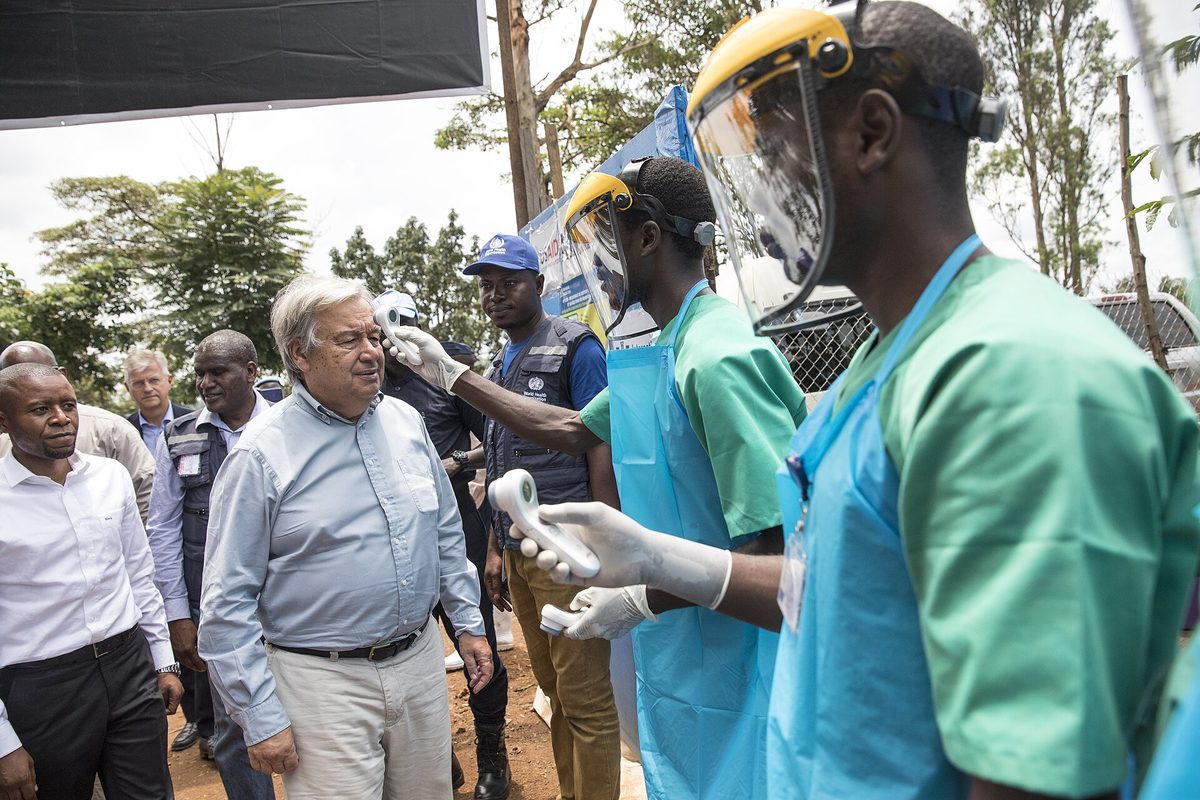
Six months after it was declared, the Ebola outbreak in the Democratic Republic of Congo is still out of control, with more than 11,000 people infected and nearly half of them dead. Government data released this week put the toll at 11,376 confirmed infections and 5,568 deaths as of November 14, a fatality rate of almost 49 percent, making it the deadliest of Congo's 17 recorded Ebola outbreaks and the second-largest ever recorded anywhere in the world.
The outbreak was declared on May 15, 2026, and has since spread to 68 health zones across eight of the country's 26 provinces. For months, Ebola has been killing roughly 240 people a week, the equivalent of about one and a half Boeing 737 passenger jets crashing every week, according to Bloomberg. It is on track to surpass the death toll from the 2014-2016 West African epidemic, which infected more than 28,000 people and killed more than 11,000.
The outbreak is driven by the Bundibugyo strain of the virus, a relatively rare form of Ebola for which there is currently no approved vaccine or specific treatment. That is one of the central problems facing responders: unlike the 2018-2020 Ebola epidemic in eastern Congo, they do not yet have a vaccine or treatment proven to work against this strain. The outbreak's roughly 50 percent fatality rate makes that reluctance to seek care understandable, said William Clemmer, a physician who has worked in Congo for three decades and is senior regional health adviser for Corus International based in Goma.
Containing the virus increasingly depends on solving problems far beyond Ebola — hunger, armed conflict, mistrust and a health system already buckling under the strain. "It's a systems problem compounded by basically geography, insecurity, conflict, poor roads, mistrust," Clemmer said. Many health facilities entered the current crisis without reliable water, electricity, sterilisation, waste disposal or supply systems, he said, and delivering protective equipment can only accomplish so much if clinics lack the basic infrastructure needed to use it safely.
The response is struggling to reach the sick. About two-thirds of Ebola deaths have recently occurred in communities rather than treatment centres, according to Médecins Sans Frontières, which Clemmer said tells responders that people are either being detected too late or are not reaching care at all. In North Kivu province, 153 Ebola patients and suspected cases were being cared for in ordinary health facilities outside designated treatment and isolation centres on November 14, and people who are not identified and isolated can continue spreading Ebola at home, in clinics and during funerals.
Fear is part of the problem. The International Rescue Committee said its teams recently documented 84 rumours, including a recurring belief that people taken to Ebola treatment centres "do not return home alive." The group said fear is discouraging some women from seeking routine medical care, including postnatal services. Telling families that a relative needs to enter a treatment centre where many patients are dying can fuel resistance, Clemmer said.
Conflict makes everything harder. Almost 29 million people in Congo already face acute food insecurity, a number projected to exceed 30 million in the first half of next year, according to United Nations agencies, with more than 11 million of them in Ituri, North Kivu and South Kivu, the eastern provinces at the centre of the country's humanitarian crisis. Conflict displaces families from their farms and livelihoods, while Ebola restrictions and fear can further disrupt farming and trade. Violence poses a more direct threat, with armed groups killing more people than Ebola itself in some affected areas, Julien Harneis, the UN's senior Ebola response coordinator, said last week. Over one recent weekend, more people were murdered by the Allied Democratic Forces, or ADF, than died from the virus.
There are reasons for optimism. Transmission has declined in some former hotspots, neighbouring countries have so far avoided sustained spread, and clinical trials under way in Congo could eventually provide vaccines and treatments specifically suited to Bundibugyo Ebola. Thousands of people are already receiving Merck's Ervebo vaccine while scientists investigate whether the shot, approved against Zaire Ebola virus, can also protect against Bundibugyo. Africa CDC said emerging evidence suggests it may provide some cross-protection and supports its use in high-risk children. Two vaccines designed specifically against Bundibugyo — one developed by the University of Oxford with the Serum Institute of India and another from Moderna — are set to enter a late-stage trial in Congo, with results expected in early 2027.
Congo's Ebola outbreak has topped 11,000 cases, the government said Wednesday, with 11,042 people infected and 5,387 dead according to the latest health ministry data at that point. The current outbreak already ranks second globally and has had at least three times the number of cases and deaths in the time since it was declared, compared with the West Africa outbreak. More than 3,300 people have been vaccinated in North Kivu, leaving just 247 doses there and prompting an urgent request for 10,000 more. "This is an outbreak that with good public health measures can be controlled," Clemmer said. "It's just we need those measures" to overcome the systems problems standing in their way.
Why it matters: The numbers alone make this the most serious Ebola emergency since West Africa a decade ago, but the pattern behind them is what should worry the world: most of the dying is happening outside treatment centres, which means the response is not reaching the sick in time — or the sick do not trust it enough to come. A vaccine trial result in early 2027 will not help the people dying at a rate of 240 a week right now. What would help is the unglamorous work of contact tracing, isolation and community trust, carried out across a war zone the size of Western Europe, and that work is exactly what the conflict and the hunger are making hardest to do.
Reporting: Moneyweb · North Country Public Radio
Spot an error? Orbit News corrects articles promptly and notes the correction in the article. See our Editorial Policy, or flag an error by messaging us on Facebook, X, or Instagram.
Related from Orbit News

Spain Heads to Snap Election With Far Right Poised to Enter Government for First Time Since Franco
World · Nov 16, 2026
Hundreds of Thousands Fill Prague's Letná Park to Defend Public Media From Government Overhaul
World · Nov 16, 2026