Technology
Nvidia Unveils GR00T 2, a Robot Brain That Learns New Skills by Watching Humans
Introduced at the Conference on Robot Learning in Austin, the new model lets robots pick up delicate manipulation tasks from human video, with far fewer demonstrations than before.
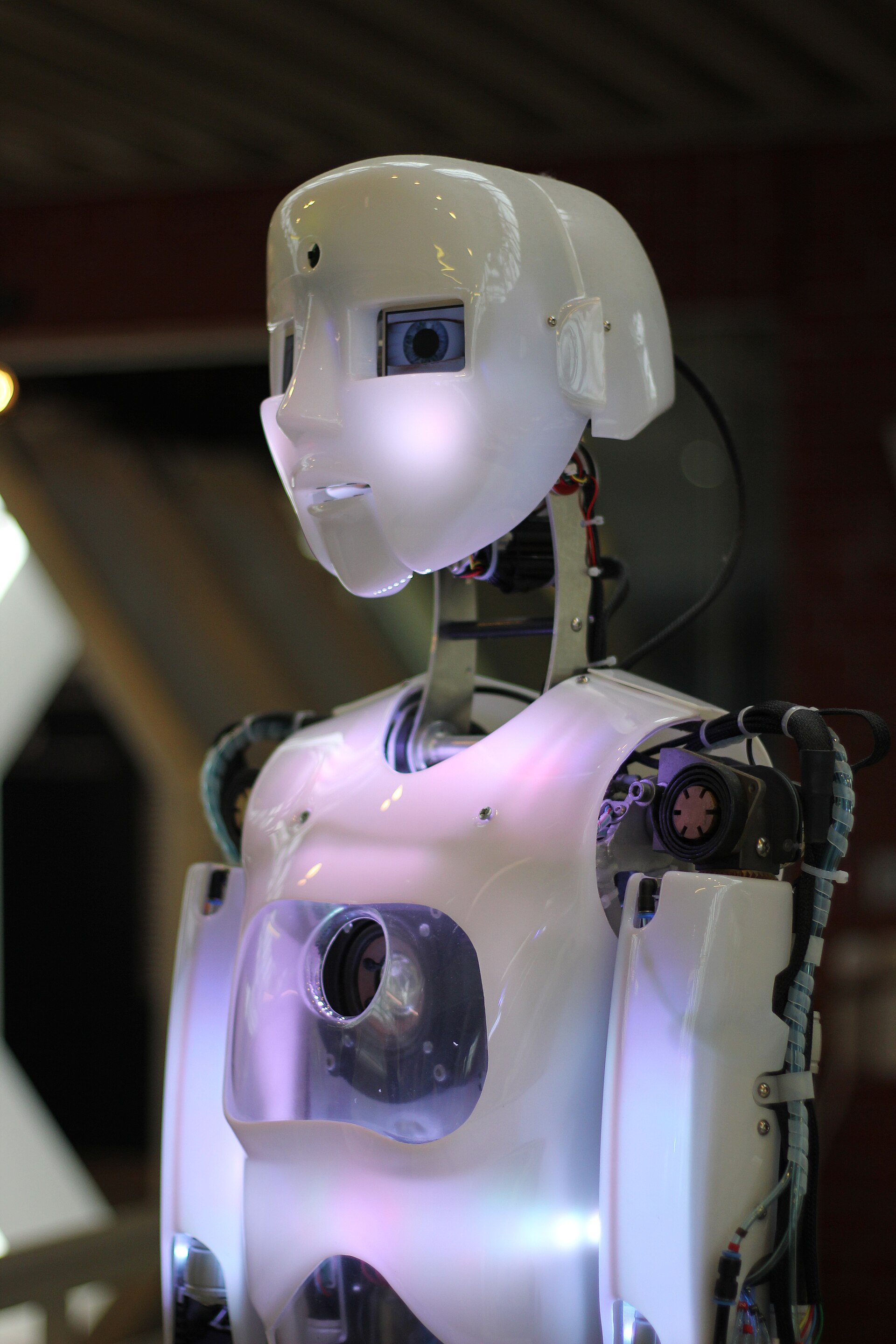
Nvidia on Monday introduced GR00T 2, a new foundation model for robots that learns dexterous manipulation skills largely by watching videos of humans doing the job. The announcement, made at the Conference on Robot Learning, known as CoRL, in Austin, Texas, is the company's latest attempt to solve the biggest bottleneck in robotics: teaching a machine to handle the physical world without spending weeks programming every movement by hand.
GR00T 2, pronounced Groot Two, is what Nvidia calls an open frontier world action model, built on its Cosmos family of world models. Unlike a chatbot that predicts the next word, a world action model predicts how a robot's actions will change its surroundings and chooses its next move from that understanding. It takes in camera views, a spoken or written instruction and the robot's own state, then predicts future video and robot actions together in a single system.
The scale of the training data is the story. Nvidia says the model was trained on a mix that includes 402,730 hours of first-person human video, 10,184 hours of handheld gripper demonstrations and 23,500 hours of robot teleoperation across arms, dexterous hands and Unitree's G1 humanoid. The company is also releasing 100,000 hours of that human video as Human-1M-100K, under a Creative Commons licence that permits commercial and non-commercial use, giving researchers a large open dataset to build on.
The results Nvidia reports are striking. In its own tests, GR00T 2 completed 40 of the 50 evaluated tasks at least once without any task-specific demonstration, averaged 71 percent success with just one demonstration per task, and reached 95 percent with five demonstrations. Those numbers matter because demonstrations are expensive: every hour a human spends showing a robot how to do a job is an hour the robot is not working. A model that needs one example instead of dozens changes the economics of deploying robots in the real world.
The model is built on a 2-billion-parameter transformer based on Cosmos-Predict2.5-2B, and Nvidia says a single pretrained checkpoint covers parallel-gripper arms, dexterous hands and a humanoid robot. The company also reports that GR00T 2 ranks among the top three models across the RoboCasa365, RoboLab, RoboDojo and MolmoSpaces benchmarks, with multiple leaderboard wins, though those are the company's own reported results and have not been independently verified.
Nvidia paired the model with Isaac Lab 3.0, the latest version of its open-source robot learning framework, which became generally available on October 20. The new release lets AI agents quickly set up training environments with simulation-ready assets, switch between the PhysX and Newton physics engines, and apply a new reinforcement-learning post-training library to foundation models like GR00T. Nvidia says the update delivers up to 2.5 times the training throughput of the previous version on a dexterous manipulation benchmark.
Early testers are already putting the model to work on practical problems. Nexuni is testing it for robotic laundry handling, Foxconn is applying it to factory automation for server manufacturing, and Siemens is evaluating it across industrial use cases. MicroAGI is using GR00T 2, post-trained through reinforcement learning, to perform Ethernet cable swapping with a YAM robotic arm. All of that work is testing and evaluation, not production deployment, and real-world reliability is still unproven.
There is also a caveat worth knowing. Nvidia calls GR00T 2 open, but its research page says the model code will be available in December, and no public release date or licence for the model weights has been announced. The 100,000-hour dataset is genuinely open, but the model itself is, for now, open in the sense that Nvidia intends to share it, not in the sense that researchers can download it today. That distinction matters to the robotics community, which has learned to read the fine print on openness claims.
What happens next will play out at CoRL itself, where two Nvidia papers are among six finalists for the Best Paper Awards, and in the months that follow as the code release arrives. If GR00T 2 delivers on its promise in factories and warehouses, it could mark the moment when robot learning started to look like language model training: pretrain a foundation model once, then adapt it to a new job with a handful of examples. The robots are not taking over the warehouse yet, but they are getting much faster at learning how.
Reporting: NVIDIA Blog
Spot an error? Orbit News corrects articles promptly and notes the correction in the article. See our Editorial Policy, or flag an error by messaging us on Facebook, X, or Instagram.
Related from Orbit News
IBM and Microsoft Launch Imagine Enterprise, an AI Agent Platform Built for Regulated Industries
Technology · Nov 10, 2026
Anthropic Unveils Claude Fable 5.2 and Mythos 5.2, Its Most Powerful Models Yet for Coding and Science
Technology · Nov 10, 2026