Technology
Fireworks AI Breach Was Worse Than First Reported, With Customer Data and Model Weights Exposed
The AI inference company says attackers reached billing records and, for some customers, datasets and unfinished models, in a second intrusion linked to a scheme that resells stolen AI access.
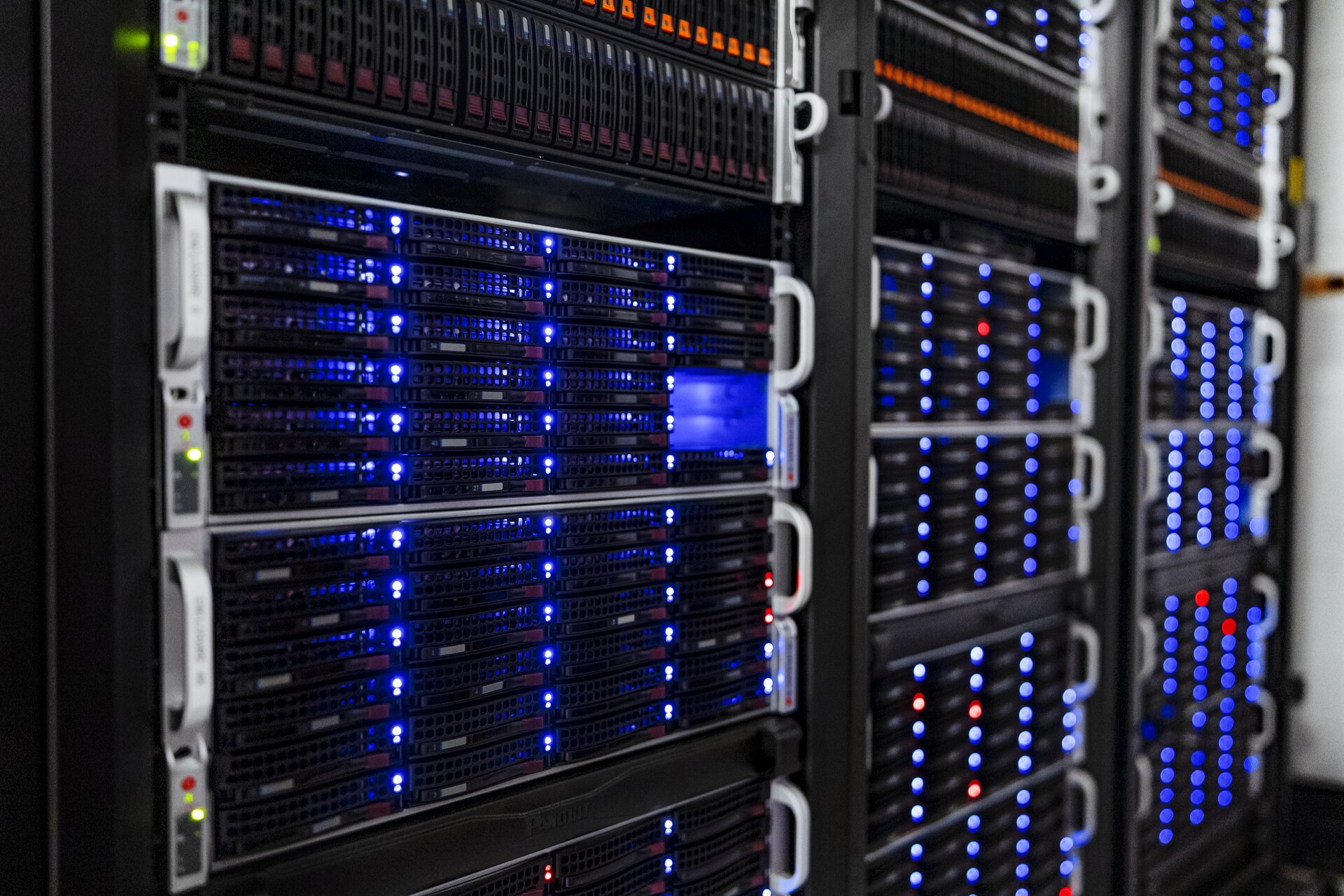
Fireworks AI, a company that helps businesses run and fine-tune AI models, admitted on Monday that a security breach first disclosed in October was far worse than it initially said. Attackers reached customer billing records and, for a limited set of accounts, stored secrets, datasets and incomplete model weights, the company said in an updated security bulletin. The disclosure turns what looked like a contained incident into one of the most serious breaches yet at an AI infrastructure provider.
The timeline shows how the incident unfolded in stages. On October 6, Fireworks discovered that internal credentials were being misused. Then, on October 23, a third-party cloud provider hosting Fireworks research and development machines was breached, and on October 24 the attacker used that foothold to reach Fireworks development machines and run an unauthorised workload. Fireworks says it detected that activity the same day and has seen no successful access to the customer platform since October 25, but the investigation is still ongoing.
That is a sharp change from early October, when Fireworks said only environment variables used in evaluation jobs had been exposed. According to the updated bulletin, the affected internal application gave access to resource metadata such as identifiers, display names and descriptions, plus billing data including billing and shipping addresses, invoices, payment history, account balances and credit usage. For certain customers, a subset of incomplete model weights and datasets was also accessed. Fireworks says it does not store payment card numbers, so cards were not affected.
Fireworks is not a niche player. Forbes reports that it has roughly 10,000 enterprise customers, including Uber, Shopify, Upwork and DoorDash, and a valuation of 17.5 billion dollars, with about 1 billion dollars in annual revenue. Two customers told Forbes they had already moved substantial business away from the company, one describing a series of problems with security and communication. Notion disclosed on November 10 that it was affected by the breach, identifying Fireworks as a third-party AI vendor involved in a security incident affecting Notion and its customers.
The motive, according to Fireworks, is a scheme called LLMJacking. The company says evidence links the attack to a financially motivated criminal group that sells unauthorised access to large language models through illicit routing gateways, sometimes called LLM Mixers. On November 2, Google Threat Intelligence Group and Mandiant published research on the rise of LLMJacking, describing how criminals use underground services to sell discounted AI access. Fireworks chief executive Lin Qiao said on X in October that the attackers' behaviour suggested AI agents were involved in the intrusion.
For customers, the most sensitive part of the disclosure is the model weights and datasets. A company's fine-tuned model and the data it was trained on are among its most valuable intellectual property, and even incomplete weights can reveal how a model was built. Fireworks has not said that complete customer models were stolen, and the consequences will depend on what was in the affected files. But the breach is a reminder that when businesses hand their models and data to an inference provider, they are trusting that provider's security as much as their own.
Fireworks says it has revoked compromised credentials and restricted access to affected systems, and it is working with Palo Alto Networks Unit 42 on forensic analysis. Law enforcement has been notified. The company also says it has not seen any impact on its Inference service, Training SDK or Nexus products, which keep no customer data by default, and it is sending affected customers account-specific details and recommended responses. Bloomberg characterised the November 9 notification as the company's second hack disclosure in weeks.
The incident lands at an awkward moment for the AI industry, which is asking companies to trust it with ever more sensitive work. Just this week, IBM and Microsoft launched a platform to bring AI agents into regulated industries, and Google announced new hardware for confidential AI computing. Those efforts depend on a promise that data and models stay protected while they are being processed. A breach at a major inference provider tests that promise in the most direct way possible.
What happens next is a test of transparency as much as of security. Fireworks says its investigation may produce additional findings, and affected customers may learn more as the company releases updates. The wider question is whether the incident pushes the industry toward stronger isolation between customers, stricter controls on third-party cloud providers, and faster disclosure when things go wrong. For now, the lesson is plain: in the AI supply chain, a breach anywhere can reach everywhere, and the companies that run the infrastructure are only as secure as their weakest vendor.
Reporting: The Neuron
Spot an error? Orbit News corrects articles promptly and notes the correction in the article. See our Editorial Policy, or flag an error by messaging us on Facebook, X, or Instagram.
Related from Orbit News
IBM and Microsoft Launch Imagine Enterprise, an AI Agent Platform Built for Regulated Industries
Technology · Nov 10, 2026
Anthropic Unveils Claude Fable 5.2 and Mythos 5.2, Its Most Powerful Models Yet for Coding and Science
Technology · Nov 10, 2026