U.S. News
NSA's Classified Internal Network Goes Down in Latest U.S. Tech Outage
The spy agency closed its Fort Meade campus to most employees after its highly classified network went down during a software patch. Officials say there is no evidence of a cyberattack.

The National Security Agency's highly classified internal communications network went down on Tuesday, forcing the spy agency to close its Fort Meade campus to most employees and rely on backup systems to keep its most sensitive work moving. The outage was the latest in a string of American technology failures that have disrupted airlines, banks and government services in recent days.
The system, known as NSANet, went down on Tuesday, according to six people familiar with the matter. The network is a highly classified internal communications platform used by NSA employees to share the agency's most sensitive intelligence, and its failure left many employees unable to do their work on Tuesday.
The NSA closed its Fort Meade campus in Maryland to most employees on Tuesday night, according to an alert sent to staff, telling employees to report to work as scheduled unless they were essential personnel. The campus closure followed a day of shifting instructions: the agency's voicemail inbox was updated Tuesday morning to ask employees to arrive on a staggered schedule, known as code yellow, and then to code green in the evening, telling them to report as scheduled, before moving to code orange, the closure, later on Tuesday night.
"The National Security Agency experienced temporary degradation during scheduled routine maintenance," an NSA spokesperson said in a statement. "While this system is a key internal tool, mission-critical capabilities remain fully operational." The agency did not say what caused the outage, though officials said the problem was being worked on and restoration was ongoing.
Director of National Intelligence Jay Clayton said on Fox Business on Tuesday afternoon that the outage resulted from applying a software patch for major vulnerabilities in PHP, the programming language that powers about 70% of the world's websites. Clayton said the vulnerabilities were discovered last month, and that the patching that followed had caused some systems not to come back up as expected.
"The patching that has gone on following that has caused some of these systems to not come back up when you patch them as expected," Clayton said. He said the issue was being addressed and that the agency was working to restore the network.
There is no evidence the outage was caused by a cyberattack, according to multiple people familiar with the matter, and a White House spokesperson said officials had seen no indication of a cyberattack. The outage did not affect the so-called Five Eyes intelligence-sharing partnership with the United States, Britain, Canada, Australia and New Zealand, and it did not affect the agency's ability to communicate urgent intelligence to the president, who is travelling in Asia.
Former senior NSA officials said the impact of the outage depended on how widespread it was. One former official said NSANet was more of a network of networks, and that a full outage of the whole system was unlikely, while another said the outage would disrupt the daily work of NSA employees, particularly analysts, even if the agency's most critical systems stayed up.
The NSA outage was the latest in a series of technology failures to hit the United States in recent days. Microsoft's outage affected business applications used by millions of people, and on Friday a Federal Aviation Administration ground stop in Arkansas delayed flights across the country. The NSA itself has suffered a major outage before: in 2000, its computer systems went down for nearly three days, an episode that forced the agency to shut down its own operations and rely on outside help.
As of Tuesday afternoon, the NSA was still working to restore the network, and it was not clear when it would be fully back up. The agency has not said how long the outage lasted or how many employees were affected, and it has not given a timeline for a full restoration.
Why it matters: The outage matters because it hit the most secretive corner of the American intelligence apparatus, the network that carries the nation's most sensitive secrets, and because it happened during a week of cascading technology failures that have already hit airlines, banks and Microsoft. Officials are quick to say there is no evidence of a cyberattack, and the explanation they have offered is mundane: a software patch that did not go as planned. But the episode shows how fragile the infrastructure behind American intelligence and public services has become, and how quickly a routine maintenance window can turn into a closure of the agency that runs the country's signals intelligence.
Spot an error? Orbit News corrects articles promptly and notes the correction in the article. See our Editorial Policy, or flag an error by messaging us on Facebook, X, or Instagram.
Related from Orbit News
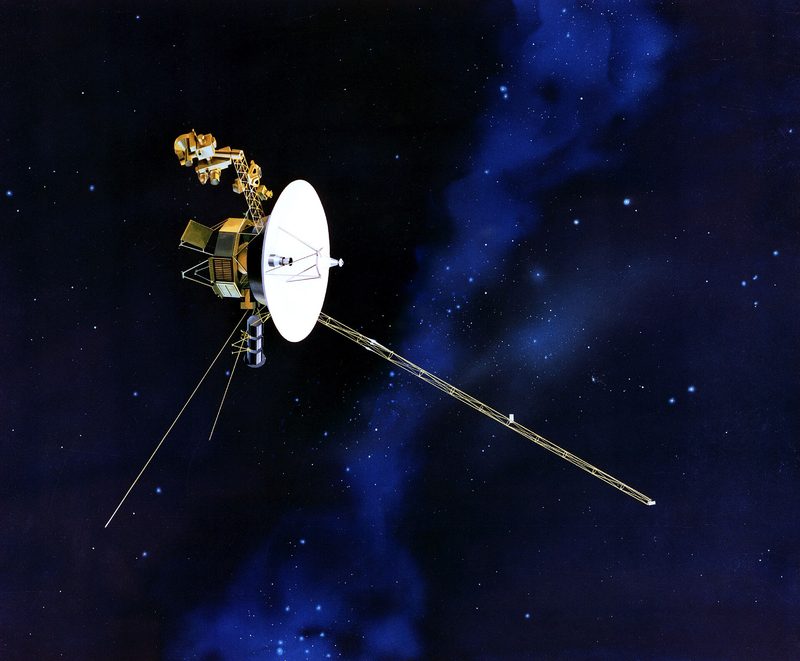
Voyager 1 Reaches One Light-Day From Earth, a First for Any Human-Made Object
U.S. News · Nov 18, 2026
Huawei Trial Nears Its End as Jury Prepares to Deliberate in Brooklyn
U.S. News · Nov 18, 2026