U.S. News
Huawei Trial Nears Its End as Jury Prepares to Deliberate in Brooklyn
After two months of testimony, prosecutors told jurors the Chinese telecom giant operated as a criminal enterprise for 20 years. The defense said the government started with guilt and worked backwards.
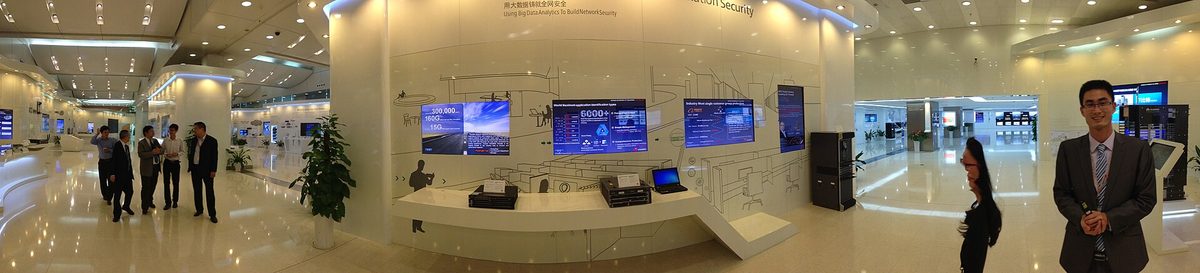
The racketeering conspiracy trial of Huawei Technologies approached its end on Tuesday after closing arguments in Brooklyn federal court, with prosecutors and the defense offering jurors two sharply different accounts of the Chinese telecommunications giant. The jury is likely to begin deliberations on Wednesday, after a trial that began in September and heard from dozens of witnesses.
Prosecutors accuse Huawei of scheming to defraud HSBC and other banks about its business in Iran and conspiring to steal trade secrets from five US tech companies. The company was also indicted as a criminal enterprise, and the case is one of the most consequential corporate prosecutions the United States has brought against a Chinese company.
Assistant U.S. Attorney Meredith Arfa delivered the government's closing argument on Monday, telling jurors that Huawei had operated as a criminal enterprise. "For 20 years, Huawei committed a pattern of crimes targeted at American companies, the American financial system and the American government," Arfa said in her closing statement. "It is time to finally hold Huawei accountable."
Arfa said the company for two decades encouraged a workforce of over 200,000 workers in 170 countries to lie, cheat and steal for a competitive advantage to grow and protect its business. She also told jurors that Huawei had helped Iran spy on its citizens, providing the country with equipment to monitor its people while concealing the relationship from banks.
Defense lawyer Brian Heberlig answered on Tuesday, arguing that US prosecutors had put a sinister spin on the company's business activities and, after two months of testimony, failed to prove the criminal charges. "They began with guilt and worked backwards," Heberlig told jurors in Brooklyn federal court in his closing argument. "When the evidence didn't fit its theory, it moved the goal posts."
Heberlig argued that the banks at the center of the fraud allegations all knew Huawei operated in Iran, which is under US sanctions, and that the banks accepted the risk and competed for Huawei's business. On the trade secrets allegations, he said the government had cherry-picked a handful of incidents and tried to convert them into a 20-year conspiracy, and that prosecutors sometimes blamed the company for taking intellectual property that was already public.
"Huawei didn't steal its way to success," he said. "It earned it, plain and simple." He credited the company's growth to engineering, investment, innovation and competition, and said prosecutors built their case in part by focusing on acts of wrongdoing by a few employees who were fired after their misdeeds were discovered.
The prosecution put on over 60 witnesses during the trial, while the defense called about 15, a gap that reflects the scale of the government's case and the breadth of the alleged scheme. The jury will have to weigh that testimony against the defense's argument that the government began with a conclusion about Huawei and assembled its evidence to fit it.
The case burst into the headlines in 2018 when Meng Wanzhou, Huawei's chief financial officer and the daughter of the company's founder, was detained in Canada on a US warrant for her role in the alleged bank fraud. She entered into an agreement with prosecutors in 2021 and the charges against her were dismissed, but the case against the company dragged on, and the United States announced the criminal charges in early 2019 and has since expanded the allegations.
Huawei is the world's largest supplier of gear for wireless telecom networks, but it is not allowed to sell equipment to US carriers over fears it poses a security risk, and it has also been blacklisted by other Western allies, including Canada and Britain. Cut off from other lines of business, the company has expanded into chipmaking as the boom in artificial intelligence fuels demand for microprocessors. The jury will deliver its verdict as US-China tensions heat up in the battle over artificial intelligence and amid a fragile trade truce between the two countries.
Why it matters: This trial is about far more than one company's conduct: it is the centerpiece of the American government's long-running effort to treat Huawei as a national security threat rather than an ordinary competitor, and a verdict will land in the middle of a fragile US-China trade truce and a fight over who controls the chips that power artificial intelligence. A conviction would validate nearly a decade of American pressure on allies to shun Huawei's equipment, while an acquittal would undercut the criminal case at the heart of that campaign. Either way, the jury's decision will shape how Washington pursues Chinese technology companies next.
Spot an error? Orbit News corrects articles promptly and notes the correction in the article. See our Editorial Policy, or flag an error by messaging us on Facebook, X, or Instagram.
Related from Orbit News
Voyager 1 Reaches One Light-Day From Earth, a First for Any Human-Made Object
U.S. News · Nov 18, 2026
Judge Blocks Trump Administration's Limits on Internships for International Students
U.S. News · Nov 18, 2026