U.S. News
U.S. Intelligence Says Iran Is Drawing Up Plans for a Dirty Bomb Attack in Washington
Seven U.S. officials told CNN that Tehran is developing plans to target senior Trump administration officials with a radiological or chemical weapon in the capital. The White House says there is no credible threat to the homeland right now, and Iran calls the report fabricated.
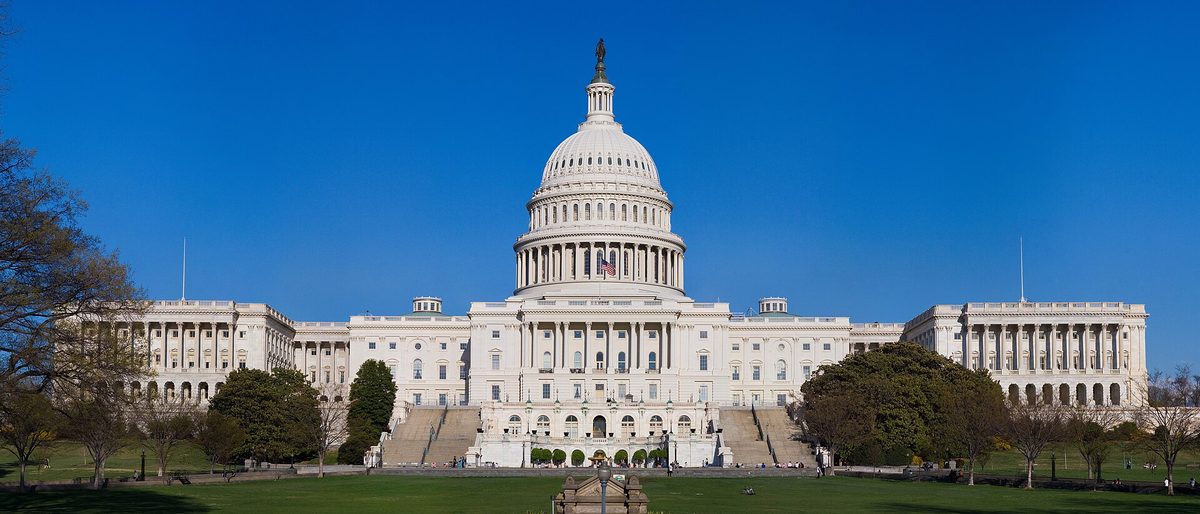
New U.S. intelligence indicates that Iran is developing plans to target senior Trump administration officials by detonating a so-called dirty bomb or a chemical weapon in Washington, D.C., according to seven U.S. officials cited by CNN in a report published Monday night. The officials said the plotting is highly specific, naming locations and targets, and has set off a flurry of contingency planning inside the U.S. government.
The sources were careful about what the intelligence does and does not show. They described the Iranian planning as, for now, an effort to give Tehran options rather than a sign of an imminent attack, and officials continue to debate whether Iran can or will try to carry out such a plot. "Whether they actually have the personnel in place to execute is a matter of debate," one of the sources told CNN. Two of the sources said officials have held several meetings over the past week to discuss how to counter the threat, planning one source described as "prudent."
Asked about the report during his trip to Asia, President Donald Trump said Iran would face overwhelming retaliation if it attacked Washington. "Well, if there is, they will pay a price the likes of which no country has ever paid before. I, I hope it's not, but it's–we take it very seriously because they happen to be crazy. But this is why they can't have a nuclear weapon, by the way, in case people had any questions," Trump said. His warning came as he met leaders from the Philippines, Japan, India and Australia on the first leg of a swing through Asia.
The White House moved quickly to steady the public message. Spokeswoman Lauren Bis said in a statement that the United States is "monitoring any and all potential threats, but at this time there are no credible threats to the homeland." The distinction matters: officials view the intelligence as evidence of intent and preparation, not as a warning that an attack is about to happen.
Iran rejected the report outright. A spokesperson for the Iranian Mission to the United Nations in New York said Iran "considers the use of chemical weapons under any circumstances to be wholly illegitimate and categorically rejects and unequivocally refutes the false and fabricated allegations circulated in this regard." Foreign Ministry spokesman Esmaeil Baghaei added on social media on Tuesday that those who started the war "are attempting to manufacture a veneer of legitimacy for further aggression and atrocities."
The threat has already changed how senior U.S. officials live and work. CNN reported that threats from Iran prompted the Secret Service to move Treasury Secretary Scott Bessent into military housing last week. Fox News reported that Attorney General Todd Blanche, Secretary of State Marco Rubio and Secretary of War Pete Hegseth have also moved to military installations or protected government housing in recent weeks, though the relocations have not all stemmed from the same threats, with some following concerns about domestic political violence.
A dirty bomb is very different from a nuclear bomb. It packages radioactive material into a conventional explosive, and while it can disperse dangerous airborne radiation for blocks or even miles, experts say any casualties are likely to be caused by the explosion itself rather than the radiation. "Any weapon like that is a weapon of terror, not a weapon of precision, just like a suicide bomber blowing themselves up," one source familiar with the new intelligence told CNN. "They can make people really sick and certain areas uninhabitable."
U.S. intelligence has also picked up Iranian chatter claiming that bomb-making materials have been stashed inside the United States, according to one of the sources, though officials are divided over how credible that claim is. Officials broadly believe it would be very easy, and even likely, that Iran has already pre-positioned nuclear materials or chemical agents that could be laced onto a conventional weapon. One source close to the intelligence said that given how porous the border has been for years, "it would have been extremely easy to get operatives inside the country" who could acquire and place bomb components.
The alarm comes in the middle of a war that began on February 28, when the United States and Israel attacked Iran and Tehran struck back at Israel and Gulf states hosting U.S. bases. American officials have described the U.S. military strikes and the punishing economic blockade of Iranian ports as "devastating" to the country, and they read the new plotting as a sign of Tehran's willingness to escalate as that pressure mounts. Talks aimed at ending the conflict have stalled, and one regional source told CNN the next several weeks will be critical, with hardliners or rogue elements of the regime among those to watch as possible spoilers.
Officials are also watching a second stream of intelligence suggesting Iran may use chemical weapons against American troops stationed in the Middle East, according to two of the officials, concerns first reported by the New York Times. Several officials said flatly that U.S. troops do not have adequate protective equipment or training to guard against such an attack, prompting a parallel contingency effort to make sure diplomatic and intelligence personnel in the region have the equipment and training to protect themselves. The concern has also fed a push in Washington to reauthorize a key surveillance law that expired in June; Attorney General Todd Blanche, Director of National Intelligence Jay Clayton and CIA Director John Ratcliffe warned lawmakers last week that delay would put American lives at risk.
Why it matters: This is not a report of an imminent attack, and the White House is explicit that there is no credible threat to the homeland right now. What makes it significant is the shift it reveals: for years, Iranian plotting against U.S. officials was concentrated on opportunities overseas, including a murder-for-hire plot against Trump in 2024. Planning for an attack inside Washington, with named locations and targets, would cross a line Tehran has not previously been reported to cross, and it lands as the war in the Gulf grinds on with no diplomatic breakthrough in sight. The next signals to watch are whether the administration briefs Congress in detail, whether any arrests or disruptions follow, and whether Tehran's denials hold up against further reporting.
Spot an error? Orbit News corrects articles promptly and notes the correction in the article. See our Editorial Policy, or flag an error by messaging us on Facebook, X, or Instagram.
Related from Orbit News
Your TV and Radio Will Interrupt for a Minute Today. It Is Only a Test, and There Is No Blackout Coming.
U.S. News · Nov 17, 2026
Pentagon Fails Its Financial Audit for the Ninth Year in a Row, Even as Most of Its Units Pass
U.S. News · Nov 17, 2026