U.S. News
Three Killed After Small Plane Crashes on the Grand Canyon's North Rim
A Piper PA-24 Comanche carrying three people went down on the North Rim of Grand Canyon National Park on Sunday night. Searchers found the wreckage on Monday morning after a nearly 12-hour search. The NTSB is investigating, and the cause is not yet known.
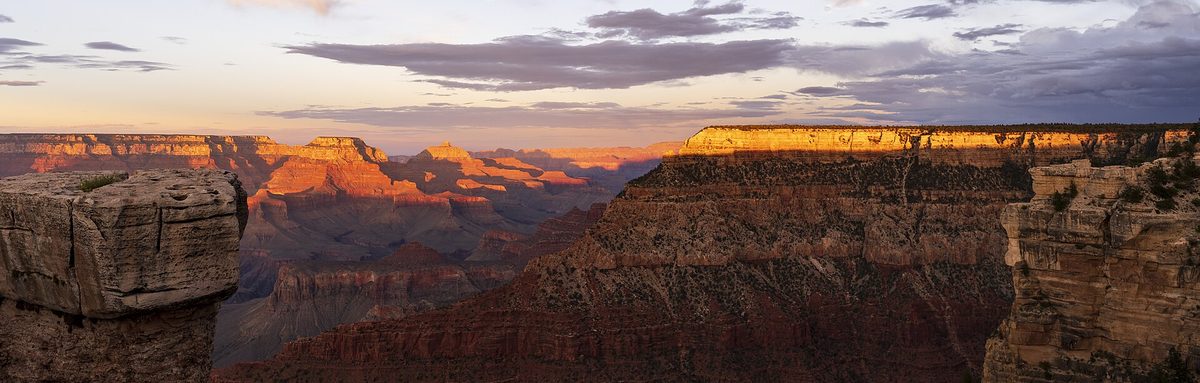
Three people were killed when a small plane crashed on the remote North Rim of Grand Canyon National Park in Arizona on Sunday night, the National Park Service said. The wreckage of the single-engine Piper PA-24 Comanche was found on Monday morning after an overnight search across some of the most rugged terrain in the American Southwest. "There were no survivors," the Park Service said in a news release.
According to the Federal Aviation Administration, the Piper PA-24 Comanche went down at about 7:15 p.m. on Sunday, November 15, in the Basin area of the North Rim. The aircraft was reported missing to the Grand Canyon Regional Communications Center at about 11:30 p.m. that night, with three people aboard and its last known location near the Basin area. The names of the people aboard are being withheld out of respect for their families' privacy, the Park Service said.
The search ran through the night. The Arizona Department of Public Safety conducted an aerial search in the early morning hours of Monday, November 16, using forward-looking infrared and night vision equipment. Coconino County Search and Rescue, Kane County Search and Rescue and the Air Force Rescue Coordination Center also took part. At about 10:15 a.m. on Monday, Park Service crews located the aircraft and its debris field in the Basin area, nearly 12 hours after the missing-aircraft report.
The National Transportation Safety Board has opened an investigation into the crash, with support from the Park Service. NTSB spokesperson Peter Knudson confirmed the agency had identified the aircraft as a Piper PA-24 and said an investigator was expected to arrive at the accident site on Tuesday, November 17. The wreckage will be documented and moved to another facility for further investigation, Knudson said.
The NTSB will investigate the pilot, the aircraft and the operating environment. Investigators will look at flight track data, recordings of air traffic control communications and any available surveillance videos, according to Knudson. A preliminary report is expected within 30 days, while a probable cause finding and final report will take 12 to 24 months. The Federal Aviation Administration said it will help with the investigation, though the NTSB will lead it and provide updates.
The cause of the crash is not yet known, and officials have released almost no details about the flight itself. The Park Service has not said where the plane took off from, where it was headed, or what its flight route was. Phoenix station AZFamily reported that conditions around the canyon on Sunday night were neither windy nor rainy, according to a report carried by the Associated Press.
The crash site is in one of the most isolated parts of the park. The North Rim sits on the Kaibab Plateau at an average elevation of about 8,300 feet, roughly 1,000 feet higher than the South Rim, and the Basin area where the wreckage was found is remote even by North Rim standards. The NTSB described the crash area as "mountainous terrain," and the fact that it took a night-long search with infrared equipment to find the plane shows how little of the landscape is visible from the ground.
Anyone with relevant information about the flight is asked to contact the NTSB at [email protected], Knudson said. The Park Service said no additional information was available on Monday, and it has not announced any park closure connected to the crash. The South Rim remains open year-round, while the North Rim operates under restricted seasonal arrangements in November.
Small-plane crashes in canyon country are rare but unforgiving, and the investigation will now work through the questions that always follow one: the pilot's experience and condition, the aircraft's maintenance history, and the weather and terrain the flight encountered in its final minutes. For now, the only confirmed facts are the ones the Park Service released on Monday: a Piper Comanche with three people aboard went down on Sunday night, searchers found it on Monday morning, and no one survived.
Why it matters: The details that matter most — who was aboard, where the flight began, and what went wrong — are all still unknown, and the NTSB's timeline means they will stay that way for weeks. What the crash does show is how thin the margin is for small aircraft over the canyon's North Rim: high elevation, mountainous terrain and a landscape so remote that a missing plane can sit undiscovered for nearly 12 hours despite an aerial search. The preliminary report, due within 30 days, will be the first real window into what happened on Sunday night.
Reporting: AZCentral · The Sun
Spot an error? Orbit News corrects articles promptly and notes the correction in the article. See our Editorial Policy, or flag an error by messaging us on Facebook, X, or Instagram.
Related from Orbit News

U.S. Intelligence Says Iran Is Drawing Up Plans for a Dirty Bomb Attack in Washington
U.S. News · Nov 17, 2026
Your TV and Radio Will Interrupt for a Minute Today. It Is Only a Test, and There Is No Blackout Coming.
U.S. News · Nov 17, 2026