Technology
Judge Refuses to Dismiss DRAM Lawsuit Against Samsung, SK Hynix and Micron
A federal judge ruled on Friday that a class-action lawsuit accusing Samsung, SK Hynix and Micron of conspiring to restrict memory supply and inflate prices can proceed, rejecting the companies' argument that the case was a rerun of one thrown out in 2022.
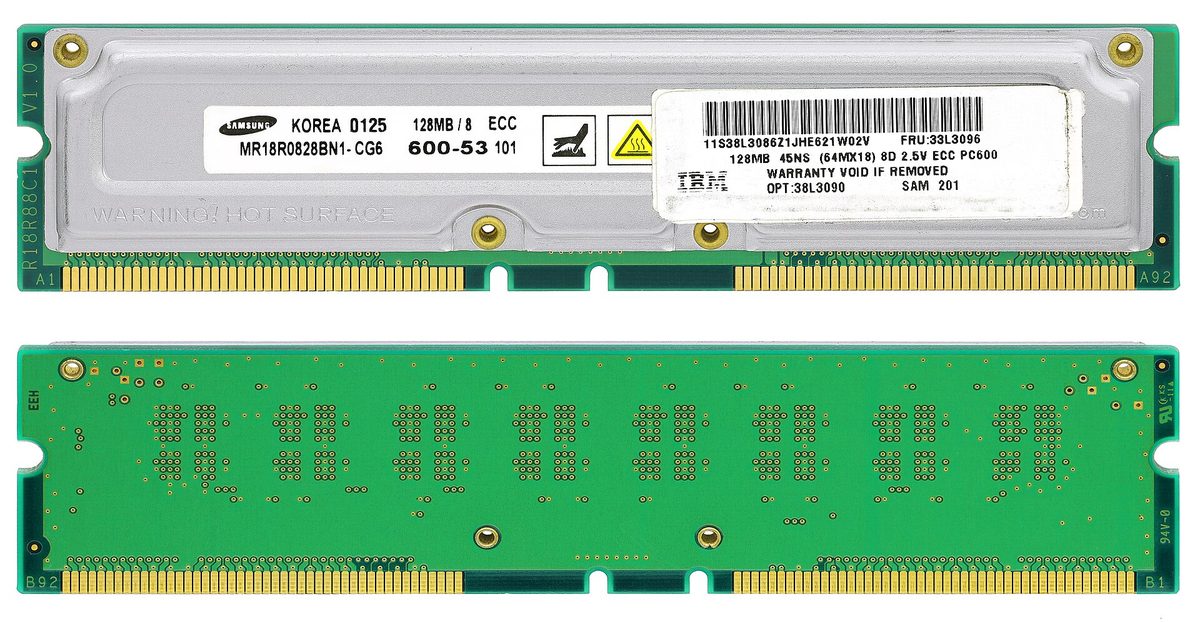
A federal judge has refused to dismiss a class-action antitrust lawsuit accusing Samsung, SK Hynix and Micron of conspiring to restrict the supply of conventional memory chips and drive up prices, allowing the case to move toward discovery. The ruling, issued on Friday, November 14, is an early but significant win for the plaintiffs and a setback for the three companies that dominate the global market for dynamic random-access memory, or DRAM.
U.S. District Judge Noël Wise of the Northern District of California denied the companies' joint motion to dismiss in full, finding that the complaint plausibly alleged an illegal agreement in violation of Section 1 of the Sherman Act, the American law against agreements that restrain trade. The judge's ruling does not find that a conspiracy happened. It finds only that the plaintiffs have alleged enough to let the case proceed, with the court accepting their allegations as true at this stage.
The lawsuit was filed on June 25, 2026, by 17 consumers and small businesses from five states. It accuses the three companies — which together controlled more than 91% of global DRAM revenue as of the third quarter of 2025 — of cutting conventional DRAM production starting in late 2022 and shifting wafer capacity to high-bandwidth memory, or HBM, the specialised memory used in artificial intelligence accelerators, from 2023.
The complaint alleges that the production shift drove conventional DRAM prices up by 697% over 18 months, and by 171.8% in the year to the third quarter of 2025, while none of the three companies expanded conventional DRAM output. HBM requires about three to four times more silicon wafer area per gigabyte than standard DDR5 memory, so shifting capacity to HBM means far fewer conventional chips for the same amount of silicon. These figures are allegations in the complaint, not findings by the court, and they have not been proven.
The companies argued that the case was a rerun of an earlier DRAM lawsuit that the Ninth Circuit appeals court dismissed in 2022, known as DRAM II. Judge Wise rejected that argument, writing: "The Court finds that it is not." She found that the new complaint alleged a different pattern of conduct, centred on the shift to high-bandwidth memory for AI, that the earlier case did not cover.
The judge identified a series of factors that, taken together, supported a plausible inference of conspiracy. They included long-term HBM supply lock-ups, Samsung's and SK Hynix's refusals to sign long-term contracts for conventional DRAM, Micron's announcement on December 3, 2025 that it was closing Crucial, its 30-year-old consumer brand, delays in building new factories, the three companies' closely timed exits from DDR4 production in the same quarter of 2025, and near-identical customer-vetting practices the three adopted in January 2026.
On the companies' argument that they were simply watching each other like hawks, the judge wrote: "But Plaintiffs' allegations go beyond hawks watching each other; their contentions are more akin to hawks flying in formation, an activity that hawks ordinarily do not do." The court also accepted as a factor the industry's earlier price-fixing history, when companies including Samsung, Hynix and Micron were part of a criminal cartel that fixed DRAM prices from 1998 to 2002. Three of the plaintiffs' arguments — investor statements about supply discipline, meetings at conferences, and the structure of the market — were given no weight by the court.
The ruling matters because memory prices have become a real cost for consumers and businesses. DRAM is in almost every computer, phone and server, and the alleged price rises coincided with a boom in demand for AI hardware that made high-bandwidth memory far more profitable than the conventional chips used in ordinary devices. If the plaintiffs are right, ordinary buyers paid more for their computers because the three biggest makers chose to serve the AI market instead.
Judge Wise ordered the companies to file their answers to the complaint by December 7, 2026, with the initial case management conference set for January 12, 2027. The case will now move into discovery, where internal documents and communications could emerge in court. The companies have not yet commented publicly on the ruling, and the allegations remain unproven until they are tested in court.
Why it matters: This ruling matters because it keeps alive the most serious antitrust challenge the memory industry has faced in years, and it does so at a moment when memory prices are already a sore point for anyone buying a computer. The judge's 'hawks flying in formation' line captures why the case survived: the complaint does not rest on a single smoking gun but on a pattern of parallel moves — the same exits, the same refusals, the same vetting practices — that the court found hard to explain without coordination. Discovery is where this case will be won or lost, and the internal documents it produces will show whether the production shift was a business decision or a conspiracy.
Spot an error? Orbit News corrects articles promptly and notes the correction in the article. See our Editorial Policy, or flag an error by messaging us on Facebook, X, or Instagram.
Related from Orbit News

Tesla Opens Cybercab Orders at $29,990, but the Car Won't Move Without a $299 Monthly Fee
Technology · Nov 15, 2026
Microsoft Says Global Microsoft 365 Outage Is Over After More Than a Day Offline
Technology · Nov 15, 2026