World
Denmark's Parliament Ratifies Greenland Security Deal With the U.S. in 109-0 Vote
Denmark's parliament voted 109-0 to ratify the security agreement with the United States over Greenland, clearing the final political hurdle for a deal aimed at ending the standoff over the Arctic island.
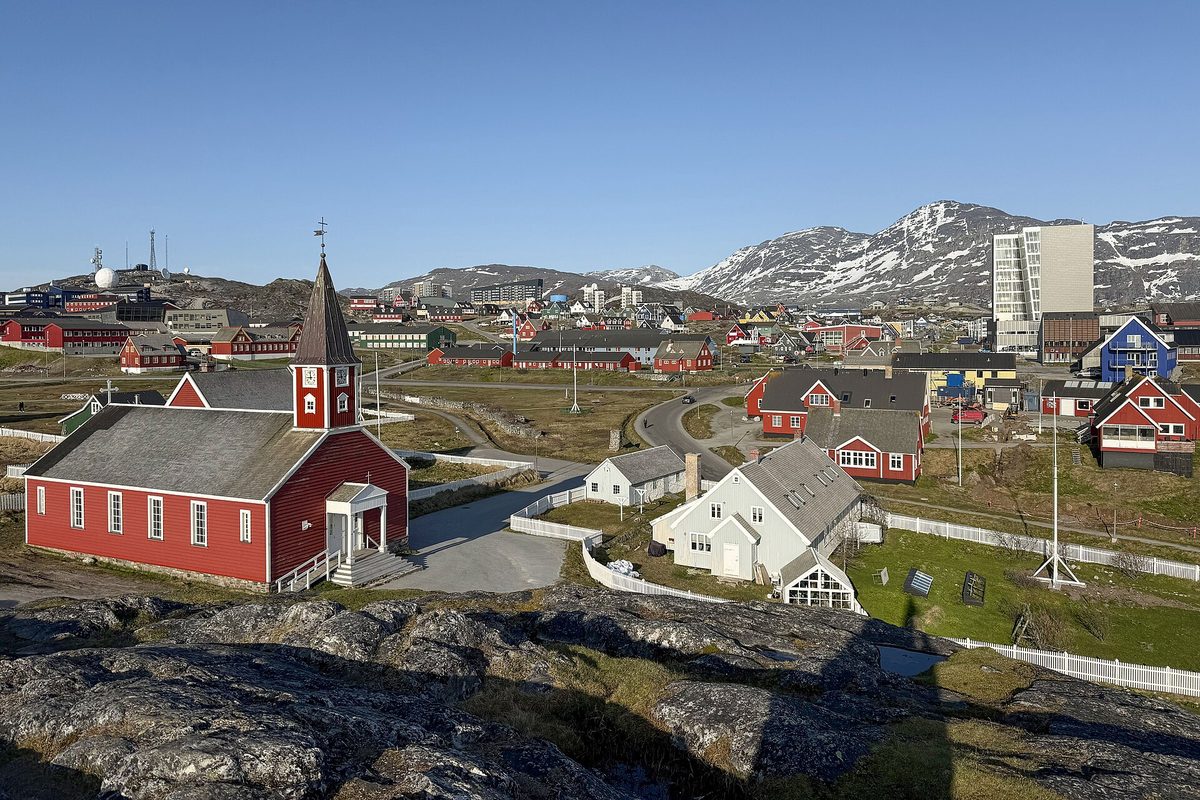
Denmark's parliament on Thursday unanimously ratified a security agreement with the United States covering Greenland, hoping to end a standoff over the Arctic island's future that has rattled transatlantic relations. All 109 lawmakers present voted in favour and none against, after the agreement's second reading, according to Brussels Reporter.
The United States, Denmark and Greenland signed the agreement in September to resolve tensions after President Donald Trump repeatedly threatened to take control of the mineral-rich island, a self-governing Danish territory home to 57,000 people. Signed in New York on September 22, the agreement supplements a 1951 accord on the United States military presence in Greenland.
The deal expands the United States military's role in Greenland, including permission to establish a “Golden Dome” missile defence system, while reaffirming Danish sovereignty and Greenlanders' right to self-determination. The signatories will now start work on a new Greenland law to screen outside investors on security grounds and plans for two new United States military bases, as outlined in the agreement, Denmark's Defence Minister Jeppe Bruus told Reuters.
Greenland's parliament ratified the deal earlier this month, with 16 votes in favor and seven abstentions. The agreement is an executive deal and does not require a vote by the United States Senate. It will enter into force once Denmark's Foreign Ministry informs Washington through a diplomatic note that the necessary procedures have been completed.
Trump's refusal to rule out military or economic force to acquire the island triggered a diplomatic crisis within NATO in January and months of intensive negotiations. The United States ambassador to Denmark, Kenneth Howery, welcomed the vote result, calling the agreement “a tremendous accomplishment” that bolsters the security of all sides, including NATO.
Naaja Nathanielsen, a Greenlandic member of the Danish parliament, said Trump's pressure had led to distrust in Greenland towards the United States administration. “It's been really difficult for Greenlanders these past two years.” Nathanielsen said the pressure had seeped into every aspect of Greenlanders' lives. She hoped the agreement would open a path to dialogue after hurtful rhetoric within the Western alliance.
Mikkel Vedby Rasmussen, a political science professor at the University of Copenhagen, said the deal was more likely a beginning than an end. He said that with the treaty in hand, the United States would be able to “demand greater influence on decisions that have security policy implications” and on part of the extraction of strategic resources. Other experts say the new agreement does not add much United States military access to Greenland, noting that the northernmost United States base is already on the island, which lies on the shortest route from Europe to North America.
Trump last month said that “massive oil, gas and mineral exploration” was set to begin on Greenland, a contentious statement on a territory that has banned new drilling for crude. Denmark has said any resource extraction must respect local law.
With both parliaments now having approved the deal, the remaining step is the diplomatic note from Copenhagen to Washington. Once that is sent, the agreement takes effect, and the focus will shift to the two new bases, the investor-screening law and whether the deal truly settles the question of Greenland's future, or only postpones it.
Why it matters: The ratification matters because it closes, for now, the most dangerous standoff inside NATO in years — a sitting American president threatening to seize the territory of an ally. The deal gives Washington the expanded military access it sought while leaving Greenland inside the Kingdom of Denmark, but the hard questions remain: what the two new bases will look like, how the investor-screening law will work, and whether Greenlanders, who lived through two years of pressure, trust the arrangement. Ratification is the end of the crisis, not necessarily the end of the argument.
Reporting: WDSM · Brussels Reporter
Spot an error? Orbit News corrects articles promptly and notes the correction in the article. See our Editorial Policy, or flag an error by messaging us on Facebook, X, or Instagram.