World
Xi and Putin Rail Against Protectionism and Sanctions as Trump Lands in China for First Three-Way Talks
At the APEC summit in Shenzhen, China's leader pledged to defend free trade and Russia's president attacked Western sanctions, hours before a first-ever trilateral meeting with the U.S. president.

Chinese President Xi Jinping and Russian President Vladimir Putin used the opening of the APEC summit in Shenzhen on Wednesday to attack Western trade protectionism and sanctions, hours before they were due to meet US President Donald Trump for the first three-way talks between the three leaders. The summit has turned the Chinese technology hub into the center of a diplomatic week that could shape the war in Ukraine and the trade rivalry between the United States and China.
Xi pledged to stand against trade protectionism and to support free and open trade, telling the summit that China would lower tariffs, further open its markets and invest in its industrial complex and new technologies. "We must firmly uphold the rules-based multilateral trading system with the World Trade Organization at its core, support free and open trade and investment," Xi said, in a message aimed at the United States, which has imposed new restrictions on China's access to advanced artificial intelligence chips.
Putin, speaking after Xi, criticized Western sanctions and called the Western powers that imposed them former hegemons, saying Europe was in a humiliating decline and that the sanctions had backfired on the countries that imposed them. His remarks came after Ukraine crippled the Kerch road bridge linking Russia to Crimea, a strike that Moscow said would not stop its forces in Ukraine.
Xi greeted Trump at the airport on Tuesday, the first time the Chinese leader has done so with any visiting leader since becoming president, in a gesture that reciprocated Trump's own greeting of Xi at Joint Base Andrews in September. The two leaders hugged briefly on the tarmac, and Xi told reporters that China was a country of etiquette with a tradition of reciprocating courtesy. Trump said every meeting he had with Xi had been very pleasant.
The two leaders then attended a group photograph and a banquet with other leaders attending the summit, before Trump headed into a day of bilateral meetings. On Thursday, Trump, Xi and Putin are scheduled to hold their first-ever trilateral meeting, a session that aides had earlier said would not include Ukraine, but which Trump said would cover the war in Ukraine, the US war in Iran, trade, artificial intelligence and nuclear weapons.
Trump said he believed a deal to end the war in Ukraine was close, telling reporters, "I think it's very close to getting it done". He said he was going to have a good meeting on that, and that he expected the trilateral session to be productive. Putin said he expected big potential benefit from the upcoming trilateral meeting, and Beijing said the three leaders would discuss how to promote world peace and development.
The meeting has drawn comparisons to the Yalta Conference of 1945, when the leaders of the United States, Britain and the Soviet Union met to divide Europe after the Second World War, but the Kremlin dismissed those comparisons as games of political scientists, and analysts said they expected no substantive breakthroughs from the session. The three leaders are expected to discuss limiting nuclear weapons, ending the war in Ukraine, and the US war in Iran, and Trump has said he wants to take an improvised approach.
The trade backdrop to the summit is stark. China will have exported $1 trillion more in goods than it imported for the second straight year, a surplus that Western partners criticize as evidence that Beijing is dumping goods on world markets. The United States has responded by announcing further restrictions on China's access to advanced AI chips, and China has pledged to retaliate, raising the stakes for the trade talks that are also on the agenda.
Trump arrived in China after a stop in Manila, where he had lunch with Philippine President Ferdinand Marcos Jr. at the Malacanang presidential palace and claimed a trade deal had been reached, though he gave no details and the White House said only that Manila would buy more American energy and farm products. The US goods trade deficit with the Philippines rose from $4.9 billion in 2024 to $12.8 billion in the first nine months of this year, according to the US Census Bureau. Trump also met Imelda Marcos, the 97-year-old widow of the former Philippine dictator, during the visit.
Japanese Prime Minister Sanae Takaichi received a cold reception in Shenzhen, with no welcoming ceremony for her arrival, amid a rift between Beijing and Tokyo over her remarks about Taiwan a year ago. Taiwan and Japan also flagged Russian aircraft incursions into their airspace on Tuesday, a reminder that the security tensions in the region extend beyond the trade talks. Trump also teased a private meeting with Putin and a sit-down with North Korean leader Kim Jong Un, though his national security adviser, Marco Rubio, clarified that Trump was serious about meeting Kim but that no meeting had been scheduled for Thursday.
Why it matters: This summit matters because it is the first time the three leaders of the United States, China and Russia will sit down together, and because the meeting is happening at a moment when all three are fighting on different fronts: the United States is at war with Iran, Russia is at war in Ukraine, and the United States and China are fighting a trade war over the chips that power artificial intelligence. The public rhetoric from Xi and Putin was aimed at Washington, but the real test of the week will be what happens behind closed doors on Thursday, when Trump says he wants to improvise a deal on Ukraine, nuclear weapons and trade. The chances of a breakthrough are slim, but the fact that the meeting is happening at all is a sign that all three leaders see value in talking, even if they do not yet agree on what to say.
Spot an error? Orbit News corrects articles promptly and notes the correction in the article. See our Editorial Policy, or flag an error by messaging us on Facebook, X, or Instagram.
Related from Orbit News
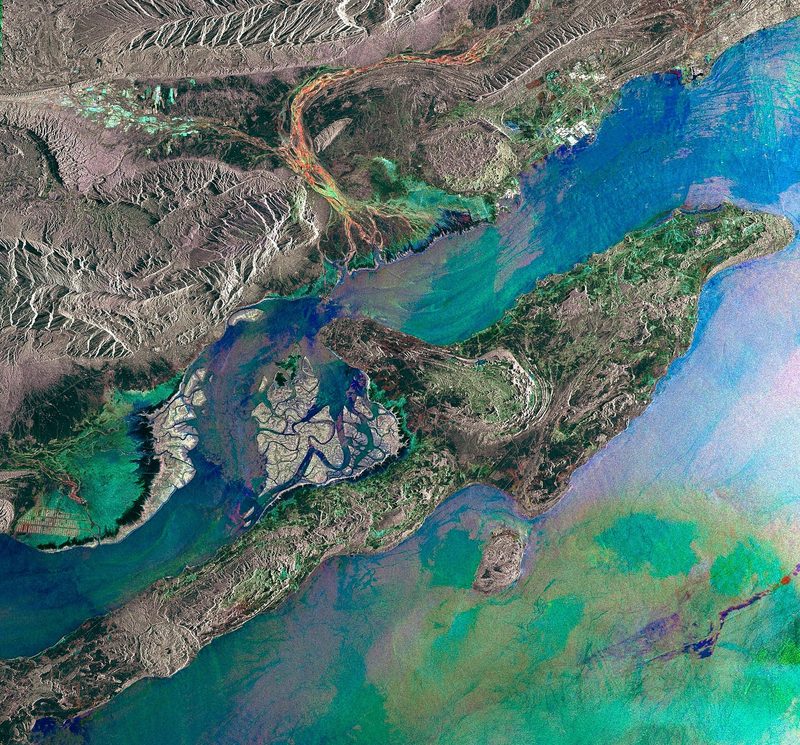
U.S. Strikes Iran's Qeshm Island as Tehran Hits Back at Bases in Kuwait and Bahrain
World · Nov 18, 2026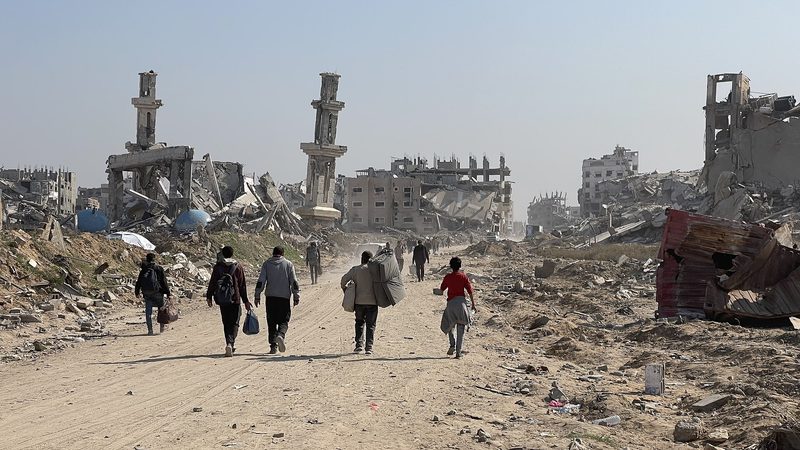
Trump's Board of Peace Warns Gaza Ceasefire Is Near Collapse as Israel and Hamas Miss Commitments
World · Nov 18, 2026