U.S. News
U.S. Skips Its Own U.N. Human Rights Review for a Second Straight Year
Washington stayed away from its Universal Periodic Review in Geneva for a second straight year, leaving its human rights record unexamined while critics say abuses have surged.
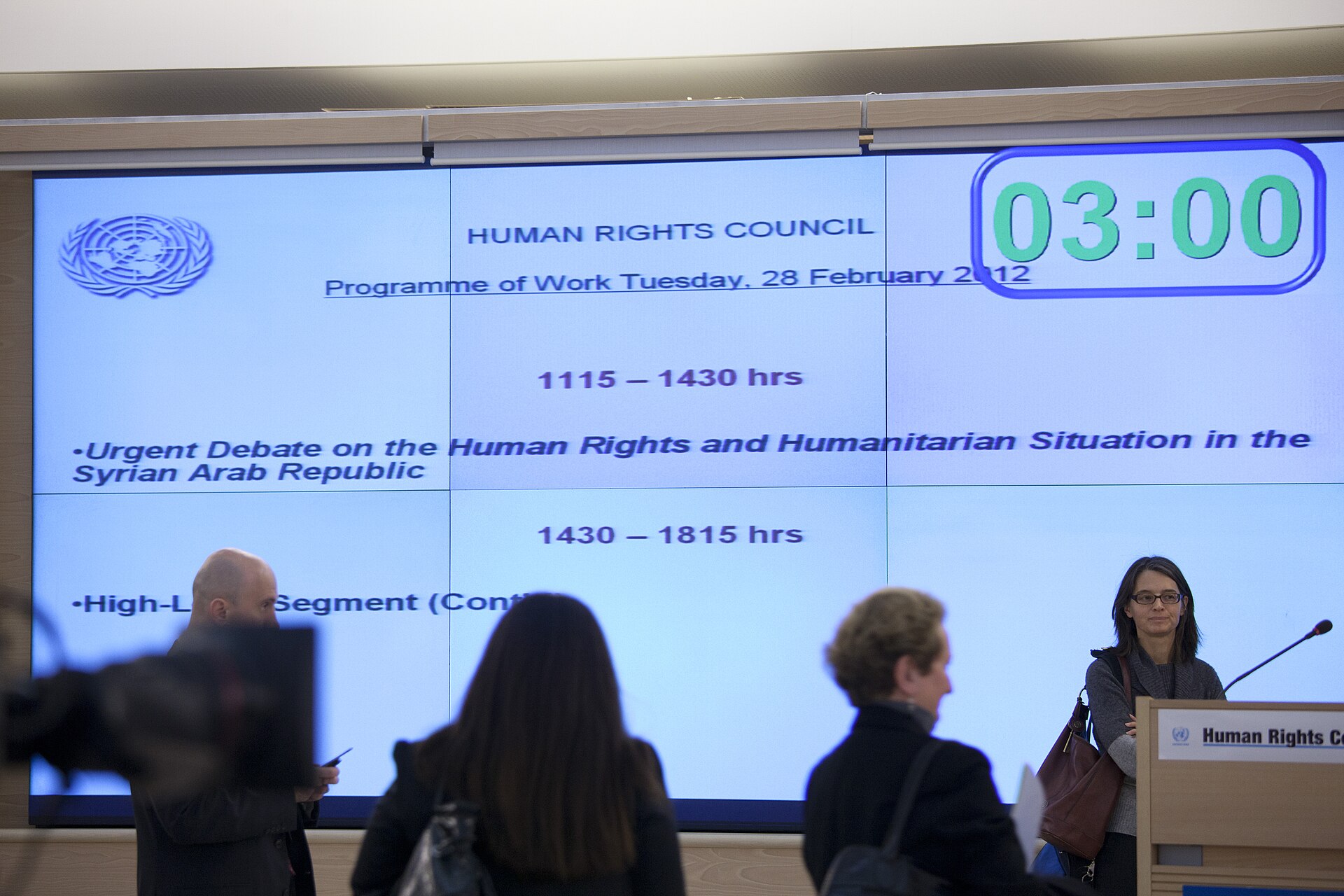
The United States skipped its own United Nations human rights review on Tuesday, spurning a meeting in Geneva where its record under President Donald Trump was due to be examined and drawing criticism from rights groups who say violations have surged to levels not seen in decades. It was the second year in a row that Washington stayed away from a process that even governments accused of the worst abuses take part in.
The review is part of the Universal Periodic Review, a system under which all 193 member states of the United Nations submit a report on their human rights record every few years and face questions and non-binding recommendations from other governments. Countries had planned to raise issues including abortion and the death penalty at Tuesday's session, and American and international non-governmental organizations sent nearly 200 submissions to the United Nations covering topics from migration to racial discrimination. With the United States absent, diplomats said the event would likely be postponed until January.
Washington disengaged from the Geneva-based U.N. Human Rights Council last year, citing what it called an anti-Israel bias, and the no-show on Tuesday extends that break. A State Department spokesperson said taking part would imply endorsement of the council's work, calling it an irredeemable body that makes a mockery of human rights through consistent failures to uphold its own values while pushing anti-American rhetoric. The spokesperson did not respond directly to the allegations about the American record.
The 47-member council has not itself directly criticized Washington's rights record, but experts appointed by the council have done so, including over migrant deportations. The administration has said deportations are carried out in accordance with U.S. immigration law. Rights advocates in Geneva argued that the absence speaks for itself. Jamil Dakwar of the American Civil Liberties Union told reporters that the country had seen attacks on fundamental human rights and civil liberties unprecedented in generations, adding that enough is enough.
The United States is not the first country to treat the review as optional, but its absence carries unusual weight because of its size and influence. The review process was designed on the principle that every country, including the most powerful, should have to answer for its record in public. When the government with the largest voice in the room declines to show up, critics say, it weakens the system for everyone else and gives other governments an excuse to treat the process as a formality they can ignore too.
Among the campaigners pressing for action in Geneva was Noor Abdalla, the wife of pro-Palestinian student activist Mahmoud Khalil, who was held in immigration detention last year. Abdalla was among those urging U.N. High Commissioner for Human Rights Volker Turk to hold a briefing on the American rights situation promptly, even in Washington's absence. She told reporters that when the most powerful government in the world is not held accountable, it thinks it can do whatever it wants. Diplomats were skeptical, however, noting that few states want to confront Washington directly.
The contrast with the recent past is stark. In President Trump's first term, the United States submitted its own human rights report and took part in the review. The decision to stay away for a second consecutive year reflects a broader retreat from international bodies that the administration regards as hostile, a retreat that has also included withdrawing from the World Health Organization. Supporters of the approach argue that the council is stacked with rights abusers and that American participation would lend it legitimacy it does not deserve.
What happens next is uncertain. Diplomats said the prevailing view in Geneva is to leave the door open and hope the United States returns in two years, when the next cycle of reviews comes around. Fourteen countries are due to take part in the review process in Geneva this month, and the machinery will go on without Washington. But the empty chair at Tuesday's session was itself the story: a country that once presented itself as the system's chief defender now declining to be judged by it, while the groups that track its record say the things they wanted to raise have only grown more urgent.
Reporting: Reuters
Spot an error? Orbit News corrects articles promptly and notes the correction in the article. See our Editorial Policy, or flag an error by messaging us on Facebook, X, or Instagram.