U.S. News
1,156 U.S. Schools Closed Last Year, the Most Since the Pandemic, as Enrollment Keeps Falling
An analysis of federal data finds 1,156 campuses shut in the latest academic year, while enrollment has fallen by more than 1.4 million students since 2019, leaving districts facing deeper cuts.
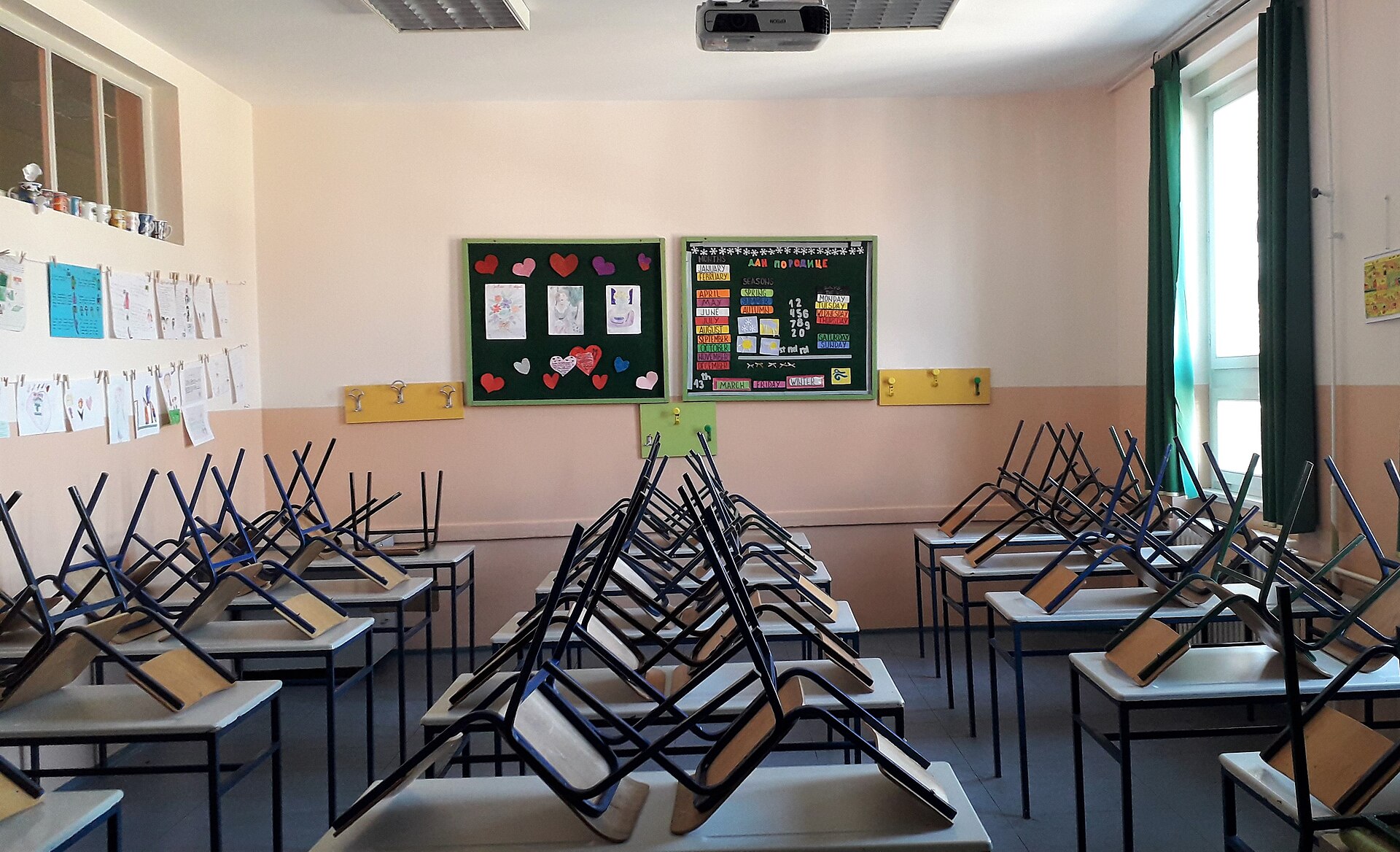
A total of 1,156 public schools closed during the last academic year, the highest number since the pandemic, according to a new analysis of federal data, as districts across the country confront shrinking enrollment, falling birth rates and tightening budgets. The closures are accelerating, researchers say, but they are not keeping pace with the empty seats, which means more painful financial choices lie ahead.
The analysis was conducted by Big Local News at Stanford University as part of a reporting partnership involving the Associated Press and The Hechinger Report. It found that student enrollment has fallen much faster than schools are closing, suggesting that the wave of closures documented in the latest academic year is an acceleration rather than an endpoint.
Nationwide, public school enrollment fell by more than 1.4 million students, roughly 3 percent, between fall 2019 and 2024, according to an Associated Press analysis of federal education data collected by Stanford economist Thomas Dee and sociologist Jaymes Pyne. Enrollment dropped from about 50.8 million students in fall 2019 to 49.4 million in fall 2024. The total number of schools has declined too, but only to about pre-pandemic levels, the researchers found.
The pattern is visible in district after district. The Vallejo City Unified School District, a working-class district near San Francisco, serves half as many students as it did two decades earlier. Enrollment has tumbled from nearly 18,000 in the fall of 2006 to about 9,300, according to the district, and its leaders have closed five campuses since 2025, a quarter of its schools. In Cleveland, enrollment has fallen from about 74,000 in 2000 to 34,000 in 2025, and the district plans to shutter 29 schools in the 2026-27 school year. In California alone, 73 schools closed in 2026 through July, according to an independent analysis.
Lower birth rates are the primary reason for the enrollment decline, researchers say, but other forces have added to it. A federal crackdown on immigration and the post-pandemic expansion of private school vouchers and homeschool options have also contributed to the fall in public school rolls. The National Center for Education Statistics projects further declines through 2031.
The financial consequences are large. Bellwether and WestEd, two research groups, estimated in a recent report that declining enrollment could cause schools to lose $11.5 billion in state revenue annually by 2030-2031, potentially prompting widespread layoffs, cuts to academic programs and more school closures. Because most states fund schools largely on a per-pupil basis, every empty desk is money a district does not receive.
Yet the research suggests closures rarely deliver the relief districts hope for. A Stanford study of districts from 2011 through 2019 found that closures were associated with lower spending but also with lower revenue, as additional families left for charter or private schools. A forthcoming study using Texas education and labor-market records found that closures reduced test scores and increased absenteeism and disciplinary actions among affected students.
The scale of the change is striking in historical terms. More than 1,000 public schools closed in each school year from 2010-11 through 2019-20, before closures dipped during the pandemic, when federal relief money kept struggling schools open. More than 1,000 schools closed during the 2025-26 school year, compared with 755 just four years earlier, a 35 percent increase. "We call it the big shrink," said Marguerite Roza, director of Georgetown University's Edunomics Lab, which tracks school funding. "Enrollment at public schools is declining, partly because there are fewer kids in the U.S."
The enrollment and financial situation is unlikely to improve soon, said Lydia Rainey, research principal at the Center on Reinventing Public Education, who helped conduct a recent survey on district finances. Districts that delay closures face deepening deficits, while districts that close schools face angry parents, longer bus rides and the loss of buildings that anchor neighborhoods.
What happens next is a round of decisions that no district wants to make. More closures are planned in cities including Houston, Philadelphia, Pittsburgh and Broward County, Florida. For the families and teachers caught in the middle, the question is not whether their district will shrink, but how it will manage a decline that, by every available measure, is only just beginning.
Reporting: The Hechinger Report
Spot an error? Orbit News corrects articles promptly and notes the correction in the article. See our Editorial Policy, or flag an error by messaging us on Facebook, X, or Instagram.
Related from Orbit News
Nvidia Opens Independent Probe Into CEO Jensen Huang Over Reports He Was Targeted by Chinese Intelligence
U.S. News · Nov 9, 2026
Trump Says Deportations Were 'Too Tough' and Opens Door to Immigration Deal With Democrats
U.S. News · Nov 9, 2026