U.S. News
Nvidia Opens Independent Probe Into CEO Jensen Huang Over Reports He Was Targeted by Chinese Intelligence
Nvidia's board said it has no reason to believe national security or company secrets were compromised, but an independent committee will review whether its chief executive was the target of a foreign intelligence effort.
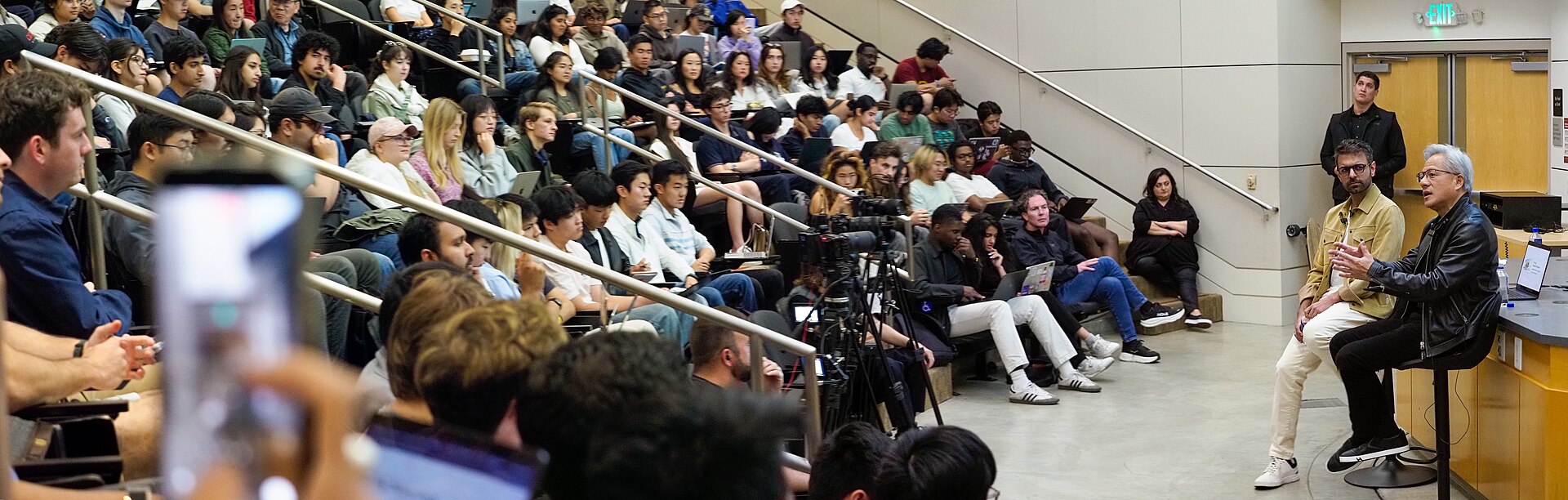
Nvidia said on Sunday that its board has opened an independent investigation into whether founder and chief executive Jensen Huang was the target of a foreign intelligence effort, after news reports linked him to a Chinese businesswoman whom American officials believe worked for Beijing. The announcement capped a weekend of turmoil for the world's most valuable chipmaker and raised national security questions around the executive at the center of the artificial intelligence boom.
The investigation follows reporting by the Financial Times on November 6 that the United States believed Huang had a romantic relationship with a Chinese woman who was recruited to spy for China's Ministry of State Security. The New York Times reported in late October that American officials had concluded that the woman, Alice Huang, a Chinese citizen and former executive at the Singapore-based cloud computing firm Megaspeed, was a Chinese intelligence asset who had developed a close relationship with the Nvidia boss and allegedly fed information directly to Beijing. Reuters said it could not independently verify the claims in the reports, and Alice Huang is not related to Jensen Huang.
Huang addressed his employees in a message on Sunday, telling them he had been unfaithful to his wife and that he would cooperate fully with the review. He said he was committed to winning back the confidence of Nvidia's board, partners and shareholders. Nvidia said Huang fully supports the investigation and has committed to cooperating with it.
The company's board said it had no reason to believe that either United States national security or Nvidia secrets were compromised, but it is proceeding with the review anyway. A committee of independent directors, assisted by outside independent counsel, will oversee the investigation and review all available information, the company said.
At the heart of the scrutiny is Megaspeed, a Singapore-based cloud computing company and Nvidia customer. The United States has been investigating Megaspeed over suspicions that it helped Beijing gain access to Nvidia's advanced artificial intelligence chips, which are barred from shipment to China under American export controls. Huang told Bloomberg News last month that his relationship and interactions with Alice Huang were related to Megaspeed.
The controversy has drawn in Washington. Senior Republicans in the U.S. House of Representatives have already sought briefings from Huang following the reports, citing national security concerns. President Donald Trump said on Sunday that Huang was an honorable person and praised his contributions to the United States, but said he had not spoken to him about the allegations. "I have not spoken to him about it. I just know he's a fine person, but you never know what is going on," Trump said.
Investors and analysts reacted with alarm to the prospect of a national security cloud over the chipmaker whose processors power much of the world's artificial intelligence infrastructure. Bill Ackman, the chief executive of Pershing Square, said he hoped the matter would turn out to be a personal failing rather than a security breach. "I am not suggesting he gets a free pass. If indeed this is more than an affair, then it is obviously a real problem," Ackman said. "I am hoping for a simple affair, not a risk to our national security."
The timing is awkward for Nvidia. The company is due to report earnings on November 17, a date analysts have called the next real test for the artificial intelligence trade after a volatile few weeks in technology stocks. South Korea, a major buyer of Nvidia hardware, said on Monday that it expected contracted deliveries of graphics processing units to proceed without disruption, and a deputy science minister said 10,000 units funded under a 2025 supplementary budget had already arrived and were in use. A planned visit to South Korea by Huang's daughter Madison Huang, a senior director at Nvidia, was cancelled as the controversy grew.
What happens next will depend on what the independent committee finds. Nvidia has given no timetable for the review, and the board has not said whether it will make the findings public. The central questions are whether any sensitive information changed hands, whether Huang was aware of any intelligence connection, and whether the company's dealings with Megaspeed complied with American export rules.
The episode also lands in the middle of a wider confrontation between Washington and Beijing over advanced chips. The United States has spent years tightening controls on the sale of cutting-edge semiconductors to China, arguing that they can be used for military and surveillance purposes, while China has sought other routes to the same technology. Whatever the investigation concludes about one executive, it is a reminder of how closely the politics of that rivalry now follows the people and companies at the top of the chip industry.
Reporting: Reuters
Spot an error? Orbit News corrects articles promptly and notes the correction in the article. See our Editorial Policy, or flag an error by messaging us on Facebook, X, or Instagram.
Related from Orbit News
Trump Says Deportations Were 'Too Tough' and Opens Door to Immigration Deal With Democrats
U.S. News · Nov 9, 2026
1,156 U.S. Schools Closed Last Year, the Most Since the Pandemic, as Enrollment Keeps Falling
U.S. News · Nov 9, 2026