U.S. News
U.S. Poised to Lose Measles Elimination Status as Review Nears Decision
A panel of international experts is deciding whether the United States has lost the measles elimination status it has held since 2000, after a year of uninterrupted transmission and more than 5,100 cases in 2026.
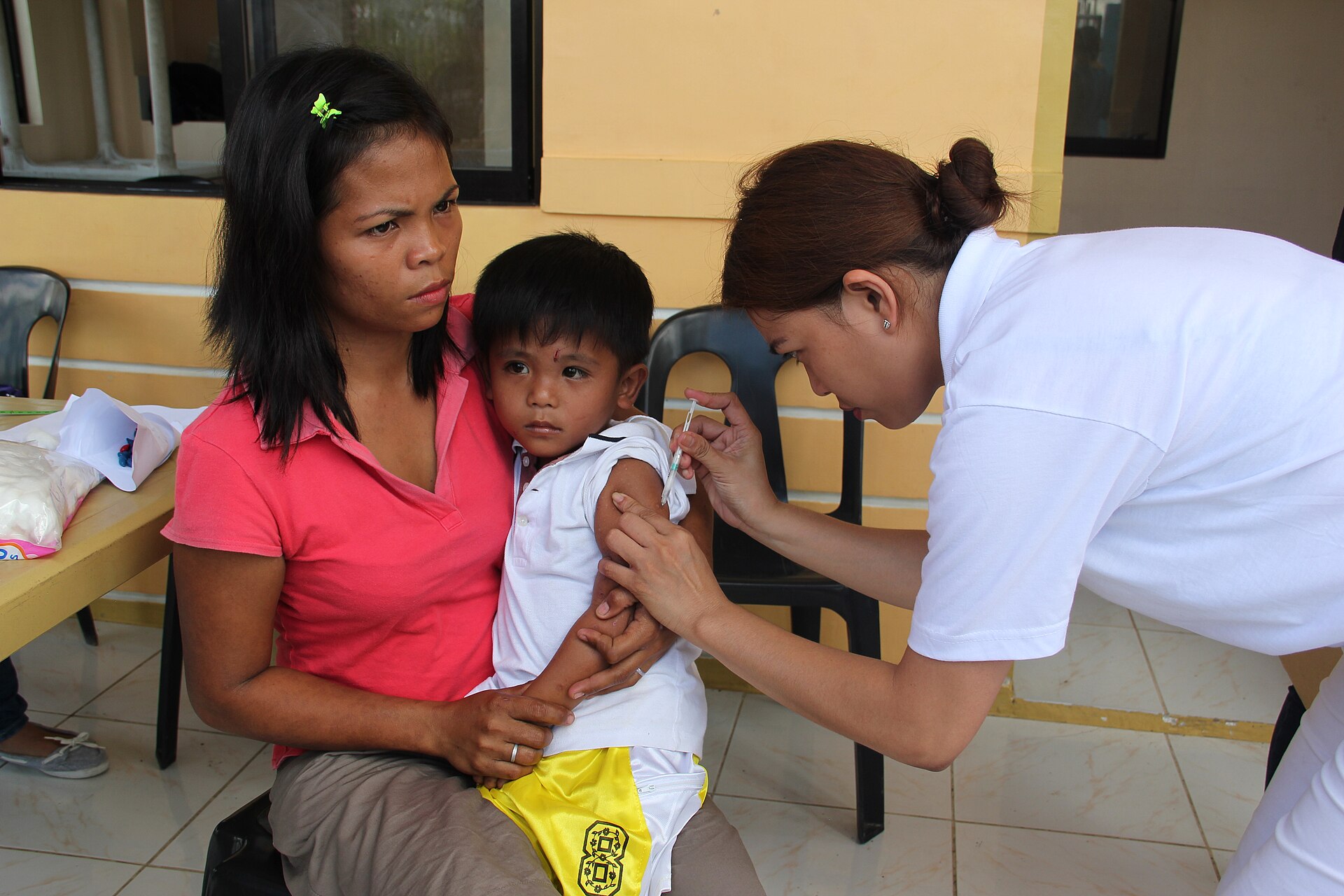
The United States is on the brink of losing its measles elimination status, a public health distinction it has held since 2000, as an international panel of experts meets in Washington this week to decide whether the virus is once again spreading continuously inside the country. The review, by the Pan American Health Organization's independent verification commission, meets in Washington this week and runs through Friday, and its recommendations will go to PAHO's director for a final decision. More than 5,100 cases of measles have been reported by the Centers for Disease Control and Prevention in 2026.
Elimination does not mean the virus has vanished. It means a country has interrupted continuous, homegrown transmission for at least 12 months under high-quality surveillance, so that the cases that do appear are imported and quickly contained. The United States earned the status in 2000, when the CDC recorded just 85 cases for the year. Losing it would mean the commission has concluded that the same viral lineage has circulated uninterrupted for a year or more, the definition of re-established endemic transmission.
The numbers behind the review are stark. The CDC has counted more than 5,100 confirmed cases in 2026, and experts said the total could pass 7,000 before the year ends. At least eight people in the United States have died from measles in 2026, along with three last year. For the first time in generations, congenital measles, passed from an infected pregnant woman to her newborn, is again a serious threat to public health.
The test the commission applies turns on genetics as much as on case counts. Its experts are examining viral genomic sequencing data to determine whether the many outbreaks across the country are driven by the same virus genotype and lineage, or whether they are separate, imported chains. If the data fail to show that the outbreaks are genetically related, the country could technically keep its status, an outcome one epidemiologist described as getting out of a speeding ticket on a technicality, since the outbreaks are plainly growing larger and more frequent.
Jennifer Nuzzo, an epidemiologist and director of Brown University's Pandemic Center, described the pattern bluntly: 'It's just like popcorn: outbreak, outbreak, outbreak, outbreak. All over the country. They grow in size, and then they shrink. And then they move somewhere [else].' She called the possible loss of the status 'a symbolic loss,' adding: 'It's a loss of standing. It's a loss of stature. It's a loss of achievement.'
Several epidemiologists and infectious disease physicians said they expect the commission to conclude that measles is endemic in the United States. 'You get hit by a semi at 60 miles an hour in an intersection, you pretty much know you've had an accident,' said Michael Osterholm, director of the University of Minnesota's Center for Infectious Disease Research and Policy. William Moss, an infectious disease epidemiologist at Johns Hopkins Bloomberg School of Public Health, said losing the status 'signals to the world that we are not up to this task and may diminish their own aspirations to achieve and sustain measles elimination.'
The review was originally scheduled for April but was postponed to November so American health authorities could finish technical analyses, including full viral genome sequencing. At the commission's November 2025 meeting, Canada was found to have re-established endemic measles, and the United States was classified as 'sustained with major concerns,' along with Mexico, Honduras and Venezuela. The analysis period for the United States runs from January 20, 2025, the onset of the reported outbreaks, according to PAHO.
The stakes go beyond symbolism. Other countries look to the United States for technical guidance on vaccines, and experts warn that losing the status could dent that standing, and the ambitions of other countries working toward elimination. There is a way back: Brazil lost its measles elimination status in 2019 and regained it in 2024. But for the United States to do the same, vaccination rates will have to rise. Two doses of the measles, mumps and rubella vaccine are 97% effective at preventing infection, and measles is the most contagious virus known to humans. If an infected person walks into a room with 100 unvaccinated people, an estimated 90 will catch the virus.
The politics around the decision are tangled. Democrats won big in last week's midterm elections, and some experts say a Democratically controlled Congress could invest more in measles prevention, though President Donald Trump, who has two more years in office, could veto funding bills or decline to release the money. The review's postponement from April also raised eyebrows: former CDC director Tom Frieden speculated the commission 'may not have wanted to meet until after the US midterm elections,' adding, 'One could hypothesize that they didn't want to annoy the administration before the election. I don't know if that's true.'
Why it matters: Losing measles elimination status would not change the daily reality of the outbreak, since the virus is already spreading, but it would put an official stamp on 26 years of lost ground, and on a public health system that once exported expertise and now struggles to contain a vaccine-preventable disease at home. The commission's decision turns on genomic evidence, but the underlying story is simpler: vaccination coverage slipped, outbreaks multiplied, and the chains of transmission never broke. Whether the United States follows Brazil's path back to elimination will depend less on what the panel announces this week than on whether vaccination rates climb again, and that is a political choice as much as a medical one.
Reporting: CIDRAP · Pan American Health Organization
Spot an error? Orbit News corrects articles promptly and notes the correction in the article. See our Editorial Policy, or flag an error by messaging us on Facebook, X, or Instagram.