U.S. News
U.S. Forces Disable Cargo Ship in Gulf of Oman as Iran Blockade Tightens
U.S. Central Command says an aircraft fired precision munitions at the stern of the St. Kitts-flagged bulk carrier Huda after its crew repeatedly ignored warnings to turn away from the naval blockade of Iran.
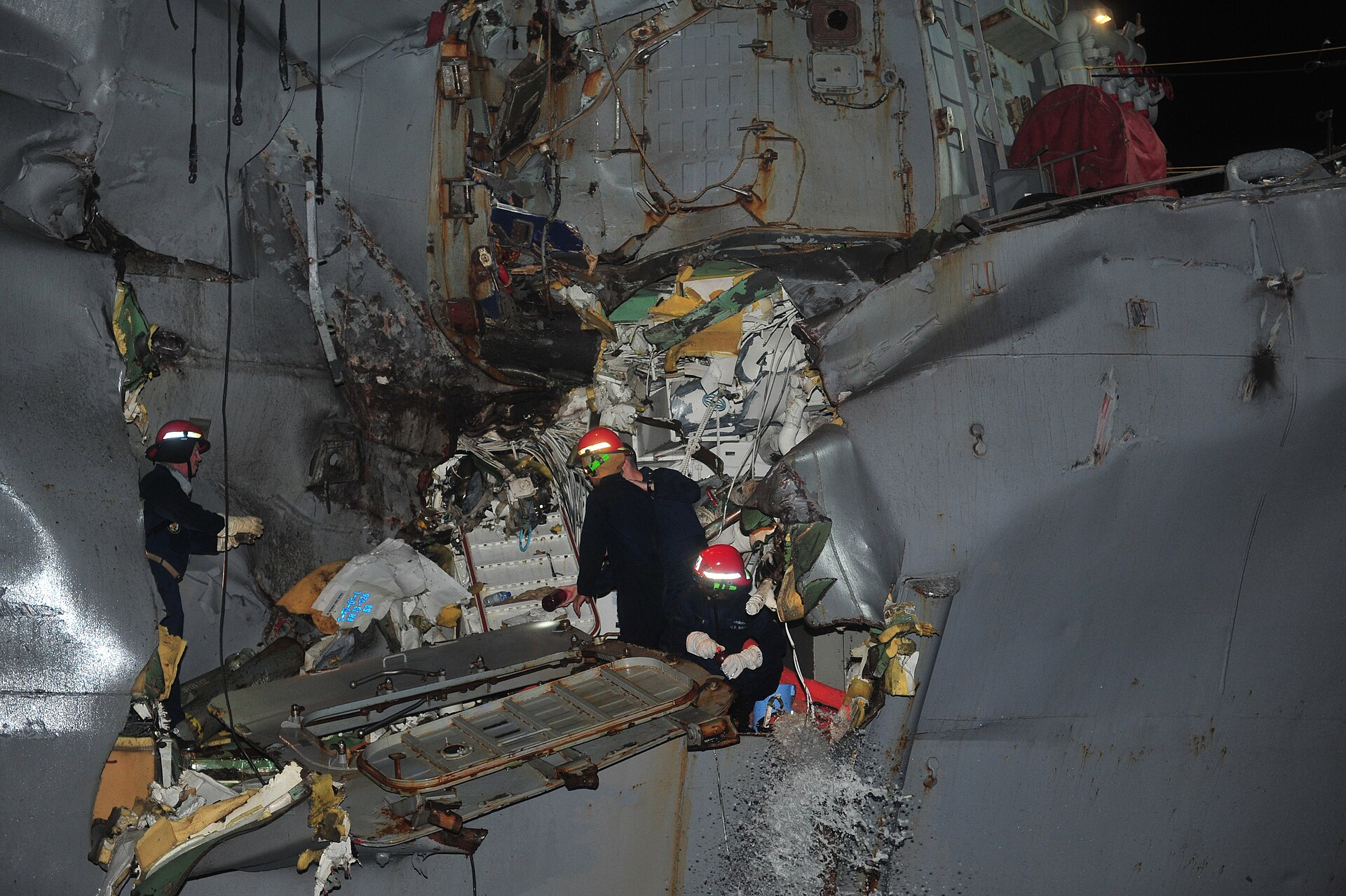
U.S. forces disabled a commercial cargo ship in the Gulf of Oman on Saturday after its civilian crew repeatedly ignored warnings and tried several times to break through the American naval blockade of Iran, U.S. Central Command said. A U.S. military aircraft fired precision munitions at the stern of the St. Kitts and Nevis-flagged bulk carrier M/V Huda, rendering the vessel immobile.
According to Central Command, the Huda had visited an Iranian port and was trying to leave regional waters when it was intercepted. The command said the crew ignored repeated warnings and made multiple attempts to violate the blockade. Before firing, U.S. forces directed the crew to abandon the targeted spaces on the ship. Central Command described the strike as a disabling action, though the condition of the crew and the full extent of the damage to the vessel were not immediately confirmed.
The United Kingdom Maritime Trade Operations agency said it had received a report of an incident involving a bulk carrier and military forces about 18 nautical miles east of Khor Fakkan. The Associated Press noted that the last confirmed U.S. strike on a cargo vessel was nearly a month ago.
The Huda is the fifth merchant ship the United States has disabled since it began enforcing the blockade in July, Central Command said. In the same period, U.S. forces have redirected 147 commercial vessels that complied with instructions to change course. The blockade is aimed at stopping Iranian oil exports and the movement of sanctioned goods.
On the same day, Central Command announced a new step in the pressure campaign. Its commander, Admiral Brad Cooper, directed the creation of Task Force Iron Gate to disrupt Iran's movement of weapons and sanctioned goods through land routes and the Caspian Sea, extending the enforcement effort beyond the sea lanes of the Gulf.
The incident came as attacks on shipping in the region continued. Iran's Revolutionary Guards said two oil tankers struck mines and caught fire in the Strait of Hormuz, according to Iran's IRNA news agency. The United Kingdom Maritime Trade Operations agency said a tanker was on fire and its crew had abandoned the vessel about eight nautical miles northwest of Khasab, Oman, in an incident reported at 19:20 UTC on Saturday. The United Arab Emirates National Guard said early Sunday that 22 people had been rescued from a cargo ship that caught fire in the gulf, though no official account has linked that rescue to the Huda.
The attacks bring to at least eight the number of vessels hit in the Strait of Hormuz and the Gulf since the start of November, according to shipping industry reports. Commercial traffic through the strait, one of the world's most important oil chokepoints, remains hazardous.
The confrontation is unfolding alongside continued diplomacy. Qatar has said mediation between Washington and Tehran remains active and that both sides are reviewing proposals to bridge their differences. Iran has sent a nuclear proposal to Washington through Qatar, according to a senior Iranian official cited by Reuters, and Qatar's latest proposal would reportedly have the United States lift its blockade of the Strait of Hormuz and release some frozen Iranian assets while Iran allows international nuclear inspectors back into bombed nuclear sites. Neither the reported proposal nor its terms have been confirmed as an agreement.
The Huda incident also follows the limited U.S. strike on Iranian air-defense positions on Qeshm Island on Friday, which President Donald Trump described as a minor operation. A third U.S. aircraft carrier and additional troops are heading to the region, underscoring how the military buildup continues even as diplomats talk.
What happens next for the Huda itself is unclear. No official towage, salvage, detention or pollution-response arrangement had been announced by Sunday, and Central Command did not identify the Iranian port the vessel had visited, its cargo or the evidence used to determine that it was attempting to breach the blockade. For the shipping industry, the message is plain: the blockade is being enforced with force, and vessels that test it risk being disabled.
Reporting: Seatrade Maritime
Spot an error? Orbit News corrects articles promptly and notes the correction in the article. See our Editorial Policy, or flag an error by messaging us on Facebook, X, or Instagram.